





Your Guide to the Perfect Sun Lounger: Size, Materials, Recline and Placement
A sun lounger looks simple: a frame, a backrest and somewhere to stretch out. Yet two loungers that look almost identical online can differ by 13 cm in width and about 17 kg in weight, and one may recline flat while the other barely moves. This guide to the perfect sun lounger sets out the details that actually decide whether a lounger suits you: its size, its frame and fabric, how the backrest adjusts, and whether it's headed for the pool deck or a compact balcony. Every measurement quoted below comes from Remarkable's own product listings, so you can compare like with like before you buy.
The Sun Lounger Buyer Guide
Buying outdoor furniture can feel overwhelming when every listing promises comfort. A sun lounger becomes much easier to choose once you narrow the decision to five factors:
- Size: length, width, seat height and weight, measured against the space you have.
- Material: the frame and the fabric or cushion you'll lie on.
- Adjustable backrest: how many positions it offers and whether it lies flat.
- Extra features: wheels, footrests, double or three-seater designs.
- Location: poolside, open lawn, covered alfresco area or balcony.
Work through them in that order and you'll rule out unsuitable loungers quickly. The rest of this guide to the perfect sun lounger takes each factor in turn, starting with the one most buyers get wrong.

Sun Lounger Size and Dimensions
Size is where most mismatches happen, because length and width vary more than photos suggest. Across the single sun loungers in Remarkable's range, the figures look like this:
- Width: from 59 cm (June) and 69 cm (Verona) up to 70 cm (Sorrento and Nardi Atlantico), 71 cm (Regina) and 72 cm (Kent).
- Length: from 194 cm (Kent) and 195 cm (June) to 198 cm (Verona and Regina) and 203 cm (Sorrento).
- Seat height: the June sits at 32 cm and the Verona at 29 cm, low to the ground in the classic poolside style.
- Net weight: from about 6 kg (June) and 9 kg (Kent) to 12 kg (Verona), 16 kg (Nardi Atlantico), 19 kg (Sorrento) and 23 kg (Regina).
How to Use These Numbers
Start with length. If you're tall, a 203 cm lounger leaves more room for your feet than a 194 cm model once the backrest is reclined. Then check width: a 59 cm lounger tucks neatly along a narrow pool edge, while a 72 cm lounger gives you room to shift position or sit cross-legged.
Weight tells you how the lounger will behave day to day. Lighter frames are easy to drag into the shade or stack against a wall, while heavier cushioned loungers stay put in a breeze but take two people to move.
Finally, plan the space around it. Remarkable's daybed guidance suggests leaving at least 75 cm on any side where people need to walk past, so a pair of loungers with a side table between them needs more room than the frames alone.
Materials
Sun loungers come in several frame and fabric combinations, and each one suits a different spot and level of upkeep. The current range centres on four options.
Aluminium Sun Loungers
Powder-coated aluminium is the most common choice, and for good reason. It doesn't rust, it's light enough to reposition, and it handles salt air and pool splashes with minimal upkeep. The Verona pairs a powder-coated aluminium frame with quick-dry textilene, measures 198 cm long and 69 cm wide, and weighs about 12 kg. The June is fully welded aluminium with a textilene sling and weighs about 6 kg, one of the lightest in the range.
Textilene is a woven, PVC-coated mesh. It dries quickly, lets air move through it on hot days and needs no separate cushion.
Teak-Look Aluminium Sun Loungers
If you like the warmth of timber but don't want to oil it, a teak-look finish on an aluminium frame gives you that tone with aluminium's low upkeep. The Regina has a powder-coated aluminium frame in a teak-look finish, 198 cm long and 71 cm wide, with high-density foam cushions in solution-dyed acrylic, and weighs about 23 kg. The Genova uses a heat-transfer finish on an aluminium frame, in teak look or charcoal, with a breathable textilene seat.
Resin Sun Loungers
Resin loungers are moulded in one piece, so there are no joints to loosen and nothing to rust. The Nardi Atlantico is made in Italy from UV-resistant, fibreglass-reinforced polypropylene with a PVC-coated textilene sling. It's 70 cm wide and weighs about 16 kg. The Nardi Plano uses the same reinforced resin with a replaceable textilene fabric and a quick-drain design that limits moisture build-up.
Rope Sun Loungers
Rope adds texture and a softer look. The Lawson Outdoor Rope Sun Lounger pairs a powder-coated aluminium frame with handwoven PVC rope built to handle moisture, plus high-density foam cushions in solution-dyed acrylic. It weighs about 15 kg and has an adjustable backrest.
Sleek aluminium, warm teak tones, moulded resin or woven rope: whichever look suits your home, there's a material to match it.
Adjustable Backrests and Recline Positions
The backrest decides how you'll use a lounger. A good range of positions lets you sit up to read, recline to doze and lie flat to sunbake, all on the same frame.
When you compare loungers, look for:
- Number of positions: the Nardi Plano offers four reclining positions. Remarkable's sun lounge guidance suggests looking for at least four, so you can move from upright to flat.
- A flat setting: the Kent adjusts from upright to almost flat to fully flat, which suits sunbaking as well as reading.
- Multi-position backrests: the Genova reclines fully or sits upright, and the Lawson rope lounger has an adjustable backrest.
- Easy adjustment: test the mechanism in the showroom if you can. A backrest you can move with one hand while seated is far easier to live with.
Wheels go hand in hand with recline. The Kent has two wheels, the Nardi Plano has integrated wheels and the Genova has rear wheels, so you can follow the shade through the afternoon without lifting the whole frame.
Special Editions & Features
Sometimes a standard single lounger is exactly right. At other times you need more room, or a design that does double duty.
Two-Piece Outdoor Sun Lounger
A two-piece lounger splits into a chair and a footrest. Use it as a lounger when you want to stretch out, then separate the pieces into a seat and footstool when space is tight. It's a practical option for balconies and small courtyards where a full-length lounger would block the walkway.
Three-Seater Outdoor Sun Lounger
Want a lounge and a lounger in one piece? The Hannover 3 Seater Outdoor Aluminium Lounge with sunlounger feature converts from sofa to sun lounger. It measures 198 cm wide and 74 cm deep, with a seat height of about 39 cm, and weighs about 30 kg. Its cushions use UV-stabilised, water-repellent olefin, and a quick drop of the backrest turns it into a large ottoman. The full range sits in the Hannover Collection.
Double Daybeds
For two people, a daybed gives more room than a pair of loungers pushed together. The Lawson Outdoor Rope Daybed is a two-seater measuring 164 cm wide and 162 cm deep, with a powder-coated aluminium frame, handwoven PVC rope and high-density foam cushions. At about 52 kg, it's built to stay in place. Browse more options in outdoor daybeds.

Poolside and Balcony Sun Loungers
Where the lounger lives shapes what you should buy, and the two most common spots ask for different things.
Choosing a Poolside Sun Lounger
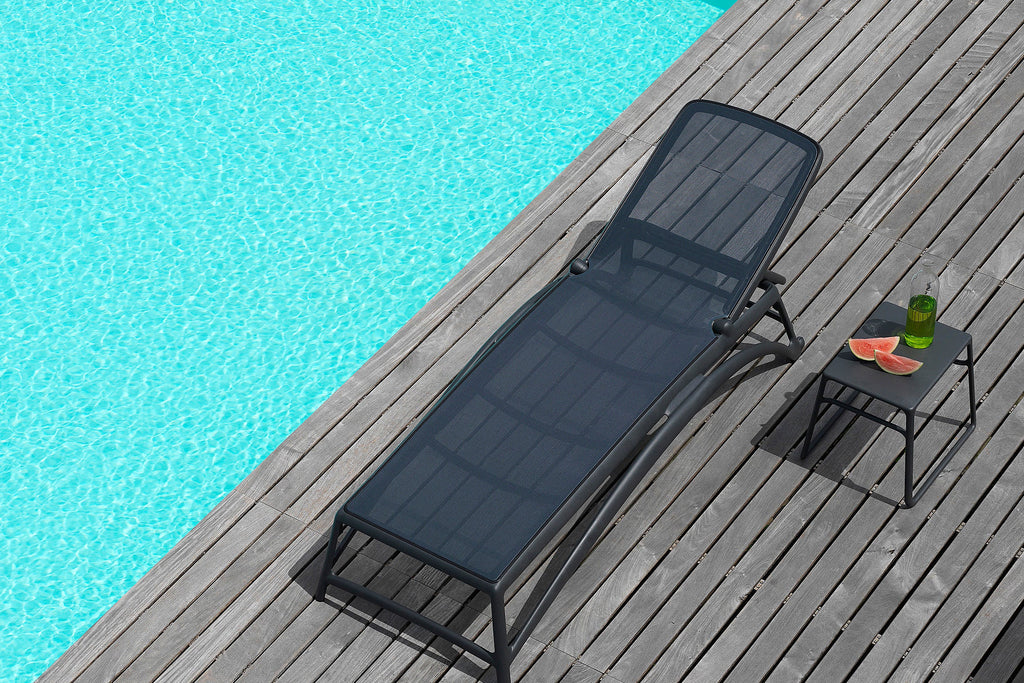
Around a pool, everything gets wet: from swimmers, from splashes and from damp towels. Choose a frame that won't rust and a surface that dries fast.
- Powder-coated aluminium frames handle constant splashing.
- Textilene slings, like those on the Verona and June, dry quickly and need no cushion to bring inside.
- If you prefer cushions, look for quick-dry foam. The Kent's quick-dry foam padding resists mould and mildew.
- Resin loungers such as the Nardi Plano are easy to hose down, with a quick-drain design.
Lower seat heights, such as 29 cm on the Verona and 32 cm on the June, give the classic poolside profile.
Choosing a Balcony Sun Lounger
On a balcony, space and weight matter most. Measure the length available first, remembering the walkway, then look for a narrow, light frame. The June is 59 cm wide and about 6 kg, so it fits along a balcony edge and moves easily. The Kent, at about 9 kg with two wheels, slides into a corner when you need the floor space.
Wind is the other consideration on upper floors. Light loungers should be folded flat or moved against a wall when strong winds are forecast, and check your strata rules before setting up. A two-piece lounger is worth considering if you need the space to work as a seating area too.
What Matters Most: Comfort
Every lounger in this guide to the perfect sun lounger differs in size, features and cushioning, and that's the point. The right choice depends on how you relax.
If you like a firm, breathable surface that dries in minutes, a textilene sling suits you. If you want to sink in for a long read, choose a cushioned lounger with high-density foam, such as the Regina or Sorrento. Solution-dyed acrylic cushion fabric holds its colour in strong sun, and a water-repellent cover lets rain bead off.
Adding padding to a sling lounger is easy too. Outdoor sun lounge cushions let you soften a frame you already own, and breathable outdoor sun lounge covers protect cushioned loungers through storm season. Store cushions or cover them during long wet spells, and wipe frames with warm, soapy water to keep them clean.
Where to Find Our Selection of Sun Loungers
You can see and test Remarkable's sun loungers and daybeds in showrooms across New South Wales, Victoria and Queensland. Find the nearest one through the Sydney, Melbourne and Brisbane showroom pages, with further showrooms on the Gold Coast and Sunshine Coast. Testing the recline and lying down on a lounger tells you more about comfort than any photo.
Prefer to compare from home? The full range of sun lounges is online, with dimensions, materials and care details on each listing. Before you browse, measure your space, note the walkway you need, and use this guide to the perfect sun lounger to shortlist the frames that fit.
Share this


