




Recently viewed


Balcony Table Buying Guide: How to Pick the Right One for Your Space
Choosing the right balcony table turns unused outdoor square space into a functional area you will actually use. Your options range from folding balcony tables and balcony bar tables to fixed styles and small tables for balcony spaces. Each design serves different needs and spatial constraints. This piece covers types, sizing, materials and key features to help you make an informed decision that makes the most of your outdoor living area.
Types of Balcony Tables You Can Choose From
Your balcony's size and intended use determine which table type fits best. Each design addresses different spatial constraints and functional needs.
Folding Balcony Tables
Folding balcony tables give you flexibility when space demands it. You can open them for meals or work, then fold them away to reclaim floor area for stretching, exercising, or arranging plants. Quality folding tables feature sturdy locking mechanisms that feel solid when seated and dispel concerns about flimsy construction.
Some folding designs offer multiple height settings, allowing you to position the surface where you need it. Materials such as decay-resistant hardwood perform well outdoors and fold down when not in use. Some designs attach to railings, while others stand on your balcony floor independently.
Hanging Balcony Tables
Hanging tables mount onto your railing and free up floor space. These compact surfaces hold a book and drink comfortably, making them well suited for solo relaxation moments.
Hanging balcony table designs come in a range of materials and configurations. Some feature both a main surface and lower shelf, with adjustable stainless steel fastening systems that work with balcony rails or walls. Teak and hardwood options accommodate various railing widths and fold down when not needed. Metal options exist too, though weight capacity varies between models, so check the load rating before purchase.
Balcony Bar Tables
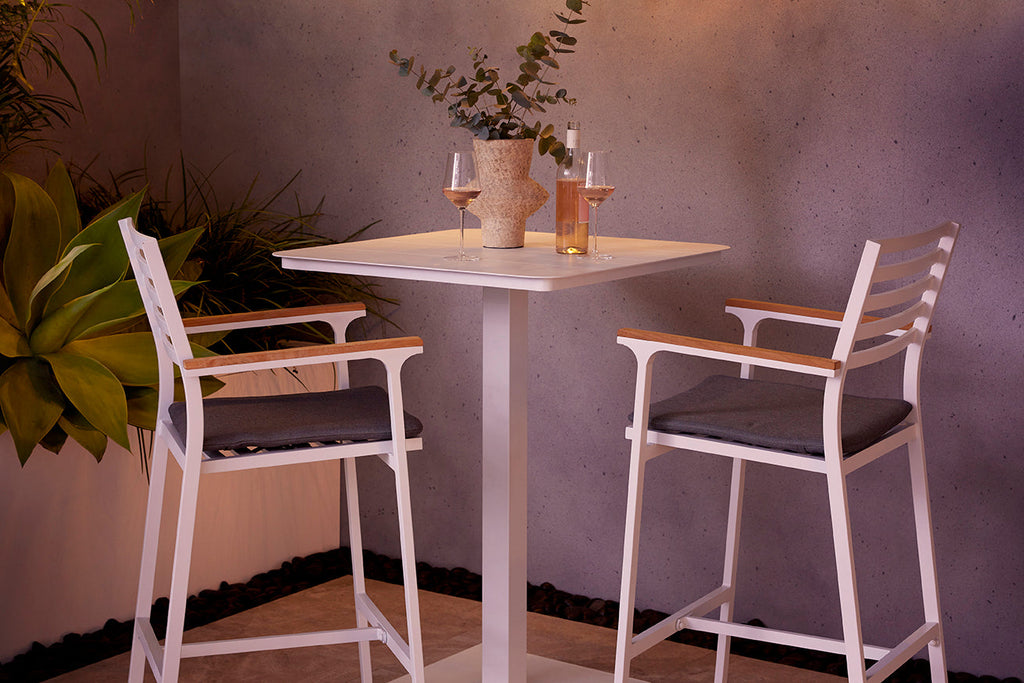
Bar tables create elevated seating arrangements that work well on higher floors where views matter. These narrow tables often attach to or hang over railings and expand your outdoor space for dining, working, or evening drinks. The elevated position lets you see over the railing rather than stare at it.
Materials range from weather-resistant acacia wood to durable metal frames with powder-coated finishes. Look for features like slatted designs for drainage, adjustable brackets that clamp across a range of railing widths, and levelling bars for stability. Fade-resistant finishes help maintain appearance through UV exposure.
Fixed Balcony Tables
Fixed tables provide permanent solutions when you do not need mobility. These stable options work well if you have dedicated outdoor dining or work areas. They sacrifice flexibility for improved stability and often support heavier weight loads than folding alternatives.
Café Style Tables
Café tables bring compact proportions to small balconies. These tables suit tight footprints while maintaining a practical surface area. Round café tables work well in corners and tight spaces, while square designs with drainage cutouts shed water quickly after rain.
Built for outdoor use, café style tables work just as well for morning coffee or evening drinks. Their clean design matches most chair styles and offers versatility in your overall balcony arrangement.
Measuring Your Balcony Space and Choosing the Right Size
Accurate measurements ensure your balcony table fits properly and leaves adequate room for movement. Measure the specific dining zone rather than your balcony as a whole. Use a tape measure to record the length and width of where you want the table positioned, then mark these boundaries with painter's tape to visualise the footprint. Identify permanent obstacles like railings, walls, planters, door swing paths, or built-in seating that reduce usable space.
How to Measure Your Available Space
Clearance around your table determines whether your setup feels comfortable or cramped. You need at least three feet of space on all sides of the table to give yourself room to pull out chairs and let people walk by. A minimum of 18 inches behind each chair is required when pulled out from the table. Walkways where people move frequently need 36 inches of clearance, or 44 inches if you carry trays or need to move around seated guests.
The distance from your table edge to a wall or railing requires 24 to 36 inches minimum. If someone in a wheelchair needs to pass behind a seated person, increase that clearance to 60 inches. These numbers matter because insufficient space creates daily frustration, not just occasional inconvenience.
Calculate seating capacity by allowing 24 inches of table edge per adult. A 72-inch rectangular table seats six people comfortably using this guideline. Before you finalise any purchase, measure four specific elements: your usable dining zone dimensions, door swing and traffic paths you must keep clear, which sides people enter and exit seats, and how the table will be oriented relative to walls or railings.
Small Tables for Balcony Spaces
Compact outdoor areas between 24 and 32 inches wide require careful planning to maintain comfort and movement flow. Round or square tables measuring 24 to 30 inches work best for most balconies. Café and bistro tables range from 24 to 30 inches in diameter at standard dining height. A bistro table with two chairs fits into a space as small as 6 by 8 feet, factoring in the table width plus circulation clearance of 2.5 to 3 feet.
Folding balcony table options let you set up dining surfaces only when needed for ultra-narrow balconies. Drop-leaf designs work well for long, narrow layouts where you keep one or both leaves down daily, then extend them when guests arrive. Long, narrow spaces suit rectangular tables because they align with the footprint and preserve a clear walkway lane. Round tables maintain flow in tight quarters and prove easier to move around.
Choosing Table Height and Shape
Standard dining height tables measure 28 to 30 inches tall, pairing with chairs that have seat heights between 16 and 19 inches. Counter height balcony bar table options stand 34 to 36 inches tall, offering better views and a modern aesthetic. Bar height tables reach 40 to 42 inches, creating casual gathering spaces but requiring bar stools with seat heights between 28 and 33 inches.
Your space configuration determines shape selection. Rectangular tables fit narrow balconies and decks, lining up parallel to railings while keeping one walkway clear. Square tables provide equal seating on all sides and work well for even numbers of guests in balanced layouts. Round tables encourage conversation by eliminating a head position and fitting more efficiently into compact corners. Designs with rounded edges provide a few extra inches of movement space and accommodate additional guests more comfortably where clearances are tight at the ends.
Materials That Work Best for Outdoor Balcony Tables
Material selection determines how long your balcony table withstands sun, rain, and temperature swings. Materials vary in durability, maintenance requirements, and aesthetic qualities.
Wood Options: Teak, Acacia, and Eucalyptus
Teak stands apart for outdoor longevity. Its high natural oil content and dense grain repel moisture, deter wood-boring insects, and handle sunlight exposure well. Teak performs exceptionally in Australian outdoor conditions and develops a silver-grey patina when left untreated, or maintains its warm honey tone with regular oiling.
Acacia offers solid hardwood performance with strong density and hardness, making it well suited to regular outdoor use. The wood provides good stability with attractive grain patterns but requires more frequent oiling and sealing to maintain its condition against weathering.
Eucalyptus represents a practical hardwood option with natural resistance to rot and a warm reddish-brown tone. It performs well outdoors with regular oiling to maintain appearance, though it benefits from more frequent maintenance than teak to prevent surface deterioration.
Metal and Aluminium Tables
Aluminium balcony bar table designs deliver strong weather resistance without rust concerns. The material is lightweight, rust-proof, and durable when finished with powder coating. Aluminium does not decay or loosen, and quality powder-coated finishes perform well through extended outdoor exposure.
Stainless steel weighs more than aluminium and provides stability in windy conditions while resisting rust and corrosion. Steel conducts heat and can become hot to touch in direct sunlight. Both metals require only periodic cleaning with mild soap and water.
Weather-Resistant Composite Materials
Composite materials replicate wood's appearance while reducing maintenance. These weather-resistant surfaces use recycled plastics like HDPE and resist weather conditions, water, and wear. The material does not rot, splinter, or fade over time. You do not need to stain, seal, or paint it.
Composite balcony table options handle all weather conditions, rain and humidity included, without cracking or warping. The surface provides natural wood texture while resisting weather, fading, and stains.
HPL and Stone Table Tops
HPL (High-Pressure Laminate) tables resist UV rays, weathering, staining, spills, and burns. The non-porous surface makes cleaning easy and requires only regular wiping with mild cleaners. HPL's compact composition withstands damage from moisture, making it well suited to humid climates.
Stone tabletops made from granite or slate provide strong durability with minimal maintenance. Granite resists scratches, heat, and weathering well. Stone surfaces remain heavy and stationary but give a solid, weather-resistant appearance that holds up in outdoor conditions.
Important Features to Look For
Functional features separate tables that work naturally from those that frustrate you daily. Beyond materials and measurements, specific mechanisms determine whether your balcony table delivers on its promises.
Folding and Space-Saving Mechanisms
A quality folding balcony table collapses with minimal effort when you finish using it. The tabletop folds down to save space in limited settings and frees your balcony for other activities. Some designs fold flat against railings when not in use, eliminating floor space consumption entirely.
The folding mechanism itself requires inspection before purchase. Press and fold the table to test smoothness of operation. Locking points should engage without requiring excessive force. Tables with adjustable height settings let you modify the height across multiple levels, suiting railings of varied heights.
Adjustable Brackets and Mounting Systems
Mounting systems determine which railings work with hanging designs. Adjustable bracket widths accommodate railings from 1 to 6 inches in thickness. This adaptability works with square, round, and wood railing types without requiring professional installation.
Brackets include convenient knobs on two sides and the bottom for secure attachment. Levellers ensure the tabletop sits at 90 degrees rather than tilting. Railing protectors prevent scratches on your existing finishes and couple with cable ties for extra secure holds in windy conditions. The strongest systems allow height adjustment before tightening hardware.
Weight Capacity and Stability
Load ratings reveal what your table supports. Entry-level hanging models handle lighter loads, while mid-range and reinforced options support progressively greater weight. Triangular support designs provide structural strength that keeps items stable without tipping.
Powder-coated stainless steel frames resist rust while ensuring stability in rainy or sunny conditions. The frame construction matters as much as advertised capacity. Tables with heavy-duty supporting arms hang securely onto railings, while reinforced legs and sturdy bases ensure strength throughout the surface.
Storage and Portability
Lightweight construction makes moving your table practical. Look for models that allow single-person repositioning without strain. Tables store flat against walls or in closets when folded, taking minimal storage space. Portable designs suit renters who move regularly or homeowners who store outdoor furniture seasonally.
Choosing the Right Balcony Table
Your balcony table should match your space constraints and how you actually use your outdoor area. Measure your available space first and calculate clearance requirements. Then select materials that handle your local weather conditions. Folding designs work well for flexibility, while hanging options maximise floor space on compact balconies. Test folding mechanisms and mounting systems before purchasing. Always verify weight capacity against your intended use. The right choice turns your balcony into a functional outdoor area you will use regularly.
FAQs
Q1. How do I determine the right table size for my balcony?
Measure the length and width of your available balcony space, then subtract 6 feet from both dimensions to allow for 3 feet of clearance on all sides. This calculation gives you the maximum recommended table size. For example, a 12 by 9.5 foot balcony would accommodate a table up to 72 by 40 inches. Remember to account for door swings, railings, and traffic paths when measuring.
Q2. What clearance space do I need around a balcony table?
You should allow at least 3 feet of space on all sides of your table for comfortable movement. Behind each chair, maintain a minimum of 18 inches when pulled out. For walkways where people frequently pass, plan for 36 inches of clearance, or 44 inches if you need to carry items or navigate around seated guests.
Q3. Which materials last longest for outdoor balcony tables?
Teak offers the strongest outdoor longevity due to its high natural oil content and moisture resistance. Acacia and eucalyptus provide solid hardwood alternatives with varying maintenance needs. Aluminium and stainless steel are rust-resistant metal options, with powder-coated aluminium performing well through extended outdoor exposure.
Q4. What is the difference between standard and bar height balcony tables?
Standard dining height tables measure 28 to 30 inches tall and pair with regular chairs that have seat heights of 16 to 19 inches. Bar height tables stand 40 to 42 inches tall, offering enhanced views and a casual gathering feel, but require bar stools with seat heights between 28 and 33 inches. Counter height options at 34 to 36 inches provide a middle ground.
Q5. How much weight can hanging balcony tables support?
Weight capacity varies significantly by model. Entry-level hanging tables support lighter loads, while mid-range options handle moderate weight and reinforced designs manage heavier items. Always verify the weight capacity matches your intended use, especially if you plan to place heavier items like planters or multiple dishes on the surface.