





Recently viewed


An aluminium outdoor dining set is one of the most practical outdoor furniture choices you can make. To choose well between aluminium outdoor table and chairs, aluminium garden sets, and cast aluminium outdoor dining sets, you need to understand size requirements, quality features and what drives long-term performance. This guide walks you through measuring your space, evaluating features like powder-coated finishes and tabletop materials, and what maintenance actually looks like. You'll find which outdoor aluminium dining set suits your conditions and lifestyle, and why the construction details matter more than the first impression.
What Are Aluminium Outdoor Dining Sets and Why Choose Them
The set combines a central dining table with matching chairs, all built on aluminium frames. The material choice is deliberate: aluminium forms a protective oxide layer when exposed to oxygen, creating a barrier that shields the metal from environmental damage without chemical treatments or regular maintenance.
Key Components of an Aluminium Outdoor Dining Set
The frame's construction determines how long the set will perform outdoors. Welded aluminium joins outperform bolted connections, which in turn surpass riveted assembly. Pick up a chair and shake it: any movement on day one signals problems ahead. Riveted joins work loose within a couple of seasons of regular use.
Fasteners matter more than most buyers realise. Stainless steel screws resist corrosion, but standard steel fasteners rust through powder coating from the inside out. Check the table's underside before you buy. Coastal homes face accelerated corrosion and make fastener quality non-negotiable. The powder coating itself adds another protective layer: this process bakes a dry powder onto the aluminium surface, enhancing resistance to chipping, fading and scratching while expanding colour options.
Tabletops vary between ceramic, glass and solid aluminium surfaces, each paired with the aluminium frame structure. Chairs may include contoured designs with breathable fabric seats or cushioned options that address aluminium's one notable drawback: the metal heats up under direct sunlight. Cushions or breathable sling seats solve the comfort issue during warmer months.
Biggest Advantages Over Other Materials
Aluminium weighs one-third the density of steel yet maintains comparable strength. You can rearrange your outdoor space without strain, move pieces to follow afternoon shade, or bring furniture under cover during rough weather. This mobility proves useful for families who regularly adjust seating arrangements.
The rust and corrosion resistance stems from the protective oxide layer. This layer forms spontaneously and reforms over superficial scratches, maintaining protection against corrosion without intervention. Coastal and poolside locations benefit most, where moisture and salt accelerate material degradation in other metals.
Maintenance requirements drop considerably compared to timber or steel. You won't need sealing, oiling or special treatments. Water and mild soap handle routine cleaning. Timber requires ongoing maintenance that many owners skip, leading to deterioration. Steel demands regular rust prevention treatments.
Aluminium resists UV rays, preventing colour fading that plagues other materials. The furniture maintains its appearance through seasons of sun exposure without refinishing. This UV resistance, combined with moisture imperviousness, makes aluminium outdoor dining table sets suitable for year-round outdoor placement in any Australian climate.
The material handles rain, humidity, wind and temperature fluctuations without warping, cracking or structural compromise. Timber swells with moisture and steel oxidises in damp conditions, but aluminium remains stable. The long-term calculation favours aluminium: the initial outlay may exceed some alternatives, but the extended lifespan and near-zero maintenance offset the upfront commitment.
Who Should Consider Aluminium Garden Sets
Coastal homeowners gain the most obvious advantage. Salt air degrades many outdoor furniture materials within seasons, but aluminium's rust resistance withstands seaside conditions. The protective oxide layer prevents saltwater from attacking the metal structure.
Those in humid climates or areas with high rainfall find these sets perform reliably. The material's imperviousness to moisture means furniture can stay outdoors year-round without protective coverings during wet seasons.
Low-maintenance seekers should prioritise aluminium garden sets. If you prefer spending weekends relaxing rather than treating, sealing or repairing outdoor furniture, aluminium eliminates those tasks. The minimal upkeep suits busy households.
Buyers seeking modern, minimalist looks find aluminium's sleek lines and clean surfaces line up with contemporary outdoor design. But the material's versatility extends beyond modern spaces: the neutral appearance complements traditional gardens and eclectic outdoor areas, and you can mix aluminium pieces with timber accents or wicker elements for a considered, layered look.
Anyone prioritising furniture longevity over frequent replacement cycles benefits from cast aluminium outdoor dining sets. The material's durability and weather resistance translate to furniture that remains functional and attractive for decades, avoiding the replacement costs and waste of shorter-lived alternatives.
How to Determine the Right Size for Your Space
Buying furniture before measuring your space ranks among the most common outdoor dining mistakes. Start by mapping the full footprint of your patio, deck or designated outdoor area. The table itself tells only half the story.
Measuring Your Outdoor Area
Chairs need room to slide back without hitting walls, balustrades or garden beds. Allow at least 60 cm of clearance per chair to ensure comfortable movement. This clearance extends beyond the table edge when chairs are pushed out, so your dining zone requires considerably more space than the table's listed dimensions suggest.
Measure length and width, then subtract at least 1 metre from each dimension to determine your maximum table size. A 4 metre long patio accommodates a 3 metre table at most, leaving 50 cm on each end for chair movement and circulation. Tighter spaces force guests to manoeuvre around seated diners, which turns every meal into a logistics exercise.
Use painter's tape or a garden hose to outline your proposed table size on the ground. Walk around it and pull imaginary chairs out. This physical mockup reveals spatial issues that numbers on paper miss.
2 to 4 Seater Sets for Compact Spaces
Compact aluminium outdoor dining sets suit balconies, small patios and intimate courtyards. A 4-seater table measures about 120 to 140 cm in length and fits in spaces as small as 250 x 250 cm. Bistro-style 2-seater arrangements require even less and work within 200 x 300 cm zones.
These smaller aluminium garden sets provide practical solutions for apartment living or secondary dining zones within larger gardens. They work well as breakfast spots or casual dining areas that serve double duty as reading corners. Foldable options add further flexibility and store away when the space serves other purposes.
6 to 8 Seater Sets for Family Gatherings
Six-seater aluminium outdoor table and chairs span 158 to 160 cm in length and 90 to 105 cm in width. These dimensions accommodate family meals and fit patios measuring 300 x 300 cm or larger. Rectangular configurations at 160 cm suit most suburban outdoor spaces.
Eight-seater sets introduce more size variation. Square models measure about 160 x 160 cm, while rectangular designs range from 230 x 97 cm up to 250 cm in length. Round 8-seater tables measure 180 cm in diameter and offer a more sociable seating arrangement that removes head-of-table dynamics.
Round configurations need different space calculations. A 180 cm diameter table requires at least 320 x 320 cm of patio space to account for chairs and circulation. Rectangular tables at 230 cm fit within 300 x 380 cm areas, making them more space-efficient for narrower patios.
10 and Over Seater Sets for Large Entertaining
Outdoor aluminium dining sets seating ten or more guests measure around 3 metres in length. These substantial pieces demand patios of at least 5 x 5 metres to provide adequate circulation and comfortable seating. Coastal homes and properties with expansive outdoor areas benefit most.
The generous tabletop accommodates serving dishes and drinks without crowding diners. Extension models reach about 3 metres when fully expanded, solving the everyday-versus-entertaining trade-off for households that regularly host.
Extendable Table Options
Extension mechanisms solve the occasional-guest problem without committing to permanently oversized furniture. Standard configurations seat your household, while extension leaves accommodate additional diners during gatherings. Aluminium construction handles the mechanical stress of repeated extension and retraction better than timber alternatives.
Quality extension tables use powder-coated aluminium throughout, including the mechanism components underneath. Check that extension leaves store and deploy smoothly: some designs use butterfly-leaf systems that fold out from the table centre, while others use removable panels that need dry storage when not in use. The former is more convenient.
Weather-resistant finishes on extension components matter as much as the main table surface. Mechanisms exposed to moisture and UV deteriorate without proper treatment, causing binding or corrosion that can render the extension feature unusable. Keep the slides free of grit with a quick brush before extending.
Essential Features to Look for in Quality Sets
Quality differences separate sets that last decades from those that need replacing within a few seasons. Scrutinise these features before you commit.
Powder-Coated Finishes and Protection
The powder coating process applies a dry powder electrostatically to the aluminium surface and cures it under heat, creating a hard, durable finish that resists chipping, fading and scratching. The baked-on layer bonds at a molecular level, unlike paint, which sits on the surface and peels over time.
Gentle wiping with a soft cloth and water is enough for routine cleaning. Avoid abrasive cleansers that scratch through the protective layer. Dark finishes warm up more in direct sun. White and charcoal remain popular colour choices, and the coating itself prevents UV damage and colour fading in all shades.
Tabletop Materials: Ceramic, Glass, and Solid Aluminium
Ceramic tabletops feature non-porous surfaces that resist water penetration and UV damage. Rain evaporates rather than soaking in. The material withstands temperature fluctuations without cracking, resists stains, and wipes clean with soap and water. Ceramic tops often pair well with extension mechanisms.
Glass tops show smudges quickly and create glare in bright light. Tempered glass resists shattering, but you'll clean it more frequently to maintain appearance, and edges need proper polishing for safety around bare feet.
High-pressure laminate and compact laminate deliver exceptional durability. Hospitality venues rely on these engineered surfaces because they handle spills, heat and UV exposure without complaint. They remain colour-stable and easy to clean, though edges need proper sealing. For families dealing with sunscreen, food spills and red wine, these surfaces shrug it all off.
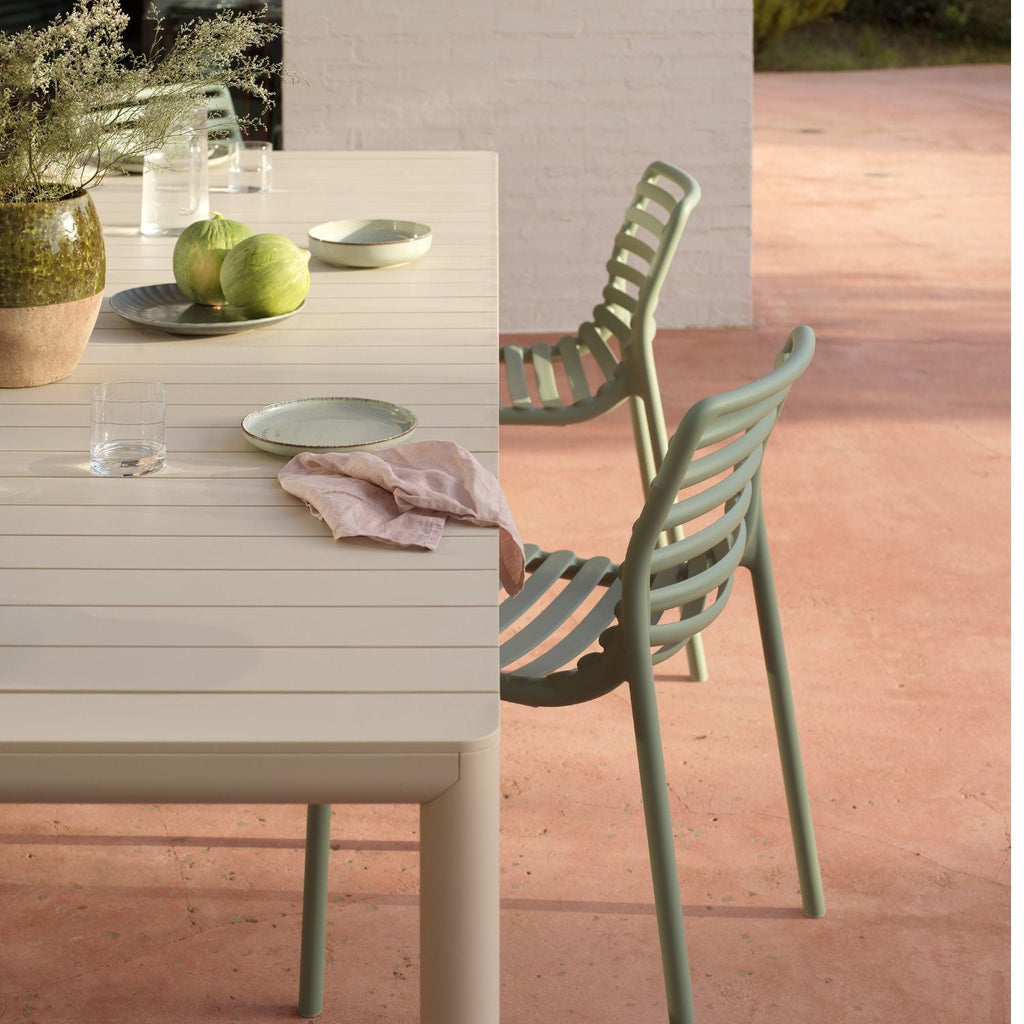
Solid aluminium tops eliminate the risk of breakage entirely. Slatted designs allow water drainage and simplify cleaning.
Chair Comfort: Cushions and Ergonomics
Cushion fabric determines how comfortable your aluminium garden sets remain through the seasons. Solution-dyed acrylic locks colour into the fibre rather than surface-dyeing, resisting UV-induced fading and maintaining softness even after seasons in direct sun. Quick-dry polyester blends use open weaves that let air pass through, cutting trapped heat and drying fast after rain. Olefin fabric doesn't absorb water: it dries quickly without developing musty odours in humid weather.
Standard cushion thickness measures around 6 cm and provides adequate padding for extended seating. Look for removable, washable covers with UV and water-resistant treatments that keep cushions functional outdoors.
Seat height matters for comfort. Most outdoor dining tables stand 72 to 76 cm tall and need chair seats of 43 to 48 cm high to keep knees at comfortable angles during meals.
Chairs with armrests support forearms and assist standing, which helps older adults in particular. But armrests add 3 to 8 cm to each side and reduce how many chairs fit at the table. They may also bump the table apron and prevent chairs sliding in fully. Armless chairs save space and pack more seats into the same run.
Stackable vs Non-Stackable Designs
Stackable chairs provide space efficiency for smaller patios and balconies. Store them neatly during off-seasons or when hosting requires clearing space. Aluminium's lightweight nature makes stacking effortless compared to heavier materials.
Non-stackable designs often feature more elaborate styling or integrated cushioning that prevents stacking. If you have the storage space, this trade-off is fine; on a compact balcony, stackability earns its keep.
Assembly Requirements
Assembly needs vary by design. Some aluminium outdoor dining table sets arrive partially assembled; others need full assembly with supplied hardware. Powder-coated aluminium handles repeated disassembly if you need it for storage or relocation. During assembly, confirm that all fasteners are stainless steel and snug them again after the first few weeks of use as frames settle.
Comparing Standard Aluminium and Cast Aluminium
Manufacturing methods determine whether you're buying standard or cast aluminium outdoor dining sets. Cast aluminium forms from molten metal poured into moulds, creating single solid pieces. Welding joins individual cast components together, sometimes combining them with tubular aluminium. Standard aluminium, also known as extruded aluminium, heats until soft then passes through a die to produce hollow tubes that are cut and assembled.
Standard Aluminium vs Cast Aluminium Outdoor Dining Sets
Both types resist weather, sun, rain and wind while requiring minimal maintenance. The major difference lies in weight. Cast aluminium outdoor dining sets weigh considerably more than standard extruded versions. This added heft provides stability during windy conditions but reduces mobility when you rearrange furniture.
Cast aluminium seats hold their shape because the solid structure and material strength keep the base stable for the chair's working life. The construction method allows varied design detail that extrusion cannot match. Nearly all cast designs lend themselves to stacking, making storage and transport efficient. Even as solid aluminium, the pieces remain substantially lighter than steel while maintaining strong load capacity.
Colour Options: White, Charcoal, and Black
White aluminium outdoor table and chairs remain especially popular and coordinate well with a range of property styles while giving a fresh, clean appearance. Charcoal-coloured chairs pair well with natural stone-top tables, while white frames complement matching aluminium tabletops. Black provides a grounding anchor for lighter-toned settings.
Mixing Aluminium with Other Materials
Material combinations create considered outdoor spaces. Aluminium tables paired with woven resin wicker chairs soften the overall look and make settings comfortable and textured. Teak and aluminium combinations offer natural wood warmth with modern metal structure. Glass-top settings deliver clean lines, while stone and aluminium bring together the textured, weighty presence of stone with aluminium's weather resistance. Buying chairs and tables separately opens up these mixed-material combinations.
Maintenance, Care, and Longevity Tips
Routine care keeps the set performing at its best without taking much time. These sets need only simple cleaning to preserve appearance and functionality.
Daily and Weekly Cleaning Routines
Wipe away spills with warm, soapy water straight away and dry them well. When the set is in regular use, perform weekly wipe-downs using a soft microfibre cloth with warm water and mild dish soap. Clean all surfaces including undersides, leg sections and joinery crevices. Rinse with a garden hose at low pressure and dry with a clean cloth to prevent water spots. Monthly deep cleaning removes embedded dirt before it compromises the powder coat: use a soft-bristled brush for joints and fastener recesses, then rinse well.
Protecting Your Set from Harsh Weather
Position furniture in shaded areas under pergolas or awnings when possible. Coastal properties need fortnightly fresh water rinses to flush salt deposits. When storm seasons arrive, secure loose cushions and accessories. Store pieces in cool, dry locations if you won't use them for extended periods. Quality powder-coated sets withstand most weather, but extreme conditions like cyclones or severe hail make covered storage the sensible call.
Dealing with Scratches and Surface Damage
Small chips expose aluminium to moisture and salt. Clean the affected area with mild soap and allow full drying, then lightly sand chip edges with 600-grit or finer sandpaper. Apply manufacturer-recommended touch-up paint with a small artist's brush and allow a full day to cure.
When to Use Furniture Covers
Use breathable, water-resistant covers if the furniture won't be used for extended periods, when overnight storms are forecast, or during high pollen periods. Covers with built-in vents prevent trapped condensation. Ensure snug fits to prevent water pooling on the cover itself.
What to look for
Your decision comes down to three things: the right size for your space, quality features that match your climate, and construction details that determine how many seasons the set actually delivers. Prioritise powder-coated finishes, welded construction and stainless steel fasteners. These elements are the difference between a set that lasts a couple of summers and one that lasts decades.
Measure your space before purchasing. A handsome set becomes frustrating when guests can't move around the table. Choose aluminium for its weather resistance and minimal upkeep, then maintain it with nothing more than soap-and-water cleaning. The right outdoor aluminium dining set should earn its place on the deck, not create work.
FAQs
Q1. What are the key advantages of choosing aluminium for outdoor dining furniture? Aluminium outdoor dining sets offer exceptional rust and corrosion resistance thanks to a naturally forming protective oxide layer. They weigh one-third as much as steel whilst maintaining comparable strength, making them easy to rearrange. The material requires minimal maintenance, just water and mild soap, and resists UV-induced fading. Aluminium handles all weather conditions without warping, cracking or structural compromise, making it well suited to coastal areas and humid climates.
Q2. How much space do I need for an aluminium outdoor dining set? Allow at least 60 cm of clearance per chair beyond the table edge for comfortable movement, and subtract at least 1 metre from your patio's length and width to determine maximum table size. A 4-seater set with a 120 to 140 cm table needs roughly 250 x 250 cm, whilst an 8-seater rectangular set at 230 cm needs around 300 x 380 cm. Always account for chair pull-out space and circulation.
Q3. What's the difference between standard and cast aluminium outdoor dining sets? Cast aluminium forms from molten metal poured into moulds, creating solid, heavier pieces that provide stability in wind and seats that hold their shape. Standard (extruded) aluminium uses hollow tubes that are lighter and easier to move. Both resist weather equally and require minimal maintenance, but cast aluminium offers more design detail and typically stacks more efficiently.
Q4. How do I maintain my aluminium outdoor dining set? Wipe spills immediately with warm, soapy water and dry thoroughly. Perform weekly cleaning with a soft microfibre cloth and mild dish soap, then rinse and dry completely. Monthly deep cleaning should include joints and fastener recesses with a soft-bristled brush. Coastal properties should rinse fortnightly with fresh water to flush salt deposits, and use breathable covers during extended non-use.
Q5. What tabletop material works best for an aluminium outdoor dining set? Ceramic tops resist water, UV damage and stains with minimal upkeep, making them one of the strongest choices for exposed positions. High-pressure laminate and compact laminate handle spills, heat and sun exposure as well as any surface on the market. Tempered glass keeps sightlines open but shows marks and needs frequent cleaning. Solid aluminium slatted tops eliminate breakage risk entirely and drain water naturally.