





Recently viewed


The timber look is the quickest way to warm up a hard-edged outdoor space, and in Australia it comes in two versions.
One is real timber — teak, acacia or eucalyptus — which starts honey-toned and drifts to silver-grey within a season or two unless you oil it. The other is aluminium finished in a woodgrain or teak tone: same warmth, same visual weight, but the colour stays where it started.
Neither is the correct answer. It comes down to whether you want the material to age with the house or stay exactly as you bought it. Both are worth sitting in before you decide — most of our showrooms have the two side by side.
Real timber or timber-look aluminium?
Timber wins on feel. It's warmer to the touch, heavier under you, and if it ever looks tired you can sand it back and start again. The cost is upkeep: an oil once or twice a year if you want to hold the honey tone, plus some tolerance for hairline checking in the grain — normal, not a fault, but it bothers some people.
Timber-look aluminium wins on time. No oiling, no greying, no seasonal ritual. It's light enough to move for a clean or a party, and it won't swell or split. Two honest caveats: darker timber-look finishes get genuinely hot in full midday sun, and up close the grain pattern repeats — from two metres away nobody notices, from arm's reach you can.
If the setting lives under a roof or pergola, timber is very manageable. Fully exposed, west-facing, or a holiday house you visit twice a year — aluminium is the lower-regret choice.
Browse by setting type
Dining settings
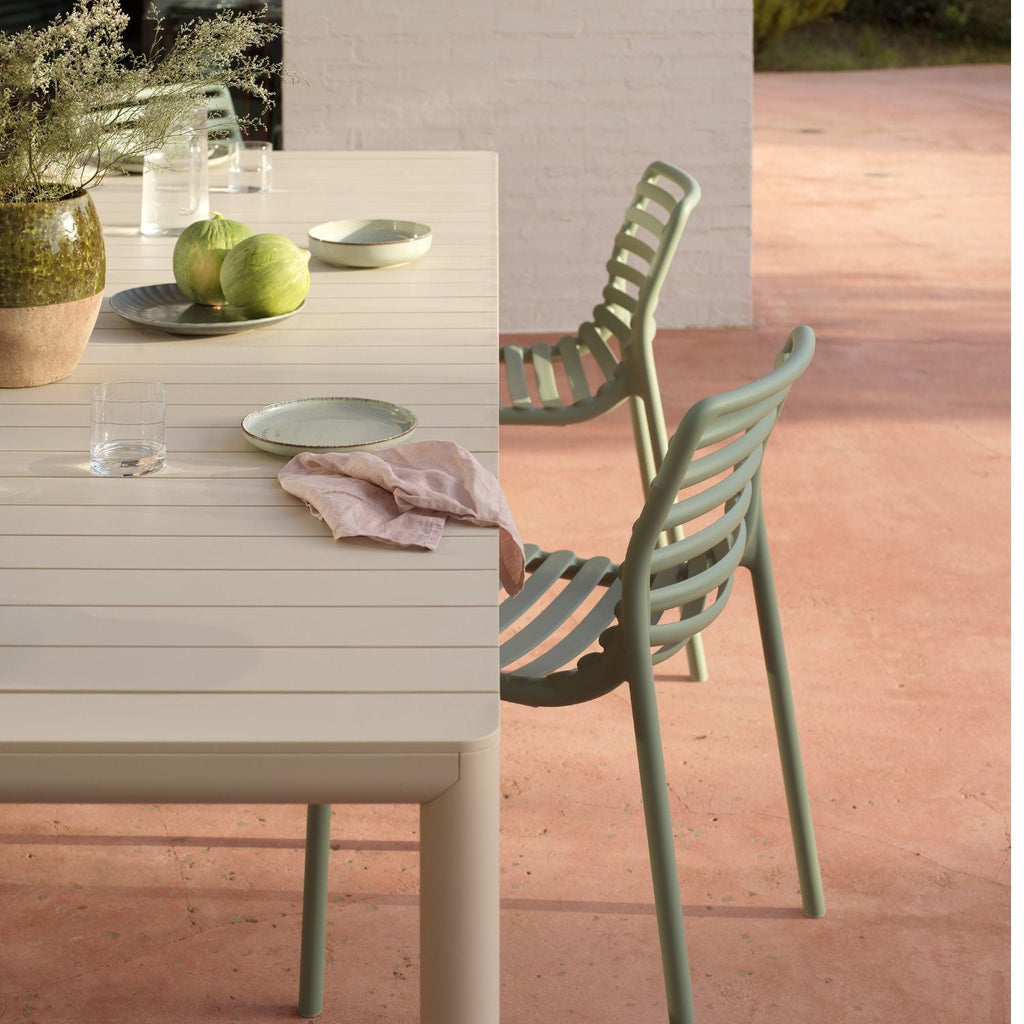
The most common place people choose timber look, because the tabletop is what everyone sees. Timber-look aluminium tops are the practical pick here; nothing to seal, and hot plates won't mark them. See all timber look dining settings.
Lounge settings
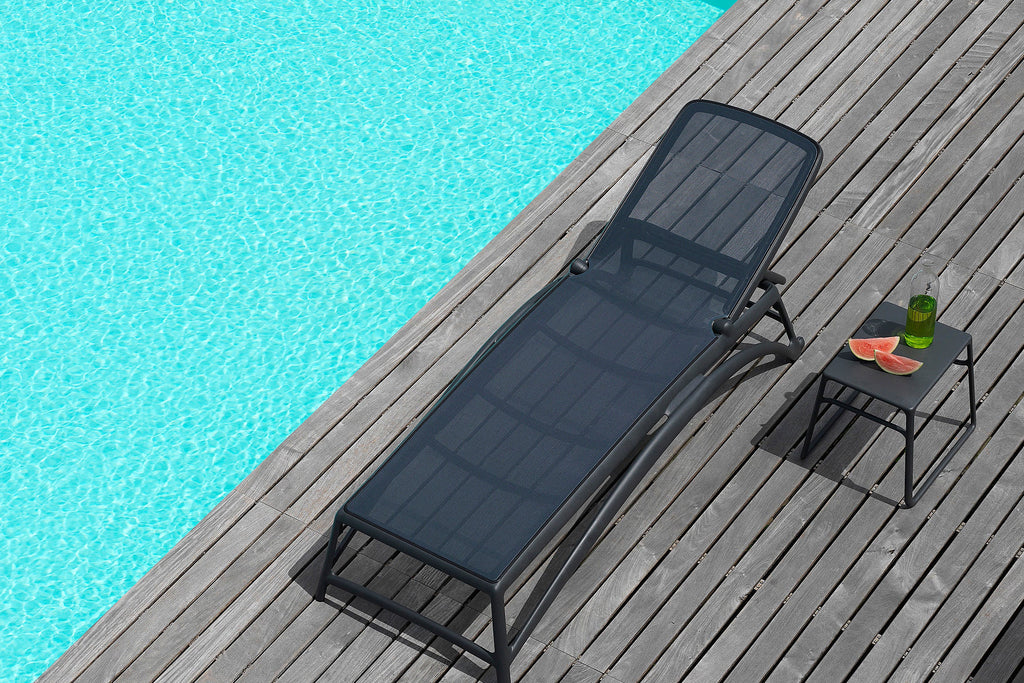
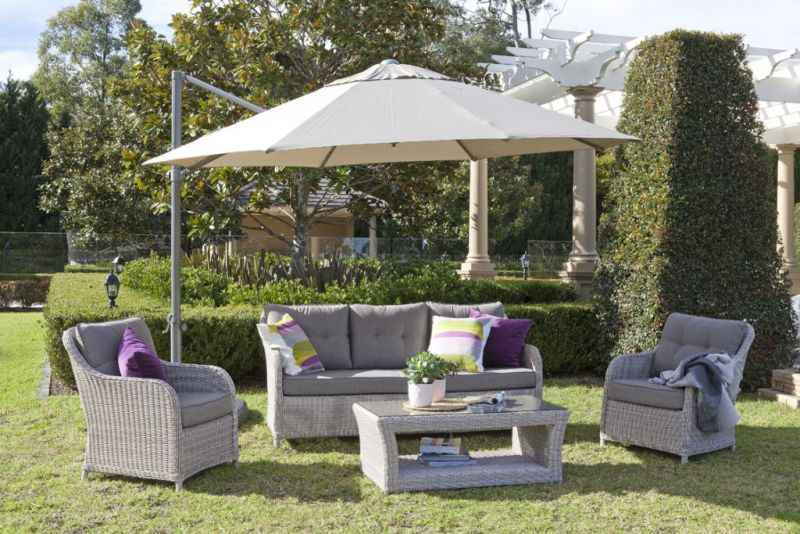
Usually a timber-look frame lounge paired with rope, mesh or aluminium slats. The timber tone softens what would otherwise read as a very modern shape.
Bar & counter
Timber-look tops on aluminium bases handle spills and afternoon sun better than solid timber in the same position.
Occasional & side tables
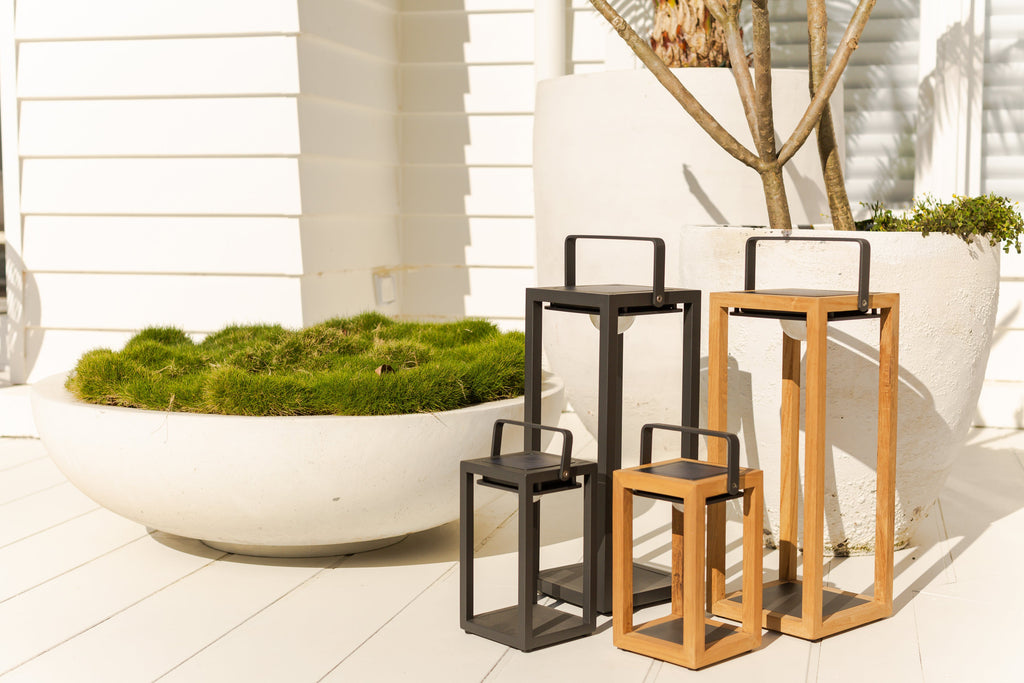
The easiest way to test the look before committing to a full setting.
Timber look outdoor furniture — common questions
Does timber-look aluminium fade in the Australian sun?
Quality powder-coat and woodgrain-transfer finishes are UV-stable and hold their tone for years. What does happen over a long time is a slight loss of gloss rather than a colour shift. Cheap imported finishes are a different story — they chalk and go patchy, usually within two or three summers. Ask about the finish process and the warranty term, not just the colour name.
How often does real timber outdoor furniture need oiling?
Once a year is enough for most Sydney and Melbourne conditions; coastal or fully exposed positions are better at twice. Skip it entirely and the timber won't fail — teak in particular is fine structurally — it just turns silver-grey. Plenty of customers prefer that look and deliberately let it happen.
Can I mix real timber and timber-look aluminium in the same space?
Yes, and it usually reads better than people expect. The trick is to keep the tones in the same family rather than trying to match them exactly — an exact match is nearly impossible, and a near-match looks like a mistake. A common combination is a timber-look aluminium dining setting with a solid timber bench or side table.
Which is better value over ten years?
Aluminium, in most cases — no oil, no sanding, no replacement slats. Timber costs more to keep but holds resale value better and can be refinished rather than replaced. If the furniture is staying with the house long-term, timber is defensible. If it's a rental or a first outdoor setting, aluminium.