





Recently viewed


An extension outdoor dining set solves the biggest problem when entertaining: accommodating varying guest numbers without sacrificing precious outdoor space. These furniture pieces can seat between 6 and 14 people, working equally well for intimate family meals and larger gatherings. Butterfly and pop-up extension mechanisms allow the table to expand with ease while maintaining a compact footprint for smaller patios and balconies. This guide explores everything you need to know about choosing the right extension outdoor dining set, covering materials and mechanisms, and showing you how to style your setting for Australian conditions.
Understanding extension outdoor dining sets
What is an extension outdoor dining set
An extension outdoor dining set combines a table with an expansion mechanism and coordinating seating. The design adapts to different gathering sizes: the set maintains a compact profile for daily use and expands when you need more surface area and seating capacity. Most accommodate between 6 and 12 guests, which makes them suitable for regular family meals and larger social occasions alike.
The biggest advantage lies in the dual functionality. The table remains at its smallest configuration during the week, preserving valuable patio or balcony space, and the extension mechanism activates to create more room when hosting arrives. You don't need a table that stays oversized all the time. This adaptability proves especially useful in Australian outdoor areas where space considerations often dictate furniture choices.
Materials like ceramic, aluminium and teak feature in these sets because they withstand sun, rain and wind exposure. The construction quality determines how smoothly the mechanism operates, and it also affects how well the set endures outdoor conditions over time.
How extension mechanisms work
Extension mechanisms operate through engineered systems that allow tabletops to separate and expand. Modern tables use synchronous rails as their foundation: when you pull one end of the tabletop, the opposite side moves in tandem, eliminating uneven extension and reducing physical effort.
The process involves unlocking the table and pulling the surface apart to reveal the extension component. You position the additional section and secure everything back together. The mechanical systems employ precision-engineered slides made from geared metal or ball bearings, creating smooth movement and supporting the table's weight while allowing effortless expansion. A single person can often manage the task.
Different mechanisms store extension leaves in varying ways. Self-storing systems keep all components within the table structure, so you never need to locate separate pieces. Removable leaf systems require you to insert additional panels when the table separates and store those pieces elsewhere when not needed.
The legs' positioning during extension affects stability. Tables where legs move with each tabletop half maintain consistent support at the ends when fully extended. Fixed-centre leg designs can leave extended edges with reduced resistance to pressure, which matters when serving heavy dishes or leaning on the table.
Butterfly vs pop-up mechanisms
Butterfly mechanisms feature a folding leaf that stores beneath the table surface. The leaf unfolds like wings when activated: you unlock the tabletop, slide the halves apart to expose the hidden leaf, then unfold the two hinged sections upward into position. The leaf pivots on pins and uses heavy-duty hinges to create a stable surface once locked. This self-storing design eliminates separate storage requirements and works well for homes where space comes at a premium.
The butterfly system's biggest advantage is convenience. Everything remains integrated within the table, so you never search for misplaced extension pieces. The trade-off is more visible join lines across the tabletop compared to other extension types, and the operation can seem fiddly until you're familiar with the sequence.
Pop-up mechanisms, coupled with side extensions, take a different approach. Side extension systems attach additional panels to the table ends: you pull out supports from beneath the main surface before placing the extra sections. These offer real simplicity and allow asymmetrical expansion, adding space to just one side when needed. The trade-off involves storing extension panels separately when not in use, and outdoors that means somewhere dry.
Draw-leaf mechanisms pull hidden leaves from underneath the main tabletop and keep them attached at all times. You pull the leaves from either end and lock them into position, allowing single-person operation within seconds. Storage concerns disappear while you maintain a cleaner surface than butterfly systems.
Choosing the right size for your space
Measuring your outdoor area
Proper measurement is the foundation of selecting an extension outdoor dining set that fits your space correctly. Start with a reliable tape measure that extends beyond standard indoor lengths, or use a laser distance measurer for larger patios. Measure each side of your outdoor area, including any irregular angles or curves, and repeat the process to confirm consistency.
Create a simple sketch reflecting your patio's shape and proportions once you've gathered measurements. Label each side with its measurement to visualise how furniture will sit within the space. Document elements like columns, built-in planters, steps and balustrades, as these influence furniture positioning.
Clearance remains the most critical measurement factor, and with an extension table you must check it in both configurations. Allow no less than 90 cm from the table edge to the nearest object or wall. This provides adequate room to pull chairs out and move freely around the dining area. Primary walkways need at least 90 cm of clearance for comfortable movement, and allocate 60 to 75 cm behind each chair for seating and standing. The set will feel cramped without this allowance, whatever the table size, and a table that fits beautifully when compact but blocks the door when extended has failed the test.
Seating capacity options (6 to 12 guests)
Outdoor extension tables seat between 6 and 12 people, with specific lengths accommodating different guest numbers:
| Table Length | Comfortable Seating | Maximum Seating | Best For |
|---|---|---|---|
| 180 to 200 cm | 6 people | 8 people | Everyday family dining |
| 220 to 240 cm | 8 people | 10 people | Regular entertaining |
| 260 to 280 cm | 10 people | 12 people | Large gatherings |
| 300 cm and over | 12 or more | 14 or more | Extended family occasions |
Some designs offer exceptional flexibility. Modular panel systems start under 60 cm in length and extend close to 3 metres when fully expanded, with each added panel contributing around 46 cm and allowing tailored setups for gatherings of 2 to 12 people. Generous extension designs can add up to 2 metres to a table's length, converting an 8-person setup into seating for 12 in seconds.
Small space solutions with extension tables
Extension tables excel in compact areas. They maintain a small footprint for daily use whilst expanding when guests arrive, and when retracted they leave room to move while still providing a practical spot for morning coffee.
Hidden extension mechanisms eliminate storage concerns, as leaves remain within the table structure rather than requiring separate storage space. This self-contained design proves especially useful for apartments and homes with limited storage.
Balcony and patio considerations
Balconies and small patios require careful size selection. Think over pairing an extension outdoor dining set with stackable or foldable chairs to boost versatility: the extra chairs stow away when not needed and keep the space uncluttered between gatherings.
Slim-width tables provide solutions for narrow spaces without sacrificing functionality. Match your table size to both typical and occasional hosting needs. Prioritise a generously sized dining area if you host frequently. Alternatively, consider two complementary smaller tables: one for everyday use in your primary outdoor area and a second stored elsewhere for larger occasions.
Materials and durability factors
Material selection determines both the longevity and the maintenance demands of the set. Each material offers distinct performance characteristics that suit different climates, exposures and aesthetic priorities.
Aluminium frames and tabletops
Aluminium stands out as a lightweight yet durable option. It weighs one-third the density of steel and maintains comparable strength. The material forms a protective oxide layer upon exposure to oxygen, providing inherent resistance to corrosion and UV damage. This natural barrier prevents rust development and colour fading, making aluminium especially suitable for coastal environments where salt air accelerates deterioration in other metals.
Powder-coated aluminium frames boost durability further and resist rust, fading and chipping even under constant rain and sunlight. The coating creates an additional protective layer and allows colour options to complement your outdoor setting. Cast aluminium offers greater weight and stability compared to extruded aluminium, though both resist moisture damage. Maintenance amounts to occasional cleaning with mild detergent and water.
Teak and timber options
Teak ranks among the most weather-resistant hardwoods, thanks to its dense grain and high natural oil content. These oils repel moisture and insects and prevent rot and decay. Well-maintained teak furniture lasts for decades, and the timber itself takes decades to reach furniture-grade maturity, which is part of why it carries the reputation it does.
Teak develops a silvery-grey patina as surface pigments fade with time. This weathering affects appearance, not structural integrity. You can restore the original honey-brown colour using teak cleaner and colour restorer with protective products. FSC-certified teak provides a responsibly sourced option for environmentally conscious buyers.
Ceramic and resin surfaces
Ceramic tabletops deliver smooth, non-porous surfaces that resist heat, stains and UV damage. The material requires minimal upkeep compared to natural stone and maintains a refined finish. Hand-finished ceramic tops remain UV-stable and stain-resistant through harsh weather, which makes ceramic a strong match for extension tables, since the leaves see less sun than the main surface and lesser materials fade unevenly.
Resin surfaces, specifically fibreglass-reinforced polypropylene resin, offer UV resistance and strong protection against atmospheric pollutants. The material is recyclable: it can be crushed and reprocessed at end of life. High-quality resin resists fading, cracking and peeling under Australian sunlight.
Weather-resistant materials for Australian conditions
Australia's intense UV exposure, high temperatures and coastal salt air need materials engineered for hard conditions. Aluminium, teak and powder-coated steel perform reliably across these environmental challenges. With an extension design, the mechanism deserves the same scrutiny as the surfaces: galvanised or stainless sliding components are what keep the table extending smoothly after years outdoors.
Material maintenance requirements
Aluminium requires simple cleaning with soapy water and an occasional check of mechanism hardware. Teak needs minimal intervention: regular brushing and optional oil application every six months maintain colour, or let it silver naturally. Ceramic surfaces clean with microfibre cloths and warm water. Resin furniture asks only for periodic washing with soap and water. Whatever the material, keep the extension rails free of grit, as a quick brush along the slides before extending preserves the smooth action.
Essential features to consider when buying
Selecting an extension outdoor dining set needs attention to specific performance features that determine long-term satisfaction. Functional elements dictate how well the furniture serves your entertaining needs beyond looks.
Extension mechanism quality and ease of use
The extension system should operate smoothly with minimal effort and allow one person to adjust the table size quickly. Quality mechanisms feature ball bearing guides or geared metal slides that create effortless movement without binding or requiring excessive force. Test the mechanism before purchasing to confirm it extends and retracts without awkward resistance or alignment issues.
Sound systems lock securely in both compact and extended positions, preventing unwanted movement during use. The table should remain level when extended, with no noticeable height difference between the main surface and extension components. Beyond functionality, look at how leaves fit with the main tabletop: minimal visible seams and consistent alignment indicate superior construction.
Frame stability and construction
A well-designed base gives the table stability in both compact and extended positions. The frame construction determines whether the table wobbles when pressure is applied at the edges or when guests lean against it. Tables with legs positioned at outer corners avoid awkward seating arrangements and provide consistent support throughout the structure.
Powder-coated and galvanised frames resist corrosion in humid conditions. Adjustable feet pads accommodate uneven pavers and decking, while non-slip rubber pads protect surfaces and boost stability.
Table weight and portability
Weight affects both stability and mobility. A full-size extension table commonly weighs 60 to 70 kg, with each extension panel adding several kilograms more. Heavier tables resist wind movement but need two people to reposition. Balance your need for stability against how often you expect to relocate the set, and remember the extended configuration is where stability gets tested.
Warranty and build quality
A confident warranty signals build quality, but read the structure of the coverage rather than the headline. Frame coverage typically runs longest, mechanism and finish coverage shorter, and fabrics shorter again. Before committing, confirm the coverage explicitly applies to outdoor exposure, check whether the extension mechanism is covered as a component, and keep the documentation. A maker willing to stand behind the moving parts, not just the frame, is telling you something about the engineering.
Upkeep and longevity considerations
The ownership experience differs more by material than buyers expect. Aluminium sets ask for almost nothing beyond washing, making them the lowest-effort path to decades of service. Timber rewards a maintenance rhythm: oil on schedule and it keeps its colour, skip it and it silvers gracefully, but either way the mechanism hardware still wants an annual check. Ceramic tops shrug off the sun that gradually tires lesser surfaces. Whichever direction you take, the extension mechanism is the component that determines the set's working life, so favour designs whose moving parts are accessible, stainless or galvanised, and proven rather than novel.
Styling your extension outdoor dining set
A visually appealing outdoor space requires more than just selecting the table. The surrounding elements determine whether your patio feels intentional or haphazard.
Matching chairs and seating options
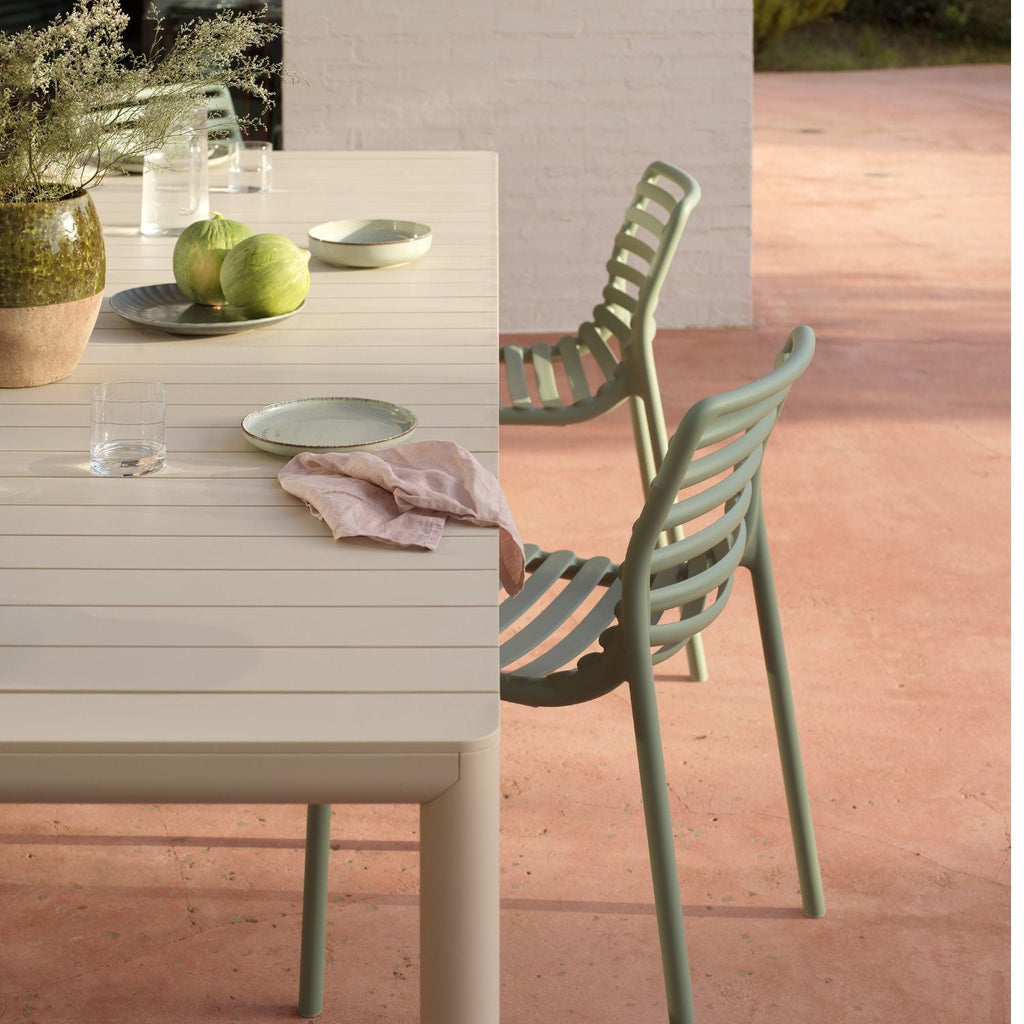
Your dining chairs need not match the table exactly but should share visual relationships through form or material. Think about having at least two seats in the same colour as your table to establish balance. Benches with cushions provide dual functionality, serving as both dining and casual seating. Stackable or foldable chairs boost versatility, especially when the table expands and the everyday chairs suddenly need company.
Colour and finish coordination
The 60-30-10 design rule works well when selecting colours: allocate 60 percent to dominant shades (exterior walls, decking), 30 percent to secondary colours (chairs, cushions), and 10 percent to accent pieces (planters, lanterns). Choose your table colour first, as it anchors the whole setting. Neutral furniture palettes allow flexibility through easily changeable accents like cushions and table linens.
Creating a cohesive outdoor dining area
Cohesion emerges from consistency in materials and proportions rather than identical pieces. Visual rhythm comes from repeating finishes across furniture categories. Too many textures create visual clutter, while a few deliberately chosen materials produce settled, considered spaces.
Accessories and complementary furniture
Cushions lift comfort levels and introduce colour depth. Outdoor rugs define the dining zone and add texture underfoot, and choosing a rug sized for the extended table means the setting still looks grounded on hosting nights. Planters frame the space and connect it to the garden beyond.
Choosing with confidence
An extension outdoor dining set expands your entertaining capability without permanently sacrificing outdoor space. These versatile pieces adapt from intimate family meals to larger gatherings, making them one of the most practical formats in Australian outdoor living.
Prioritise materials suited to your climate as you select your set. Look for extension mechanisms you can operate single-handed, corrosion-resistant moving parts, and construction quality the maker is willing to stand behind. Above all, ensure your measurements accommodate both the compact and extended configurations with comfort.
Choose on those terms, and the set will serve your home for decades, adapting naturally as your entertaining needs evolve.
FAQs
Q1. How many people can an extension outdoor dining set typically accommodate? Most extension outdoor dining sets comfortably seat between 6 and 12 people, with some larger designs extending to accommodate up to 14 guests. The capacity depends on the extended length: tables of 180 to 200 cm seat 6 to 8 people, whilst tables of 300 cm and over can host 12 or more.
Q2. What's the difference between butterfly and pop-up extension mechanisms? Butterfly mechanisms feature a folding leaf stored beneath the table that unfolds upward like wings when the table is extended, keeping everything self-contained. Pop-up mechanisms with side extensions require separate panels to be attached to the table ends, offering simpler operation but requiring dry storage space for the additional pieces when not in use.
Q3. Which materials are best for Australian outdoor conditions? Aluminium, teak and powder-coated steel perform well in Australian conditions. Aluminium naturally resists corrosion and UV damage whilst remaining lightweight. Teak offers superior weather resistance thanks to its natural oils and lasts for decades with proper care. Ceramic and resin surfaces also provide strong UV stability and stain resistance.
Q4. How much clearance space do I need around an extension outdoor dining table? Allow at least 90 cm from the table edge to the nearest wall or object to ensure comfortable movement. Behind each chair, allocate 60 to 75 cm for seating and standing, and maintain 90 cm for primary walkways. Check these measurements against both the compact and the fully extended configurations before buying.
Q5. What should I look for in the warranty on an extension outdoor dining set? Look at the structure of the coverage rather than the headline figure. Confirm it explicitly applies to outdoor exposure, check that the extension mechanism is covered as a component alongside the frame and finish, and keep the documentation. Coverage that includes the moving parts is the strongest signal of confidence in the engineering.