



Recently viewed


Bar Stools Brisbane: A Practical Outdoor Buying Guide
Getting the height wrong is the most common mistake Brisbane buyers make, and it is one of the easiest to avoid. Beyond that, the decisions around materials, features and where to shop are generally straightforward once you know what to look for. Whether you are after aluminium bar stools for an outdoor kitchen, wicker designs for a covered entertaining area, or teak stools for a poolside bar, this guide covers what actually matters before you buy.
Getting the Height Right: Counter vs Bar Height
Bar Height Stools (73–81 cm)
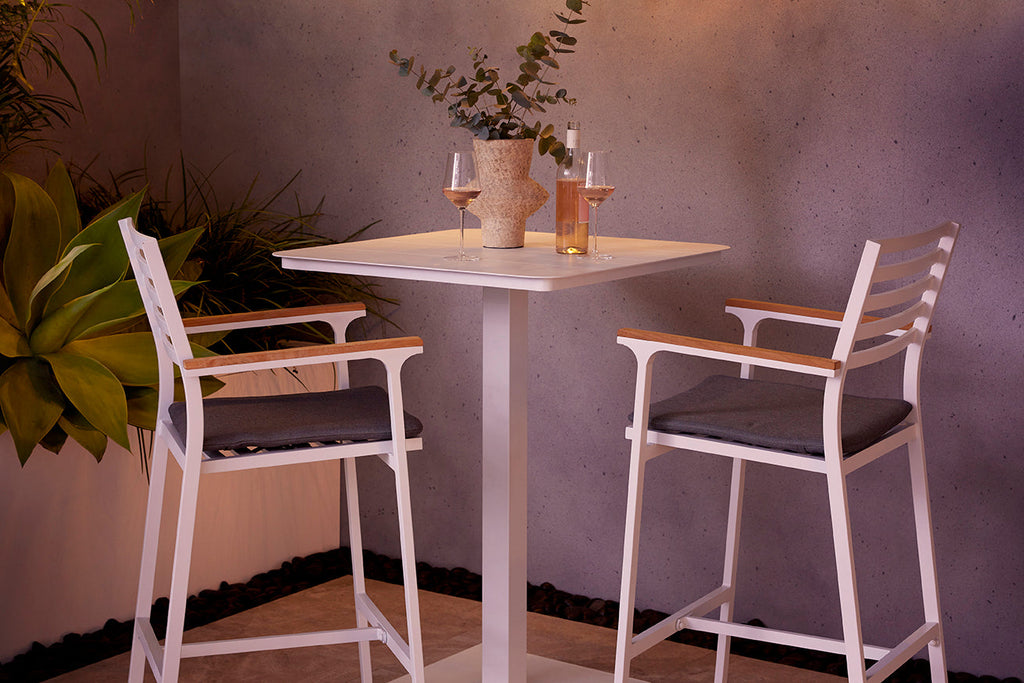
Bar height stools have seat heights between 73 and 81 cm. They are designed for outdoor bar tables and raised counters that measure 102 to 107 cm from ground to underside — the kind of surface you would usually find in a dedicated outdoor bar or entertaining area rather than a standard outdoor kitchen bench.
The elevated seating position creates the more perched feel associated with traditional bar settings. It works well for outdoor standing counters where you want guests to stay connected to the space and maintain clear sightlines across the deck or patio. A 105 cm outdoor bar table, for example, usually pairs well with stools around 75 to 80 cm in seat height.
Counter Height Stools (60–68 cm)
Counter height stools range from 60 to 68 cm and suit standard outdoor kitchen benches and island counters, which typically measure around 90 cm from ground to benchtop. These are the stools most Brisbane households need for outdoor kitchen islands and alfresco dining bars.
The lower profile keeps seating comfortable for adults and more accessible for children. In open-plan indoor-outdoor layouts, counter height also helps preserve sightlines and keeps conversation moving between seated guests and whoever is working at the barbecue or outdoor kitchen.
How to Measure Correctly
Measure from the ground to the underside of your outdoor counter or bar table, not the top surface. This is the measurement that determines which stool height you need. Many buyers measure to the top and end up with stools that sit too low.
The basic rule is simple: allow 25 to 30 cm of clearance between the top of the stool seat and the underside of your counter. That gap gives you comfortable legroom without awkward positioning.
A few other things are worth checking:
- Footrest height — it should support a comfortable seated posture
- Stone or concrete counters — measure both inner and outer dimensions, as a drop lip can affect usable height
- Uneven outdoor surfaces — check that stool legs sit level on your decking, pavers or tiles; adjustable feet can help on slightly uneven ground
Outdoor Bar Stool Styles Available in Brisbane
Powder-Coated Aluminium Bar Stools
Powder-coated aluminium is one of the most practical frame materials for outdoor bar stools in Brisbane conditions. It resists rust and corrosion naturally, handles sustained UV exposure without degrading, and requires very little maintenance — typically just a hose-down and occasional wipe with mild soapy water.
Aluminium bar stools are lighter than steel or hardwood equivalents, making them easy to reposition around an outdoor bar, pull up to a different table, or move under cover ahead of severe weather. The powder coating provides an additional barrier against moisture, salt air and surface scratching — particularly relevant for Brisbane households near the coast or in areas with high humidity.
Contemporary aluminium designs often feature clean lines and slim profiles that suit modern outdoor entertaining areas. The material also pairs well with other outdoor furniture — aluminium bar stools alongside a teak bar table or a ceramic-top outdoor kitchen island can create a considered setting without everything needing to match.
Teak Bar Stools
Teak is a dense hardwood with natural oils that provide inherent resistance to moisture, insects and decay. It performs well in Brisbane's outdoor conditions — heat, humidity, UV exposure and seasonal rain — without requiring chemical treatment. Over time, teak develops a silver-grey patina when left untreated, or it can be maintained with periodic teak oil application to preserve the original warmer colour.
Teak bar stools suit outdoor spaces where a natural timber look is preferred. They are heavier than aluminium equivalents, which can be an advantage for stability on outdoor surfaces but makes them less convenient to move frequently. Teak works particularly well alongside other timber outdoor furniture or as a contrast material against stone and concrete outdoor kitchen surfaces.
Wicker Bar Stools
Wicker bar stools suit Brisbane's preference for relaxed, coastal-influenced outdoor settings. Resin wicker woven over a powder-coated aluminium frame combines a natural woven texture with genuine weather-resistant performance. UV-stabilised resin wicker resists fading, cracking and peeling under Brisbane's sustained sun exposure.
This combination is hose-clean, quick to dry, and requires minimal ongoing maintenance compared to natural wicker, which degrades rapidly when left outdoors. Wicker bar stools add warmth and textural interest to an outdoor bar or entertaining area without the maintenance burden that natural fibres carry in humid conditions.
Designs with woven backs and seats work well in covered entertaining areas and alongside other outdoor lounge and dining furniture. The woven texture tends to soften the look of an outdoor space, which can be useful alongside harder materials like stone, concrete or aluminium.
Rope-Detail Bar Stools
Outdoor rope-detail bar stools feature woven outdoor rope over a metal frame — typically powder-coated aluminium. The result is a lighter visual profile with a distinct textured appearance. These designs suit contemporary outdoor entertaining areas and work particularly well on smaller decks and balconies where a lighter-looking stool keeps the space feeling open.
As with wicker, the practical focus should be on UV stabilisation, weave quality and frame construction rather than appearance alone.
Features That Affect Daily Outdoor Comfort
Swivel vs Fixed Base
Swivel stools rotate, which means you do not have to reposition the whole stool when turning to join a conversation or look across the outdoor area. This also reduces friction when getting on and off, which can be useful when stools sit close together around an outdoor bar.
Fixed base stools offer greater stability because there are no moving parts. Families with children or older household members often prefer this. Fixed bases also tend to perform more reliably over time outdoors, where moving parts can be affected by moisture, dust and temperature cycling.
The trade-off is straightforward: swivel stools offer flexibility, while fixed stools are usually simpler and more stable for long-term outdoor use. If choosing a swivel design, check that the mechanism is rated for outdoor conditions and corrosion-resistant.
Backrest vs Backless
The decision largely depends on how long people usually sit:
- Short stays — backless stools work well and tuck neatly under the outdoor counter when not in use
- Longer periods — a backrest makes a noticeable difference to lower-back comfort during extended outdoor entertaining
- High backrests — more support for extended use
- Low backrests — cleaner visual profile with lighter support
Backless designs suit busy outdoor entertaining areas where people sit briefly and move often. They keep sightlines cleaner across the outdoor space, but they are usually less comfortable over longer periods.
Footrests
A well-placed footrest supports a more comfortable posture and helps reduce pressure on the thighs. This matters most on taller bar stools where feet would otherwise hang without support. For outdoor use, check that the footrest is built from the same weather-resistant material as the frame — powder-coated aluminium or treated hardwood — and that it is welded or securely fixed.
Cushion Options
Some outdoor bar stools come with seat cushions; others are designed to be used without. For stools with cushions, look for outdoor-rated construction: cushions with a waterproof inner to protect the core, water-repellent outer fabric, and UV-stabilised materials that resist fading under Brisbane's sustained sun.
Removable, washable cushion covers are worth prioritising for bar stools. Seats used during outdoor meals and entertaining tend to need cleaning more frequently than lounge cushions. Cushions without a waterproof inner can hold moisture and develop mould — particularly in Brisbane's humid conditions.
Care and Maintenance
Routine Cleaning
For powder-coated aluminium frames, a regular hose-down removes dust, pollen, leaves and general outdoor debris. Every few months, wipe the frame with warm water and a mild pH-neutral soap using a soft cloth. Rinse thoroughly and allow the frame to dry. Avoid abrasive cleaners, scouring pads and high-pressure washing, which can damage the powder-coat finish.
Resin wicker cleans well with a garden hose and soft brush. Pay attention to debris caught in the weave — particularly in joins and corners where dirt can accumulate.
Teak benefits from periodic cleaning with a soft brush and soapy water. Apply teak oil if you want to maintain the original colour, or leave the timber to weather naturally.
Cushion Care
If your outdoor bar stools have seat cushions, brush or vacuum the cushion surface regularly to remove loose debris. Blot spills promptly rather than rubbing. Wash removable covers in line with the manufacturer's care instructions. Cushions with a waterproof inner are easier to maintain over time because the core stays protected even when the outer cover gets wet.
Allow cushions to dry fully before stacking or storing. Trapping moisture inside covers or bins leads to mould and odour — particularly relevant in Brisbane's humid climate.
Weather Protection
Fitted, breathable covers are worth using when outdoor bar stools will sit unused for extended periods. Covers should fit snugly without trapping moisture underneath. Use them during wetter stretches, overnight when storms are expected, and whenever the stools will not be used for a while.
Shade — from a pergola, awning or umbrella — reduces UV load and extends the useful life of both frame and weave finishes. Outdoor bar stools in full, unshaded afternoon sun will weather faster than those under a covered structure. In Brisbane conditions, where UV intensity is sustained through the warmer months, shade makes a practical difference to material longevity.
FAQs
How do I calculate the right stool height for my outdoor counter?
Measure from the ground to the underside of your outdoor counter or bar table. Subtract 25 to 30 cm — that is your ideal seat height. The gap between the seat top and the counter underside should fall within that range for comfortable legroom.
What frame material is most practical for outdoor bar stools in Brisbane?
Powder-coated aluminium is one of the most practical options. It resists rust and corrosion naturally, handles UV and humidity well, and requires minimal maintenance. Teak is a strong alternative for buyers who prefer timber and are willing to maintain it.
How many outdoor bar stools fit along my counter?
Measure your total usable counter or bar table length and divide by 55 cm for comfortable spacing. Round down. Backless stools can work at 50 cm spacing, while stools with backs or armrests usually need 55 to 60 cm or more.
What should I look for in outdoor bar stool cushions?
Look for cushions with a waterproof inner to protect the core, water-repellent outer fabric, and UV-stabilised materials. Removable, washable covers are worth prioritising for seats that will be used during outdoor meals and entertaining.
How do I maintain outdoor bar stools in Brisbane conditions?
Hose down aluminium frames regularly and wipe with mild soapy water. Clean wicker with a soft brush and soapy water. Use fitted covers during extended non-use and store cushions dry. Shade helps extend the life of both frame and weave finishes, especially through Brisbane's sustained UV exposure.