




Recently viewed


How to Choose the Right Chaise Lounge Chair for Your Home
A chaise lounge chair is one of those pieces that can anchor a room well — or sit awkwardly in the corner if you choose the wrong one. The style options range from sleek modular designs to more traditional single chaises with curved legs, and the decisions around material, size and features matter more than most people realise before buying. Here's a practical breakdown of what to consider before you commit.
Chaise Lounge Chair Styles: Which Type Suits Your Space
Single Chaise Lounge Chair
The standalone single chaise is the most traditional form — an accent piece that works well in main bedrooms, reading nooks and formal sitting rooms. Deep button tufting and curved legs are common in more classic designs.
Armrest configurations vary more than you'd expect:
- Armless — backrest at one end only; versatile placement, works well against walls
- Victorian style — one armrest that extends through the backrest and reaches halfway down the lounge
- Two armrests — support on both sides; suits those who prefer lying down
- Recamier (double-ended) — two raised ends, no backrest; a distinctive option depending on where you position it
Double Chaise Lounge Chair
A double chaise has two chaise sections, one at each end of the sofa. It's a generous configuration that suits families and couples who want more room to sit comfortably. The symmetry works particularly well in larger rooms where the piece can hold its own without crowding the space.
Curved Chaise Lounge Chair
Curved designs soften harder edges and create a natural focal point through their shape. They can work equally well as compact pieces in apartments or as larger statement furniture in more spacious homes. A barrel-backed curved chaise can also provide a more supported, enveloping feel.
Modular and Sectional Options
Modular chaise options offer the most flexibility. As one component within a larger modular sofa system, you can position the chaise on either side, use it on its own, or combine it with other elements to create custom configurations. Reversible designs suit renters or anyone who rearranges their living space regularly.
Corner chaise configurations help define living zones in open-plan layouts and create natural gathering points for families. Some designs include built-in consoles with storage and charging pads — practical additions that do not change the overall look too heavily.
The integrated chaise sofa — essentially an L-shaped lounge — combines a traditional sofa with a chaise extension at one end. It remains a popular choice for contemporary family living because it is versatile for daily use.
Comfort and Functionality: What's Inside Matters
Cushioning and Support
High-resilience foam contours to your body and tends to hold its shape better over time than standard foam. For stronger support, look for high-density foam or a pocket spring base with a foam overlay — these usually provide a more structured seat and help reduce the over-soft sink-in feel that can affect comfort.
Some chaise lounge chairs use a support system that combines pocket springs, tensile webbing and non-sag springs. This type of construction can help deliver more balanced support across the seat surface rather than concentrating pressure in one area.
Lumbar support makes a real difference for extended sitting. Some designs include built-in lumbar shaping; others work better with a supportive lumbar pillow. Seat depth is also worth checking — around 50 to 55 cm often allows your feet to rest flat on the floor while keeping your back supported.
Armrests and Back Height
Square, upright armrests give your upper body something to lean into, which can help relieve pressure from the lower back and promote a straighter seated posture. Higher arms suit reading or device use; lower profiles work better for those who prefer lying sideways.
Adjustable headrests are worth considering if neck or upper-back support matters to you. The more useful designs allow you to fine-tune the position rather than forcing one fixed angle.
Storage
Hidden storage can turn a chaise lounge from simple seating into something more practical. Gas-lift seat designs can reveal a full storage compartment underneath, which is useful for throws, cushions and blankets.
Adjustable Recline and Mobility
Backrest adjustability broadens how you use the piece across different activities. Some models offer multiple backrest positions ranging from upright to flatter lounging angles.
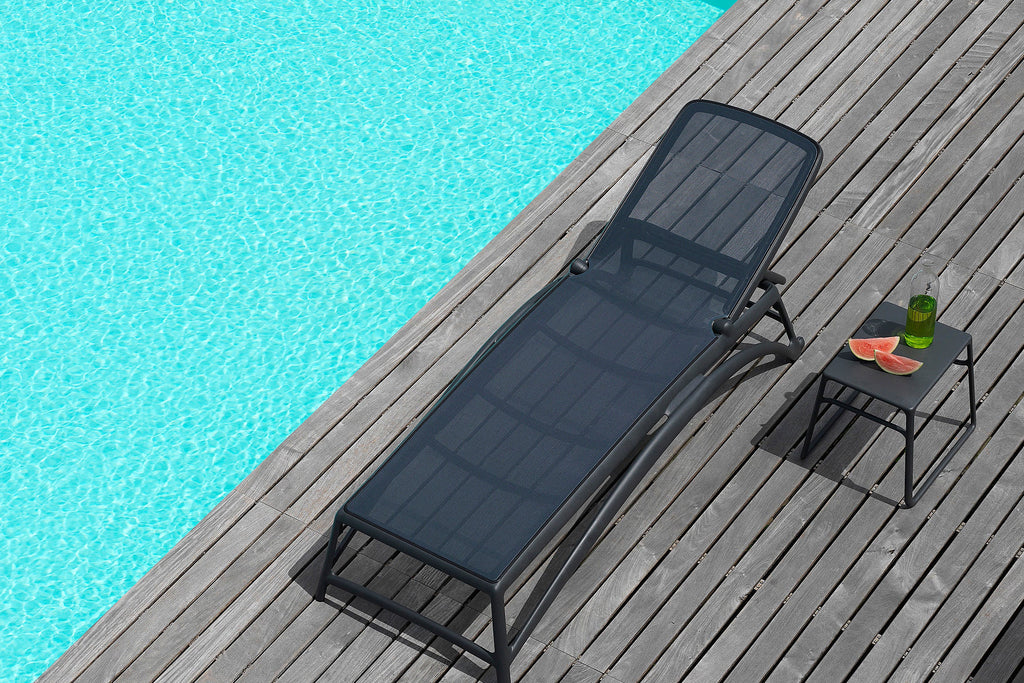
For outdoor models, wheels can make repositioning easier between a patio, poolside area or deck. More open woven or mesh-style constructions can also allow better airflow and easier drying after cleaning or light weather exposure.
Materials and Upholstery
Leather
Leather adds a more refined focal point to living rooms and bedrooms. Natural leather tends to repel dust and dander better than many fabric options, and many spills can be cleaned up with a damp cloth if handled promptly. The material can also develop character over time.
The trade-offs are real, though. Leather can scratch easily and show marks clearly. Pets with claws or young children can leave visible damage. Spills also need prompt attention, and periodic conditioning helps maintain the material.
Faux leather — made from polyurethane, vinyl or PVC-based materials — offers a similar look with easier wipe-down maintenance. One thing to watch is prolonged direct sun exposure, which can cause some faux leather surfaces to crack or peel over time.
Fabric Options
Upholstery textiles range from natural-fibre blends and linen to wool, cotton and synthetics. The range of available colours and finishes is broad, including options that are easier to manage in homes with children or pets.
Microfibre is a densely woven synthetic with a suede-like appearance. It generally handles water, fading and pet claws better than many looser fabrics, which makes it a practical choice for busier households.
Measuring Your Space and Getting Placement Right
Measure Everything — Including the Delivery Route
Accurate measurements help prevent avoidable mistakes. Start with room dimensions, then measure doorways, hallways and any tighter corners along the delivery path. A useful trick: use masking tape on the floor to mark out the chaise's footprint before buying. It takes a few minutes and makes the scale easier to judge.
Left-Hand Facing vs Right-Hand Facing
This catches a lot of buyers. Stand in your room facing the spot where the chaise will sit. If you want the armrest on your left as you look at it, you need a left-hand facing (LHF) chaise. If you want it on the right, choose right-hand facing (RHF). Also consider entryways and main traffic paths — you do not want the chaise arm blocking natural movement through the room.
Layout and Positioning
- Corner placement works well in compact spaces; it makes efficient use of floor area while helping the room feel open
- Away from the wall allows airflow and easier cleaning access
- Beneath a window keeps sightlines open and natural light unobstructed
- Longer side facing focal points — TV, fireplace or wall art — works well for media rooms; leave adequate space in front of the screen
- L-shape arrangement with a sofa creates a more connected, conversational layout
Seat height typically sits around 45 cm and affects how easily you get on and off. Leg height also affects the visual weight of the piece. Both measurements should work with the other seating in the room so the proportions feel balanced.
FAQs
What size chaise lounge works best for a living room?
It depends on your room dimensions and layout. Measure carefully — including doorways and hallways along the delivery route — and use masking tape on the floor to mark out the footprint before buying. Maintain clear walkways around the piece. In larger living spaces, leave enough room in front of focal points like TVs or fireplaces so the layout does not feel cramped.
How do I know if I need a left-hand or right-hand facing chaise?
Stand facing the spot where the chaise will sit. If you want the armrest on your left as you look at it, choose left-hand facing (LHF). If you prefer it on the right, select right-hand facing (RHF). Factor in entryways and traffic paths so the arm does not obstruct natural movement through the room.
What features matter most for comfort?
High-density foam or a pocket spring base with foam overlay usually provides stronger support and shape retention. Adjustable headrests and multiple backrest positions can help you tailor the chaise to different activities. Square, upright armrests can also improve seated support. A seat depth of 50 to 55 cm often allows your feet to rest flat while keeping your back supported.
How long should a quality chaise lounge chair last?
That depends on the frame, cushion construction, upholstery quality and how the chair is used. A better guide than any fixed lifespan claim is to assess the frame material, the cushion support system, the fabric durability rating and the level of maintenance the piece will realistically receive.