




Recently viewed


How to Choose the Right Outdoor Garden Umbrella for Your Space
Choosing the right outdoor garden umbrella can feel overwhelming with so many options on the market. A 270 to 300 cm umbrella suits most uses, comfortably covering a table for four while remaining easy to move around. A good garden umbrella should include a tilt mechanism that allows you to pivot the entire head while open, keeping you shaded as sunlight moves. This guide walks you through understanding your space requirements, learning about umbrella types and evaluating key features. You will also learn to select the right fabric and stand while maintaining your outdoor garden umbrella across the seasons.
Understanding Your Space Requirements
Accurate measurements determine whether your outdoor garden umbrella provides comfortable shade or awkward gaps. Pull out your dining chairs before measuring. You need to account for shade when seats are occupied, not the table itself. Your umbrella's canopy should extend about 60 cm past a table's edge or beyond your desired coverage area. This guideline accounts for the sun's angle as it moves throughout the day and prevents those frustrating moments when half your guests squint while the other half enjoys full coverage.
Measuring your outdoor area
Standard furniture arrangements require straightforward measurements. Measure the diameter or the length of one side for round or square tables. Rectangular or oval tables need both length and width measurements, with the longest dimension being most critical when applying the 60 cm overhang rule. Simple seating groups follow a similar approach: imagine a rectangle drawn on the ground covering all pieces, then measure its length and width.
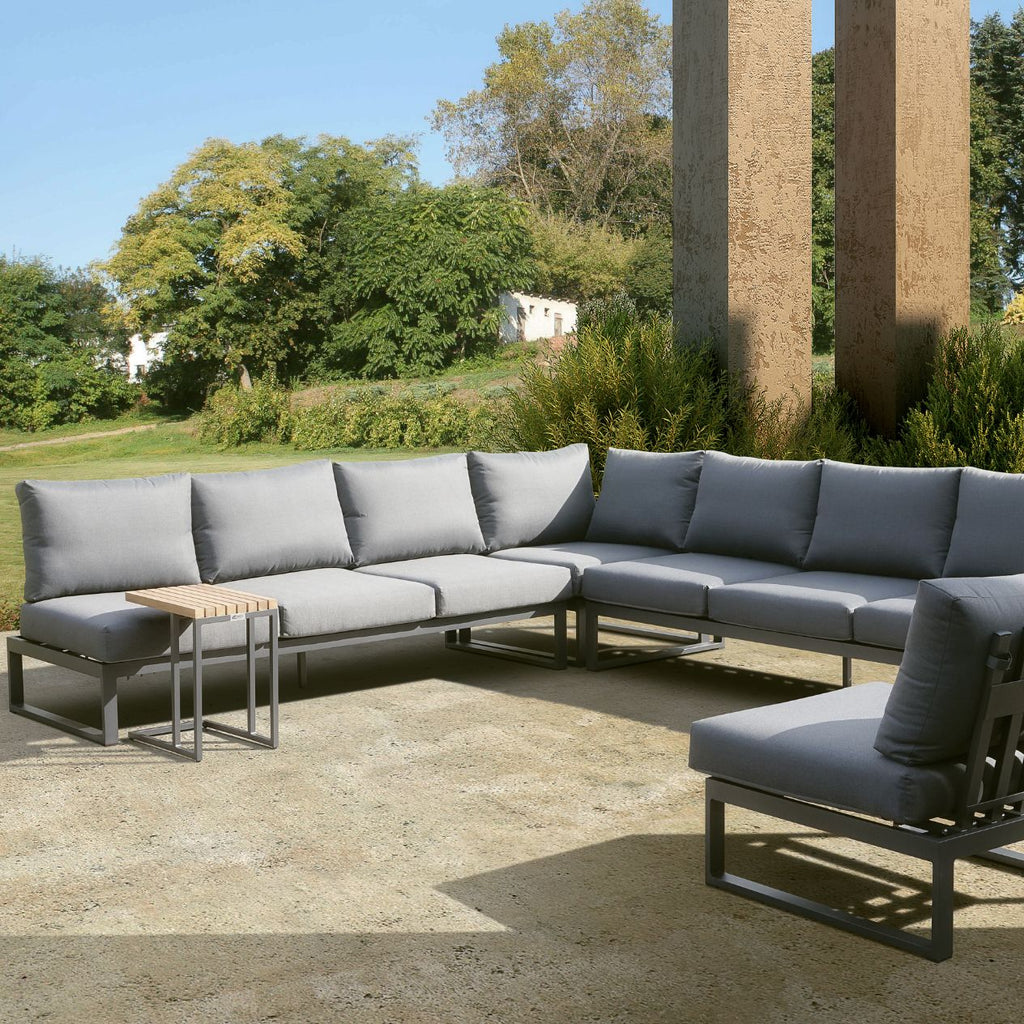
Complex layouts demand a different strategy. L-shaped or U-shaped sectionals present unique shading challenges where a 460 cm twin rectangular umbrella can stretch across long dimensions from a single central base. Outline only the primary use zone where people actually sit using string or chalk for irregular spaces with curves or multiple angles. Measure the longest and widest points of this custom shape to guide your size selection.
Standard patio umbrella sizes
Small garden umbrellas between 180 and 230 cm work best for compact spaces like balconies or café-style tables meant for two. A 180 cm canopy provides up to 3 m² of coverage and pairs well with bistro sets and tables up to 76 cm in diameter. These compact options require at least a 15 kg base for stability.
Medium garden umbrellas spanning 240 to 270 cm suit standard patio tables seating four to six people. A 240 cm umbrella covers about 5 m² and handles tables up to 120 cm in diameter. The 270 cm size remains the most popular choice and provides around 6 m² of shade for tables up to 135 cm. Both sizes need bases between 20 and 30 kg depending on specific diameter.
Large outdoor garden umbrellas from 300 to 340 cm accommodate bigger gatherings. A 300 cm canopy delivers roughly 7 m² of coverage for tables up to 155 cm and requires a base between 30 and 35 kg. A 340 cm umbrella provides about 9 m² of shade and pairs with tables up to 210 cm for groups of six to eight people.
Large outdoor garden umbrella considerations
Extra-large umbrellas of 370 cm or more provide maximum coverage for gatherings and oversized outdoor furniture sets. A 400 cm round canopy creates about 12 m² of shade and suits ten-plus person dining sets or large sectionals. Square configurations offer similar benefits: a 300 cm square umbrella delivers 9 m² for tables up to 200 cm in diameter.
Wind becomes a major factor at these sizes. Large outdoor garden umbrellas require much heavier anchoring, with fillable bases needing 180 kg or permanent concrete anchors. The frame construction must be very solid at this scale, which is why manufacturers use only heavy-duty aluminium poles for these sizes.
Coverage area calculations
Shape affects coverage differently. A 240 cm square garden umbrella and a 270 cm round garden umbrella offer nearly identical coverage areas at about 6 m². Round tables need umbrellas that surpass the table's diameter by at least 120 cm total and provide 60 cm of shade around the perimeter. A 120 cm square table pairs easily with a 240 cm square umbrella. Rectangular tables call for more tailored fits: a 180 × 120 cm table matches well with a 300 × 240 cm umbrella and ensures the umbrella extends past the longest sides by 60 cm.
Centre your garden umbrella over the table to distribute shade evenly. The canopy should sit 210 cm or higher from the ground to its underside and allow guests to sit and stand comfortably. Leave enough space around the table so chairs can be pulled out without bumping into the base or pole.
Types of Outdoor Garden Umbrellas
Two main umbrella styles dominate the outdoor furniture market: market umbrellas and cantilever umbrellas. Each offers distinct benefits for different space configurations.
Market umbrellas
Market umbrellas feature a traditional centre pole that runs straight up through the middle of the canopy. This classic design resembles a larger ground-mounted version of a handheld umbrella, with the pole positioned beneath the canopy dome. The pole slides through a hole in your outdoor table. This makes setup simple and keeps the garden umbrella stable because weight distributes around the centre support.
The design takes its name from the shade structures merchants originally used at open-air market stalls. Residential versions became popular as homeowners sought cooler backyard spaces and secured these umbrellas either by freestanding bases or by mounting them through the parasol hole of outdoor dining tables.
Market umbrellas pair well with square or round tables and take up minimal floor space. The canopy comes in round or octagonal shapes. Pole materials range from timber for a classic feel to aluminium and steel, which are lightweight and durable.
These umbrellas handle wind better than other types because of their centred support. The pole distributes wind force evenly. Many models include vented canopies that let gusts pass through rather than catching them like a sail. This makes them the practical choice for outdoor dining settings with standard tables.
Cantilever umbrellas
Cantilever umbrellas mount from the side to provide shade without any obstruction underneath. The pole positions off to one side rather than in the centre and creates an inverted L-shaped support structure. This design suspends the canopy over your seating area while the base sits against a wall or in a corner.
The offset pole gives you complete freedom in furniture placement. You can position sofas, loungers, chaise lounges, or irregularly shaped seating groups without working around a centre pole. This is valuable for poolside settings where the side post can be mounted outside the pool to shade part of the water.
Many cantilever models rotate 360 degrees and tilt in multiple directions. This gives you control over shade placement throughout the day. A cantilever garden umbrella with a 360-degree rotating base provides shade to up to four times as much space as a market umbrella of comparable size. The canopy's vertical and horizontal tilt functionality allows you to provide shade anywhere within that radius as the sun moves overhead.
The offset arm mechanism requires stronger engineering. Rotation and tilt features add complexity, and heavy-duty bases are needed to counterbalance the offset weight. Larger canopy sizes are common with cantilever designs. Most quality cantilever umbrellas offer wind ratings of 48 to 56 km/h for residential use, with commercial-grade options handling even stronger conditions.
The offset design creates leverage that can strain the arm mechanism in windy conditions. Quality cantilever umbrellas address this with reinforced joints and weighted bases. They use aluminium or steel frames. Most manufacturers recommend closing cantilever umbrellas when winds exceed 32 to 40 km/h.
Offset umbrellas
Offset umbrellas are another name for cantilever umbrellas. Industry professionals use these terms interchangeably, along with ""side post umbrellas"". All three names describe the same design where the support pole locates to the side rather than in the centre of the canopy.
Table umbrellas
Table umbrellas refer to market umbrellas designed to fit through the centre hole of an outdoor dining table. The pole slides through the table opening and positions the canopy overhead to shade seated diners. This mounting method keeps the garden umbrella stable without requiring a separate freestanding base, though you still need to secure the pole beneath the table with an appropriate stand.
Essential Features to Consider
Functional features separate simple shade solutions from good outdoor garden umbrellas that perform through multiple seasons. Four specific mechanisms affect how you interact with your umbrella daily and how well it withstands outdoor conditions.
Tilt mechanisms to track sun
Tilting functions allow you to angle the umbrella shade and control the shaded area as sunlight shifts throughout the day. Without this capability, you would need to reposition your setup or accept partial sun exposure during morning and evening hours.
Push-button tilt requires pushing a button high on the pole to tilt the umbrella head to one side. This mechanism remains simple and straightforward. The button releases a joint near the top of the pole and allows the canopy to angle past vertical in a specific direction. But shorter people may need to stand on a chair to reach the push button near the top of the pole.
Auto-crank tilt moves the head to the side with another rotation of the same crank you use to open the garden umbrella. After the umbrella extends, continuing to crank causes the canopy to tilt. This feature proves easy and fast, especially for shorter users. The trade-off comes in directional limitation, as the canopy can tilt to one direction and is gravity-activated. You will need to spin the pole itself to adjust shade placement.
Collar tilt mechanisms operate by twisting a grip collar positioned on the support pole just above table height. This system provides smooth adjustment and a full range of tilt angles. The activation point sits within easy reach, and you can control both tilt and positioning with the same collar. Some models rotate ribs clockwise to tilt the canopy, then reverse the motion to return the umbrella upright.
Crank vs push-button operation
Crank-lifting systems that open umbrellas by hand-turning a crank on the pole are easier to use than pulley lifts. With pulley systems, you must pull a string and insert a metal pin into a hole to hold the umbrella in position. The crank does the work of raising and lowering the canopy, and after extension, the umbrella locks into place.
Crank mechanisms offer several advantages. They are user-friendly and make it easy for anyone to operate the umbrella regardless of their strength. You gain precise control over the umbrella's position and can adjust it to your preferred angle. There is less risk of pinching fingers compared to push-button mechanisms, as operation remains smooth and gradual.
The downside is that crank mechanisms can wear out over time with frequent use and lead to mechanical failure. Opening and closing takes longer compared to other mechanisms, which might prove inconvenient when weather changes. The system also includes moving parts that can break or malfunction.
Wind vents to improve stability
Wind vents provide a layer of fabric on top of the canopy that allows air flow. Most market umbrellas feature wind vents at the top to help avoid damage from strong gusts. Air travels through the wind vent and gives sudden gusts a path to travel rather than catching underneath the fabric and lifting the garden umbrella.
Single wind vents are most common on standard patio umbrellas. Double wind vents appear on umbrellas designed for high-wind environments such as rooftops or coastal areas, or on large umbrellas where the extra vent helps keep the canopy stable. In very hot environments, a double vent allows hot air under the umbrella to escape and keeps temperatures cool below the canopy.
Trapped wind causes serious umbrella damage, so proper venting becomes critical. When gusts cannot pass through the canopy, pressure builds under the fabric and stresses the ribs, hub, pole, and base. Double vent designs help air move through the umbrella instead of collecting underneath it. This reduces stress on the frame and improves performance in breezy spaces.
Pole diameter and compatibility
Standard umbrella poles measure 4 cm in diameter, a size that fits through the hole in an outdoor dining table and is compatible with most umbrella bases. Pole diameters range from 4 to 6 cm. The umbrella pole needs to fit with the base, so make sure your pole's diameter is not larger than the base stem or tube's diameter.
The most common pole and stem size is 4 cm to ensure a snug, sturdy fit, though this can vary and go up to 6 cm in diameter. When in doubt, opt for a larger stem. Your base diameter should not be more than approximately 1 cm larger than your pole's diameter. This clearance ensures the pole sits securely without wobbling while still allowing easy insertion and removal.
Choosing the Right Umbrella Fabric
Fabric choice determines how long your garden umbrella maintains its appearance and protective qualities under constant sun exposure. The canopy endures rain, wind, UV radiation, and temperature fluctuations. Material selection becomes as critical as frame construction for outdoor performance.
Solution-dyed acrylic fabrics
Solution-dyed acrylic saturates fibres with colour and UV-stabilised pigments to the core during manufacturing. This creates rich colours that stay brilliant over time. The process adds pigments to liquid acrylic material before spinning it into fibre. Colour embeds throughout each strand rather than applying dye to the surface. The colour then becomes an inherent part of the fabric structure and delivers exceptional fade resistance even under intense Australian sunlight.
Premium solution-dyed acrylic weighs 270 gsm and blocks 98% of harmful UV rays. The tightly woven construction resists tearing and fraying while maintaining breathability. Spills cannot penetrate the fabric because of built-in stain and moisture resistance. Solution-dyed acrylic also resists mould and mildew because synthetic fibres do not provide organic material for fungi to consume.
Outdoor waterproof garden umbrella materials
Water repellency comes from both fabric structure and surface treatments. Solution-dyed acrylic features inherent water resistance. Liquids bead on the surface rather than soaking in. Some manufacturers apply hydrophobic and oleophobic surface treatments that repel water, dust, oil, and dirt. This protective finish allows easy cleaning and does not wash away after daily use.
Polyester provides water resistance as a standard option. Standard polyester dries fast and handles light rain well, though it lacks the long-term UV stability of acrylic. Coated polyester delivers strong waterproof performance for rain-prone climates. The coating reduces breathability and traps heat beneath the canopy.
Polyester vs acrylic comparison
Acrylic excels in UV protection and colourfastness. Vibrant colours last significantly longer with proper care. Polyester fades faster under direct sunlight and requires earlier replacement. Solution-dyed polyester provides middle-ground performance with decent UV protection and better colour retention than standard polyester.
Polyester shows superior abrasion resistance when new but loses strength with consistent sun exposure. Acrylic resists stretching and sagging over time and maintains a crisp appearance throughout its lifespan. For an outdoor garden umbrella exposed to harsh Australian conditions, solution-dyed acrylic remains the top-performing choice.
UV protection ratings
UPF 50+ ratings indicate fabrics block 99% or more of harmful UVA and UVB rays. Testing protocols vary. AATCC 183 tests only new, unused textiles, while UV Standard 801 evaluates fabrics in wet, stretched, and weathered conditions to reflect real-life use. When selecting a garden umbrella for Australian conditions, prioritise UPF 50+ rated canopy fabrics.
Selecting an Outdoor Garden Umbrella with Stand
Base selection impacts whether your outdoor garden umbrella with stand remains upright during afternoon breezes or topples onto furniture. Matching base weight to canopy size is essential for safe and stable operation.
Base weight requirements
A 230 cm garden umbrella requires at least 35 kg of base weight, while a 270 cm model needs 40 kg when filled.
Freestanding applications demand significantly more weight than table-mounted setups. A 180 cm umbrella needs 25 kg freestanding but only 15 kg when mounted through a table. A 240 cm umbrella requires 35 kg freestanding versus 25 kg through a table in the same way. A 340 cm canopy demands 57 kg to stand alone but 40 kg with table support.
Wind exposure, elevation and open areas increase these requirements. Add 7 to 9 kg in windy locations for added security. Cantilever umbrellas need specialised weight plates because their off-centre design creates forces that standard bases cannot counterbalance.
Freestanding vs table-mounted bases
Freestanding bases position anywhere on your patio without table support. These heavier stands work in lounge areas, poolsides or seating arrangements that lack a central table. Table-mounted bases fit around the umbrella pole and sit beneath your dining table. The table provides lateral support and reduces required base weight. Most bases measure about 50 cm in diameter and fit under tables without creating tripping hazards. Weight stabilises your garden umbrella, not diameter.
Standard pole diameters measure 4 cm, though fillable bases accommodate poles from 3 to 4 cm. High-density polyethylene construction resists cracking and fading, while galvanised steel offers rust-resistant durability.
Fillable bases to adjust weight
Fillable designs ship lightweight and reach full stability after you add material on-site. These hollow reservoirs hold up to 40 kg of water or 55 kg of sand. Sand provides denser weight than water and offers more stability but makes the base harder to move. Some models accept concrete or sand, with capacities up to 20 kg.
Moulded handles allow repositioning when needed. Fillable bases weigh significantly less when empty, making delivery and initial setup easier.
Rolling bases with locking wheels
Rolling bases let you move your garden umbrella to follow shade patterns throughout the day. Two-wheel models require tilting to roll, while four-wheel designs push and pull without tilting. Locking mechanisms secure wheels in place once positioned. Locking casters provide the easiest mobility for repositioning your outdoor garden umbrella throughout the day.
Maintenance and Care Tips
Regular maintenance protects your outdoor garden umbrella and prevents premature wear. Dirt and environmental pollutants cause fabric degradation, while neglected canopies become breeding grounds for mould and mildew.
Cleaning your umbrella fabric
Monthly brushing removes loose debris from the canopy and prevents dirt from embedding in fibres. The fabric needs hosing down first, then apply a solution of mild dish soap and warm water using a soft-bristle brush. Let the solution soak, rinse until soap residue disappears, and air dry. Pressure washers should never be used, as they thin canopy fabric and reduce lifespan. For stubborn mould or mildew, a gentle scrub with mild soapy water and thorough rinsing is usually sufficient.
Proper storage methods
Your garden umbrella needs storage in a dry, protected area when not in use. Seasonal storage requires verification that the fabric is dry to prevent mould growth. A garage or storage shed works best for upright storage. Moisture-laden locations cause fabric damage and compromise the umbrella's condition.
Wind safety practices
Heavy winds and storms require closing your garden umbrella to prevent fabric ripping and frame damage. Weather forecasts need checking, and umbrellas should be secured with ties or straps. Severe weather demands removing the umbrella from its base and storing it indoors.
Extending umbrella lifespan
A well-maintained outdoor garden umbrella delivers reliable performance across many seasons. Outdoor fabric protectors applied to the canopy repel water and resist fading. Clean your umbrella at the start and end of each summer season for best results.
Conclusion
Selecting the right outdoor garden umbrella requires balancing size and features with your specific outdoor needs. You might choose a market umbrella for traditional table coverage or a cantilever design for flexible shade placement. Prioritise features like tilt mechanisms and wind vents. Solution-dyed acrylic fabrics deliver superior longevity compared to standard polyester, and proper base weight ensures stability during breezy afternoons. Regular cleaning and seasonal storage keep your garden umbrella performing at its best across Australian conditions.
FAQs
Q1. What size outdoor garden umbrella do I need for my table? For a bistro table seating two people (76 cm diameter), choose a 180 to 200 cm umbrella. A 230 to 270 cm umbrella works well for tables seating four to six people (120 to 135 cm diameter). For larger gatherings with tables seating six to eight people, opt for a 300 to 340 cm umbrella. The general rule is that your umbrella canopy should extend approximately 60 cm past your table's edge to provide adequate shade coverage.
Q2. How much weight do I need in my umbrella base to keep it stable? A 230 cm garden umbrella requires at least 35 kg, while a 270 cm umbrella needs 40 kg. If you are using a freestanding base (not through a table), you will need significantly more weight. In windy locations, add an extra 7 to 9 kg for additional security. Cantilever umbrellas require even heavier specialised bases due to their offset design.
Q3. What is the difference between a market umbrella and a cantilever umbrella? Market umbrellas have a centre pole that runs straight through the middle of the canopy, similar to a traditional umbrella. They work well with dining tables and generally handle wind better due to their centred support. Cantilever (or offset) umbrellas have the pole positioned to the side, creating an unobstructed space underneath. This design offers more flexibility in furniture placement and can rotate 360 degrees to provide shade in multiple directions.
Q4. Which umbrella fabric lasts longest outdoors? Solution-dyed acrylic fabric offers the best longevity, maintaining vibrant colours significantly longer than alternatives with proper care. This material blocks 98% of harmful UV rays and naturally resists mould, mildew, and fading because the colour is embedded throughout each fibre during manufacturing. Standard polyester fades faster under direct sunlight. For the best performance, look for fabrics with UPF 50+ ratings that block 99% or more of UVA and UVB rays.
Q5. How do I maintain my garden umbrella to extend its lifespan? Clean your umbrella monthly by brushing off loose debris and washing with mild dish soap and warm water using a soft-bristle brush. Always allow it to dry completely before storing to prevent mould growth. Close your umbrella during heavy winds and storms, and store it in a dry, protected area when not in use for extended periods. Never use a pressure washer, as it can damage the fabric and reduce its lifespan.
Visit Our Showrooms
Ordering our outdoor furniture is simple with our secure online purchasing system. However, if you prefer to experience the quality firsthand, why not visit any of our 7 outdoor furniture showrooms across NSW, VIC, and QLD. Our showrooms are located in Sydney, Melbourne, Brisbane, the Sunshine Coast, and the Gold Coast. At each location, our friendly and knowledgeable team members are ready to assist with your outdoor furniture needs.
At Remarkable Outdoor Living, we offer more than just garden umbrellas – we showcase a comprehensive range of outdoor furniture to elevate your outdoor living spaces. Our extensive selection includes Outdoor Lounges, Outdoor Chairs & Benches, Outdoor Tables, Outdoor Dining Sets, Outdoor Bar & Balcony Furniture, Outdoor Daybeds & Sunlounges, Outdoor Umbrellas, Outdoor Cushions & Accessories, and more. We are also the #1 Australian retailer for popular brands like Nardi Furniture, Couture Jardin Furniture, EcoSmart, and Heatsope.