




Recently viewed


2-Seater Outdoor Sofa Buying Guide
A 2-seater outdoor sofa sounds like a simple purchase — until you realise that "2-seater" covers a surprisingly wide range. Compact models can start at around 1,400 mm wide; some larger designs stretch past 1,800 mm, which puts them in the same footprint as certain three-seaters. Before you commit to anything — whether it's a compact model for a balcony or a full-depth 2-seater for an open deck — there are a few things worth knowing that rarely come up on the showroom floor.
Measuring Beyond the Sofa's Listed Dimensions
The width on the product listing is only the starting point. Your outdoor area needs more space than the sofa's footprint suggests.
Leave roughly 75 to 90 cm between your outdoor sofa and other furniture or fixed features such as planters, barbecues and railings. This allows comfortable movement and keeps the layout functional rather than cluttered. On a smaller balcony or courtyard, you can reduce this slightly, though anything tighter can start to feel cramped in daily use.
The gap behind the sofa matters more than most people expect. Position your 2-seater at least 10 to 15 cm away from walls, fences or balustrades. This helps protect frame finishes and wall surfaces, and allows better airflow — which is important outdoors where moisture can sit behind furniture and cause issues over time.
Coffee table placement has its own logic. The comfortable range is about 35 to 45 cm from the sofa. Closer than that and you'll keep knocking your knees; further away and everyday use becomes awkward. Side tables work differently — position them close enough to the sofa arm for easy access without crowding the space.
Doorways, Side Gates and Access
Delivery day has a way of revealing problems that careful measuring could have prevented. Before anything arrives, measure the narrowest doorway, gate or side access the sofa will pass through and check clearance height for manoeuvring larger pieces. Gates and doors need to be fully open for accurate measurements.
Side access paths are where things get more complicated. Measure width, height, overhead obstructions and any turns. Garden paths, narrow side gates and stepped entries all need attention — if there is a sharp corner, you will need room to pivot.
For apartments with balcony access, lift dimensions deserve their own checklist: inside height, width and depth, door opening size, and weight capacity. A compact 2-seater may need to be tilted at an angle, so measure the diagonal distance from one corner of the lift to the opposite corner.
Outdoor Area Proportion and Traffic Flow
Your outdoor sofa should suit the scale of the area, not dominate it. On a 3 x 3 m balcony or courtyard, a compact 2-seater often works better than trying to squeeze in a larger setting. On a wider deck or patio, a full-depth 2-seater with a separate side table or ottoman can sit comfortably without crowding the layout.
Primary walkways — paths from the back door to the garden, pool area, or clothesline — need clear space. If your outdoor sofa forces people to step around it constantly, it is too large for the layout. Secondary paths can be narrower, but they still need to feel easy to move through.
Think about how people naturally move through the outdoor area: from the house, to the barbecue, around the pool gate, or toward the garden. Those paths need to stay clear. Position your sofa to face the area's natural focal point — a garden view, pool or entertaining zone — while keeping traffic flowing around the seating, not through it.
Material Realities: What Doesn't Always Come Up in Showrooms
Frame Materials and Outdoor Performance
Frame material is the foundation of any outdoor sofa. The frame determines structural integrity, weight, corrosion resistance and how much maintenance the piece will need over time.
Powder-coated aluminium is one of the most practical frame materials for Australian outdoor conditions. It is lighter than many alternatives, resists rust and corrosion well, and requires very little upkeep. A hose-down and occasional wipe with mild soapy water is typically all it needs. That is why powder-coated aluminium frames are a common choice across outdoor dining and lounge collections designed for Australian conditions.
Teak is a strong option for buyers who want a timber frame. It has a long-established outdoor track record and handles moisture and UV exposure better than most hardwoods. It can age to a silver-grey patina if left untreated, or be maintained with teak oil for a warmer finish. Either way, it suits people who value natural warmth but still want a material known for outdoor durability.
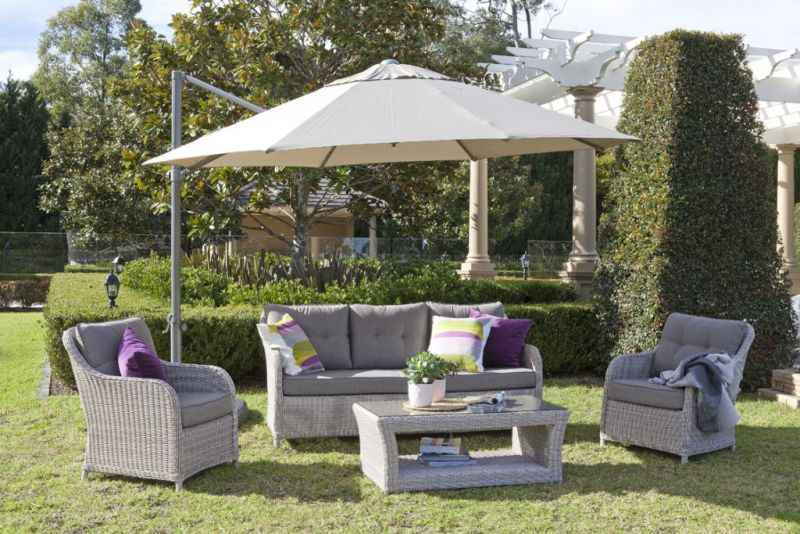
Resin wicker over an aluminium subframe is another practical combination. The resin weave handles UV and moisture, while the aluminium underneath provides structural reliability. The practical focus should be on weave quality, UV stabilisation and frame construction — not just on the look of the weave.
Stainless steel can suit more exposed settings where added weight and structural stability are useful. Finish quality and grade matter, as does occasional cleaning to maintain appearance.
Outdoor Fabric and Cushion Performance
Outdoor cushion fabric needs to handle UV exposure, moisture, temperature swings and regular cleaning without degrading quickly. That is a different set of demands from indoor upholstery.
UV-stabilised outdoor fabrics are a practical baseline, not an optional extra. In Australian conditions — particularly in areas with strong afternoon sun — fabrics without UV treatment can fade and weaken within a season or two. Tightly woven performance fabrics with stain-resistant treatments tend to hold their appearance longer and clean up more easily after everyday outdoor use.
Cushions with a waterproof inner are important if the sofa will stay outside. The waterproof inner prevents water from penetrating into the foam, allowing only the cover surface to dry quickly. This makes maintenance of your outdoor cushions much easier. Water-repellent outer covers add a further layer of protection and are the practical default for outdoor cushion fabric.
Breathable fitted covers also help extend the life of outdoor cushions, especially during wetter periods and long stretches when the sofa is not in use.
UV Exposure and Weathering: What to Expect
Colour change in outdoor furniture usually comes from sustained UV exposure, moisture cycles and general outdoor contact. UV gradually breaks down dyes in fabric and can affect some frame finishes over time. That does not mean every outdoor sofa will fade quickly. It means placement matters.
A sofa that sits in full, unshaded afternoon sun will usually age differently from one under a pergola or covered patio. Shade — whether from an umbrella, awning or built structure — reduces UV load and extends the useful life of both fabric and frame finishes.
Pet- and Child-Friendly Materials
For households where the outdoor sofa will see heavy use from children and pets, material choice makes a real difference.
Tightly woven outdoor performance fabrics tend to resist pet claws better than open-weave options and usually clean up well with mild soap and water. Powder-coated aluminium frames are practical in these settings because they handle bumps and scuffs without the same maintenance concerns as timber.
Open-weave resin wicker can trap crumbs, pet hair and debris more easily than flat-surface frames, so cleaning access is worth considering before buying. Removable, washable cushion covers are also worth prioritising in a household where the outdoor sofa will get genuine daily use.
Lifestyle Compatibility: Matching the Sofa to How You Actually Live Outdoors
Daily Use and Expected Durability
How you use the outdoor sofa matters as much as the sofa itself. A 2-seater used daily for morning coffee, afternoon reading and weekend entertaining will wear differently from one on a covered balcony that only sees occasional use.
The practical question is not how long an outdoor sofa is supposed to last in theory. It is whether the frame, cushions, fabric and construction suit the way the household actually uses the outdoor area — and whether the materials can handle the local outdoor conditions season after season.
Shade and Exposure Considerations
An outdoor 2-seater in full sun will weather faster than one under a shaded structure. If the sofa will sit in an exposed position, shade solutions — an umbrella, cantilever shade or retractable awning — can make a real difference to both comfort and material longevity.
This is especially relevant in Australian conditions, where UV intensity can exceed what many global furniture designs are engineered for. Materials specified for Australian outdoor use tend to handle these conditions more reliably.
Weather Protection Between Uses
Fitted, breathable covers are worth using when the outdoor sofa will sit unused for extended periods. Covers should fit snugly without trapping moisture underneath. Use them during wetter stretches, overnight when storms are expected and whenever the furniture will not be used for a while.
Raising furniture slightly off the ground — with feet or risers — can help prevent water pooling around legs and joints. Cushions should be stored dry in breathable bags or bins, and only sealed away once they are fully dry.
Common Mistakes First-Time Outdoor Sofa Buyers Make
Ignoring Seat Depth
Seat depth is one of the most overlooked measurements. Sit fully back and check where the front edge lands in relation to the back of your knees. Too deep and shorter users can feel unsupported; too shallow and taller users may feel cramped.
Overlooking Arm Height for Side Tables
Side tables need to work with the seat height, not just the look of the arm. It is an easy detail to miss when you are focused on appearance, but it makes a real difference in day-to-day outdoor use.
Choosing Style Over Outdoor Performance
A sofa that looks sharp in the showroom may not be built for sustained outdoor exposure. Frame material, cushion construction, UV treatment and weather resistance matter more once the sofa is outside than they do in the first few minutes of seeing it on the display floor.
Skipping the Sit Test
Test your 2-seater in more than one position before purchasing — upright, relaxed, and for longer than a quick sit-down if possible. A sofa that feels acceptable for a few minutes can feel very different after an afternoon outside.
Not Checking Material Suitability for Your Conditions
A shaded courtyard in an inner suburb and a north-facing coastal deck are very different environments. The materials that perform well in one may not hold up in the other. Ask specifically about UV ratings, corrosion resistance and fabric suitability for the conditions your outdoor area actually experiences.
Not Thinking About Delivery Access
Doorway clearance, side gate widths and stairwell dimensions are worth checking now, not on delivery day. Even if the outdoor sofa suits your space, practical access still matters.
FAQs
How much space do I actually need around a 2-seater outdoor sofa?
Leave enough space between the sofa and other furniture or fixed features for comfortable movement, keep a small gap behind the sofa away from walls or fences for airflow, and make sure main walkways stay clear. These small clearances do more for the layout than most people expect.
What's the most practical frame material for Australian outdoor conditions?
Powder-coated aluminium is one of the most practical options. It resists rust and corrosion, handles UV exposure well and requires very little maintenance. Teak is a strong alternative for buyers who prefer a timber finish and are willing to maintain it.
What should I look for in outdoor cushions?
Look for cushions with a waterproof inner to protect the core, water-repellent outer fabric, and UV-stabilised materials. These features help the cushions handle moisture, sun and regular outdoor use without degrading quickly.
Are protection plans worth it?
That depends on the terms. Some plans are useful, while others exclude the kinds of outdoor wear people assume are covered. Read the detail rather than relying on the sales summary.
How do I protect my outdoor sofa from weather damage?
Use fitted, breathable covers when the sofa is not in use for extended periods. Consider shade solutions to reduce UV exposure. Keep cushions dry and store them in breathable bags during long stretches of non-use. Regular cleaning also helps — removing dirt, leaves and moisture before they cause longer-term damage.
What hidden costs should I think about beyond the sofa itself?
Delivery access, assembly, packaging removal, replacement cushions, fitted covers and shade solutions are all worth considering before you commit.