




Recently viewed


Outdoor Lounge Chairs: The Complete Buying Guide for Your Patio Setup
Outdoor lounge chairs can turn your backyard into a dedicated relaxation space. These versatile seating options come in various designs, materials and configurations suitable for patios, balconies, and gardens. You might be searching for a compact two-seater or a full six-plus seater sectional. Finding the best outdoor lounge chairs means thinking about factors like frame material, seating capacity and weather resistance. This guide walks you through what you need to know about selecting the right outdoor lounge chairs for your space. We cover material types, sizing options, key features, placement tips, and maintenance essentials.
Types of Outdoor Lounge Chairs by Material
The frame and body material of your outdoor lounge chairs determines their weight, durability, maintenance needs and aesthetic character. Each material suits different climates and usage patterns.
Outdoor Aluminium Lounge Chairs
Aluminium lounge chairs deliver lightweight strength that makes rearranging your outdoor space effortless. Powder-coated aluminium resists rust and holds up in any climate without maintenance. The material does not retain heat and stays cool to the touch even during hot Australian afternoons with full sun exposure.
Cast aluminium provides heavier, more stable seating suited for windy conditions, while extruded aluminium weighs about one-third as much as steel. Powder coating bakes a protective finish onto the aluminium surface that resists chipping, fading and chemical damage. This combination of corrosion resistance, low weight and structural strength makes aluminium outdoor lounge chairs one of the most practical options for Australian conditions.
Outdoor Wicker Lounge Chairs
Wicker lounge chairs combine classic woven texture with modern durability when constructed from HDPE synthetic wicker. The non-porous polyethylene structure prevents water absorption and eliminates mould or mildew growth. Built-in UV inhibitors maintain colour stability through extended sun exposure.
Hand-woven HDPE wicker over welded aluminium frames creates long-term strength and stability. The woven texture adds visual warmth and softens hard patio lines, creating a relaxed atmosphere that suits traditional, coastal, and contemporary settings. Synthetic wicker outdoor lounge chairs handle hosing down without damage and dry quickly after rain.
Outdoor Timber Lounge Chairs
Timber lounge chairs bring natural warmth and organic character to outdoor spaces. Teak stands as the top-performing timber choice, with natural oils that repel water, prevent rot and deter insects. The tight grain blocks moisture penetration, which prevents warping and cracking.
Acacia and eucalyptus offer practical timber alternatives that perform well with regular maintenance. Timber does not absorb heat the way metal does, keeping seating comfortable during summer. Outdoor lounge chairs in timber pair well with woven, stone and metal accents for visual depth. Timber requires periodic oiling or sealing to maintain its appearance and protective qualities.
Outdoor Resin Lounge Chairs
Resin lounge chairs use moulded high-density polyethylene or polypropylene to create durable, weather-resistant seating. The colour runs throughout the material rather than sitting on the surface, so scratches and scuffs remain barely noticeable. Resin will not rot, splinter, crack or require painting.
HDPE resin incorporates UV protectants and stabilisers blended into the material during production. This molecular bonding resists corrosion, cracking, pests and fading across Australian conditions. Resin outdoor lounge chairs clean with mild soap and water and handle full outdoor exposure without special treatments. Their lightweight construction makes seasonal repositioning straightforward.
Outdoor Rope Lounge Chairs
Rope lounge chairs feature synthetic rope woven around sturdy frames to create seating that is softer than traditional sling fabric. Polypropylene, polyethylene and olefin ropes provide weather resistance, UV stability and fade resistance. The woven construction allows air circulation and keeps you cooler on hot days.
The open weave means rope outdoor lounge chairs shed water efficiently after rain and dry within hours rather than days. Solution-dyed synthetic rope infuses colour into fibres during production for superior fade resistance. Aluminium or teak frames beneath the rope weave provide the structural foundation. The textured, handwoven aesthetic adds character to patios without overwhelming the space.
Outdoor Lounge Chairs by Seating Capacity
Seating capacity should match how you use your outdoor space and how many people you regularly accommodate. Outdoor lounge chairs range from intimate two-seater configurations to expansive sectional arrangements.
Outdoor 2 Seater Lounge
Two-seater outdoor lounges suit compact patios, balconies and smaller deck areas where space comes at a premium. These pieces provide comfortable seating for two without dominating the available area. A two-seater paired with a side table or coffee table creates a complete outdoor setting for morning coffee or evening relaxation.
Two-seater outdoor lounge chairs work well as accent pieces within larger furniture arrangements or as standalone seating in intimate garden corners. Their compact footprint makes them easy to reposition and store during off-seasons.
Outdoor 3 Seater Lounge
Three-seater lounges serve as the primary seating piece in most outdoor setups. They provide enough room for a small family or a few guests while maintaining a manageable footprint. A three-seater outdoor lounge chair anchors your patio layout and pairs naturally with armchairs, ottomans and side tables.
This size works well for standard patios and covered outdoor areas. Three-seater configurations offer the flexibility to seat three comfortably or allow one or two people to spread out with cushions.
Outdoor 4 Seater Lounge
Four-seater outdoor lounges suit households that entertain regularly or have larger families. These configurations often take the form of L-shaped corner lounges that define conversation zones. The additional seating capacity handles casual gatherings without requiring supplementary chairs.
Four-seater outdoor lounge chairs create natural focal points in larger patio areas. The L-shaped configuration maximises corner spaces effectively and creates a sense of enclosure that encourages relaxed conversation.
Outdoor 5 Seater Lounge
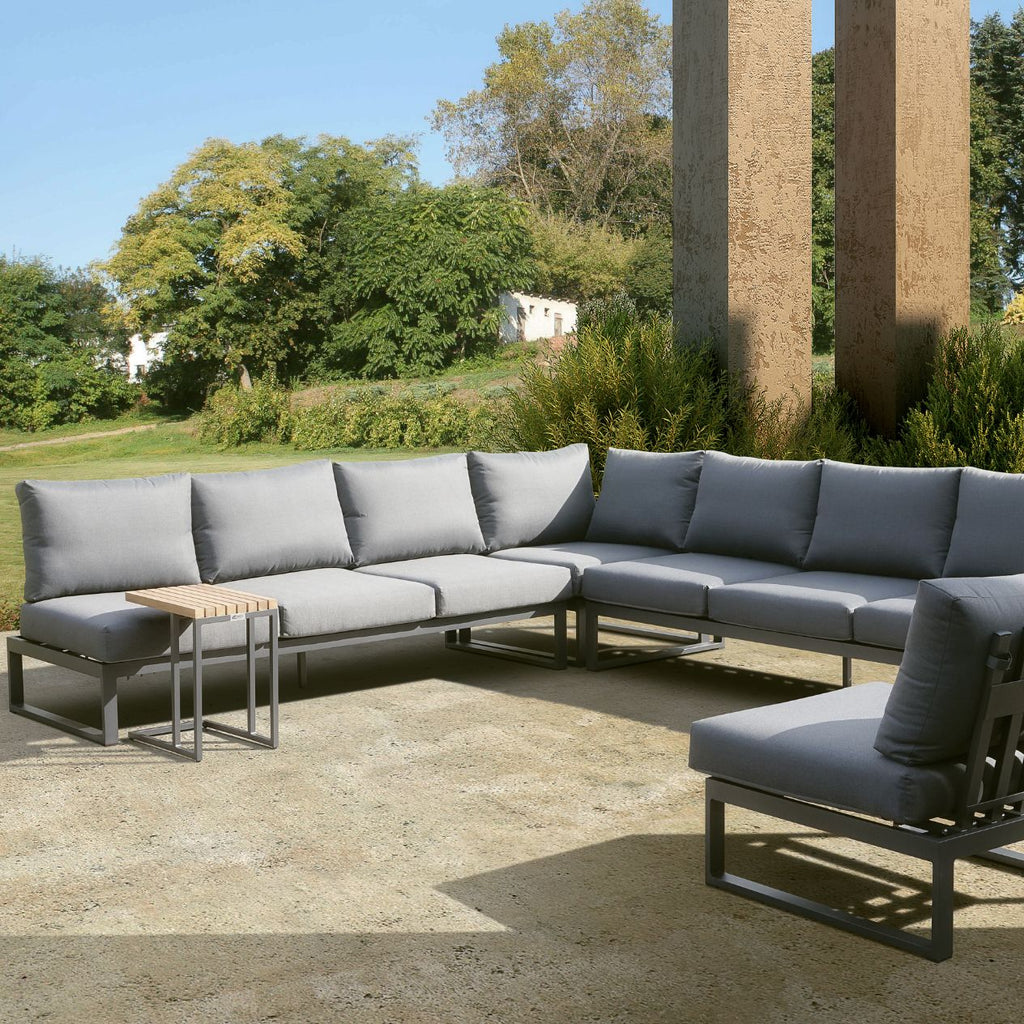
Five-seater outdoor lounges provide generous seating for social gatherings and family use. These configurations typically combine corner pieces with straight sections to create U-shaped or extended L-shaped arrangements. Modular five-seater outdoor lounge chairs allow you to reconfigure the layout based on the occasion.
This size suits larger patios and covered outdoor areas where you want dedicated lounging space separate from dining zones. Five-seater arrangements accommodate both everyday family use and weekend entertaining.
Outdoor 6+ Seater Lounge
Six-plus seater outdoor lounges create expansive seating areas for larger households and frequent entertainers. These configurations often include multiple corner pieces, armless sections and chaise elements that form substantial U-shaped or wrap-around arrangements.
Modular construction in larger outdoor lounge chairs allows ongoing customisation. You can start with a core configuration and add sections over time. These arrangements work best on spacious patios, large decks and covered outdoor rooms where the furniture defines the primary living zone.
Key Features to Look for in Outdoor Lounge Chairs
Quality features determine whether your outdoor lounge chairs last one season or many. Knowing what to look for before purchasing prevents frustration down the line.
Frame Materials and Durability
Powder-coated aluminium stands out as a top frame choice for outdoor lounge chairs. This material resists rust and holds up in any climate. It requires no maintenance. Aluminium remains lightweight yet strong and does not retain heat, staying cool to the touch even during hot days with full sun exposure.
Stainless steel weighs more than aluminium, providing stability in windy conditions. Steel frames with weather and rust-resistant e-coating reduce erosion from rain and sunshine. Teak offers exceptional durability and resistance to UV rays with minimal maintenance. Eucalyptus and acacia timbers are dense, naturally water-resistant alternatives that stand up to outdoor elements with minimal upkeep.
Weather Resistance and UV Protection
Buy fade-resistant furniture rather than fade-proof options. No materials are fully impervious to sun influence. Look for outdoor lounge chairs treated with UV stabilisers, special coatings that absorb harmful UV rays and reduce their effect. UV20-rated resin helps outdoor pieces maintain vibrant colours and structural integrity under relentless sun.
Light hues reflect light better than darker ones and do not fade as fast beneath the sun. Regular cleaning prevents dirt and debris accumulation that can absorb UV rays and accelerate ageing. Check furniture from time to time for signs of UV damage like fading or cracking. Address issues straight away to prevent further deterioration.
Cushion Quality and Comfort
Solution-dyed acrylic fabric offers superior outdoor cushion performance with stain, UV and mould resistance. Solution-dyed fabrics lock colour into every fibre rather than printing on the surface. Cushions retain vibrant hues through extended sun exposure.
Olefin ranks high for both durability and water resistance, making it a strong choice for outdoor lounge chair cushions. This quick-drying, mildew-resistant material remains soft to the touch. High-density polyurethane foam or quick-dry reticulated foam provides lasting support without flattening. Quick-dry foam prevents water from becoming trapped as moisture drains away with ease.
Weight Capacity and Stability
Heavy-duty outdoor lounge chairs support up to 180 kg with strong metal frames providing solid support. Standard weight capacities reach 135 kg per seat. Wider bases and reinforced frames maintain balance during use. Cross-bracing and proper load distribution across legs and base structures handle daily use and guests of varying sizes.
How to Choose the Best Outdoor Lounge Chairs for Your Space
Choosing the right outdoor lounge chairs requires matching furniture dimensions to your available space and usage requirements. Smart selection prevents overcrowding and creates functional outdoor zones.
Measure Your Patio Area
Start with a reliable tape measure that extends beyond standard indoor lengths. A laser distance measurer offers added convenience and accuracy for larger patios. Measure each side of your patio, including any irregular angles or curves. Measure more than once to ensure consistency and eliminate small discrepancies that can lead to design issues later.
Translate your measurements into a simple sketch. This working tool helps you visualise arrangements and anticipate spatial relationships. Document architectural elements such as columns, built-in planters, steps, railings, and elevation changes. These features influence how outdoor lounge chairs can be positioned.
Maintain at least 90 cm of clearance for primary walkways. This measurement allows comfortable movement without turning sideways or adjusting posture. Allow 60 to 90 cm of clearance around lounge seating for movement and circulation. Use masking tape, painter's tape, or kraft paper cut to furniture dimensions to map out placement before purchasing. This visual planning confirms whether pieces fit your space.
Match Materials to Your Climate
Your location determines which materials will last. Hot, sunny climates work best with powder-coated aluminium, teak, or HDPE wicker. Powder-coated aluminium stays cooler than steel or iron, while teak resists cracking and drying out in dry air. HDPE will not crack, chip, or fade under sun exposure.
Humid and coastal climates require outdoor lounge chairs made from materials that will not rust or warp, such as aluminium or teak. Skip untreated metals and natural wicker that traps moisture in these conditions. Resin and rope constructions handle coastal salt air without corrosion.
Decide on Seating Capacity
Consider how many people regularly use your outdoor space. A two or three-seater suits small families and couples. Four to five-seater configurations handle regular entertaining. Six-plus seater arrangements suit larger households and frequent gatherings.
Modular outdoor lounge chairs offer the most flexibility. Start with a core configuration and expand later as your needs change. Individual pieces sold separately let you create custom arrangements that match your specific patio layout.
Portability and Storage
Folding or stackable designs make off-season storage easy. Use movable or modular furniture to maintain layout flexibility, especially when you have small deck areas. Lightweight materials like aluminium allow easier repositioning when you want to follow the sun or rearrange your space. Consider whether your outdoor lounge chairs fit through doorways and into available storage spaces before purchasing.
Benefits of Quality Outdoor Lounge Chairs
Well-constructed outdoor lounge chairs deliver benefits that extend beyond immediate comfort. Quality pieces create functional outdoor spaces that improve your daily life.
Improved Outdoor Relaxation
Ergonomic construction with breathable materials cradles your body and provides proper support. Well-designed outdoor lounge chairs follow your spine's natural contours and reduce strain during extended relaxation sessions. Cushioned surfaces with supportive backrests ensure you and your guests enjoy extended periods outdoors without discomfort.
Outdoor seating designed for comfort makes a genuine difference to how you use your space. Quality outdoor lounge chairs bring indoor comfort outdoors, making them suitable for long evenings or relaxing with friends in your backyard. Your patio furniture plays a central role in setting the tone for relaxation, whether you are lounging with a book, enjoying morning sun, or entertaining by the firepit.
Versatile Placement Options
Modular pieces adapt to different layouts or expand seating capacity, making them practical for entertainment spaces. This adaptability allows you to host various occasions, from intimate family gatherings to larger events. Create distinct zones for different activities by placing outdoor lounge chairs in dedicated relaxation areas alongside dining sets for meals.
Compact two and three-seater designs work well in smaller areas. Larger spaces accommodate generous six-plus seater configurations. Outdoor lounge chairs work well as standalone pieces or as part of a larger outdoor setup. Pair lounge seating with outdoor sofas and side tables for layered living spaces.
Long-Term Durability
High-quality outdoor lounge chairs withstand the elements and resist fading, rust, and other forms of wear. Quality pieces deliver strong performance across many seasons with proper care and give you extended comfort.
Weather-resistant materials reduce maintenance requirements and allow you to spend more time enjoying your outdoor space. All-weather options resist fading and cracking, ensuring they maintain their appearance over time. Durability and low maintenance requirements mean you will not need to replace or repair furniture as frequently.
Care and Maintenance Tips
Proper maintenance extends the life of your outdoor lounge chairs and keeps them looking fresh season after season. Regular attention prevents damage and reduces the effort needed to deep clean later.
Cleaning Different Materials
Routine cleaning prevents the need for intensive scrubbing later. Use a soft-bristled brush to sweep away dirt and debris. A sponge or cloth soaked in warm water and mild dish soap works well on most materials, hardwoods like teak in particular. Avoid harsh chemical cleaners, which can damage furniture materials and wear down protective coatings.
Give your outdoor lounge chairs a dedicated cleaning session at least four times over the summer. Timber furniture does well with timber oil or polish applied from time to time to maintain its finish. Metal pieces need inspection for rust, coastal regions especially, and you should address chips with rust-inhibiting primer and paint straight away. Wicker cleans with mild soap and a soft brush. Skip abrasive cleaners on all surfaces to prevent scratching.
Storage During Off-Season
Clean and dry cushions before extended storage to prevent mould and mildew. Store cushions in a dry, temperature-controlled area like a closet or garage. Use breathable storage bags or containers with secure lids to keep out pests and dust.
Outdoor lounge chairs experience less stress when protected during low-use months, so use breathable covers that limit exposure to rain and debris. Covers should fit snugly but allow air circulation to prevent condensation buildup.
Protecting Against Weather Damage
Apply outdoor furniture protectant spray at least twice per season and make sure it has UV protection. Use furniture covers when items are not in use, as sun can discolour or fade materials. Move outdoor lounge chairs to a covered area during severe weather. Store cushions during storms to reduce compression and moisture damage.
Conclusion
Quality outdoor lounge chairs represent a decision that pays off through extended comfort and improved outdoor living. Choosing the right material, seating capacity and features for your specific climate and space means you enjoy that choice across many seasons.
Measure your available space first. Match materials to your local weather conditions. Consider how many people you need to seat regularly. Whether you choose aluminium for low maintenance, wicker for classic texture, timber for natural warmth, resin for durability, or rope for breathable comfort, your outdoor lounge chairs should suit both your patio and your usage patterns.
FAQs
Q1. What materials are best for outdoor lounge chairs that will last? Powder-coated aluminium is an excellent choice as it resists rust, works in any climate, and requires minimal maintenance. Teak timber offers exceptional durability and UV resistance with proper care. HDPE wicker and resin are also highly durable, incorporating UV protectants that resist corrosion, cracking, and fading. Rope construction provides breathable, quick-drying seating suited for coastal and humid environments.
Q2. What size outdoor lounge should I choose for my patio? Consider your space and typical usage. Two-seater outdoor lounge chairs suit compact patios and balconies. Three-seaters work as primary seating for standard patios. Four to five-seater configurations handle regular entertaining, while six-plus seater arrangements suit larger households. Modular designs offer the most flexibility, allowing you to start small and expand as your needs change.
Q3. How often should I clean my outdoor lounge chairs? Give your outdoor lounge chairs a dedicated cleaning session at least four times during the summer season. For routine maintenance, regularly sweep away dirt and debris with a soft-bristled brush. Use warm water with mild dish soap on a sponge or cloth for most materials, and avoid harsh chemical cleaners that can damage protective coatings.
Q4. What type of cushion fabric works best outdoors? Solution-dyed acrylic fabric offers superior performance with resistance to stains, UV rays, mould, and mildew. Solution-dyed fabrics lock colour into every fibre, retaining vibrant hues through extended sun exposure. Olefin is another strong choice, offering durability, water resistance, quick-drying properties, and mildew resistance.
Q5. How do I choose between aluminium, wicker, timber, resin, and rope outdoor lounge chairs? Match the material to your climate and maintenance preferences. Aluminium suits all climates with zero maintenance. Wicker adds classic texture and cleans easily. Timber brings natural warmth but needs periodic oiling. Resin handles full outdoor exposure without treatments. Rope offers breathable, quick-drying comfort ideal for coastal areas. Consider your aesthetic preference alongside practical requirements when selecting outdoor lounge chairs.