




Recently viewed


How to Choose Small Balcony Furniture That Actually Fits
A well-chosen set of small balcony furniture can revolutionize your tiny outdoor space into a peaceful retreat. Your compact balcony doesn't need to stay unused - the right furniture pieces can make all the difference.
The first step to buying small balcony furniture starts with taking exact measurements of your space. These measurements lay the groundwork that shapes all your design choices and furniture picks. Many people's balcony transformations fail because they skip this vital first step.
Why measurements matter
Your balcony's measurements go beyond just checking if furniture fits—they help create a functional, cosy outdoor retreat. The right measurements prevent you from buying furniture that crowds your space or leaves it empty and unwelcoming. Expert furniture designers point out several reasons why exact measurements make a difference:
- Proper fit: Your small balcony furniture needs to fit well within the space you have
- Balanced proportions: The right size creates visual harmony by matching furniture to your balcony's scale
- Movement flow: Exact dimensions help you arrange furniture that aids easy movement
- Functionality: Your space's measurements guide you to pick furniture that matches your balcony's purpose
- Access planning: Doorway measurements ensure new furniture can make it onto the balcony
So without the right measurements, you might waste money on furniture that doesn't work or creates an awkward layout you can't use.
How to sketch a simple layout
A simple sketch helps you picture how your small balcony furniture fits after you've taken measurements. Start by drawing your balcony's shape on grid paper and note its length and width. Mark any special features like corners, columns, or built-in elements that might affect where you place furniture.
Your sketch should show doors, windows, and railings with their distance from the edges. This ensures furniture won't block important access points. You'll need clear paths with at least one meter of space around each piece.
The sketch should reflect your balcony's main use and other activities. Interior designers suggest setting priorities to make sure everything looks good and serves a purpose. You can mark different zones based on what you'll do there—dining, relaxing, or reading.
Common balcony size categories
Knowledge of standard balcony sizes helps you pick the right small balcony furniture. Here's what typical balcony dimensions look like:
A standard balcony spans 5-8 feet (1.5-2.5 metres) wide and 10-16 feet (3-5 metres) long. This space works well for 2-4 people based on your furniture setup.
Juliet balconies measure about 0.5-1.0 metres (1.6-3.3 feet) deep. These serve mostly as decorative features. Standard balconies reach 1.5-3.0 metres (5-10 feet) deep, while terrace balconies stretch beyond 3.0 metres (10+ feet).
Most apartment balconies measure around 4 feet deep by 10 feet wide—enough room for a coffee table and chairs. You'll want at least 6-8 feet of depth if you plan to entertain guests.
Your balcony's size category sets realistic expectations for furniture choices. A 2×3 meter balcony fits a three-piece furniture set perfectly, while smaller spaces might work better with just a chair and side table.
Use Visual Tricks to Maximize Space
Smart design tricks can make your small balcony look by a lot more spacious. The right colors, smart furniture picks, and clever accessories work together to create an illusion of a larger outdoor retreat.
Light colors and open frames
Light and airy colors can work magic in making your balcony look bigger. Soft shades like pastel blues, gentle yellows, or clean whites bounce sunlight around. This lights up your space and makes it feel more welcoming. Your balcony becomes a peaceful retreat where space feels abundant with this simple color trick.
Smart furniture choices with open frames are your secret weapon for small balcony design. These pieces let natural light flow through them. Your space becomes brighter without visual blocks. You should pick chairs with slim, open backs or tables with thin legs. This creates an airy feel. Light dances through these open frames and adds charm to your outdoor sanctuary.
Vertical space with shelves
Tall shelving units make your balcony better by pulling the eye up while saving floor space. A vertical unit gives you plenty of room for your gardening gear—pots, gloves, tools, and soil—without eating into your seating area.
Tall vertical units work better than simple shelves that take up floor space. Wall-mounted shelves are your best bet since they float above your seating area without using any floor space. This makes your balcony look bigger and leaves more room to kick back and enjoy the outdoors.
Mirrors and reflective surfaces
Mirrors might be the cleverest trick in making small spaces look bigger. Put them on your balcony walls to create an optical illusion of depth beyond your actual space. A mirror in the right spot reflects nature from outside your window. This brings the outdoors in and makes your space feel larger.
Big mirrors with simple frames work best for making spaces look larger. Put your mirror where it catches light or shows off nice views for double the impact. Some designers like to place plants or decorative items in front of mirrors. This multiplies their visual appeal.
Mix in other shiny elements like mirrored furniture or glossy surfaces, and these tricks can turn even the tiniest balcony into what feels like a spacious retreat.
Create Zones for Different Activities
A small balcony can become a versatile retreat with smart space planning. Breaking up your compact outdoor area into distinct zones helps realize its full potential and turns one space into several useful areas.
Dining vs lounging areas
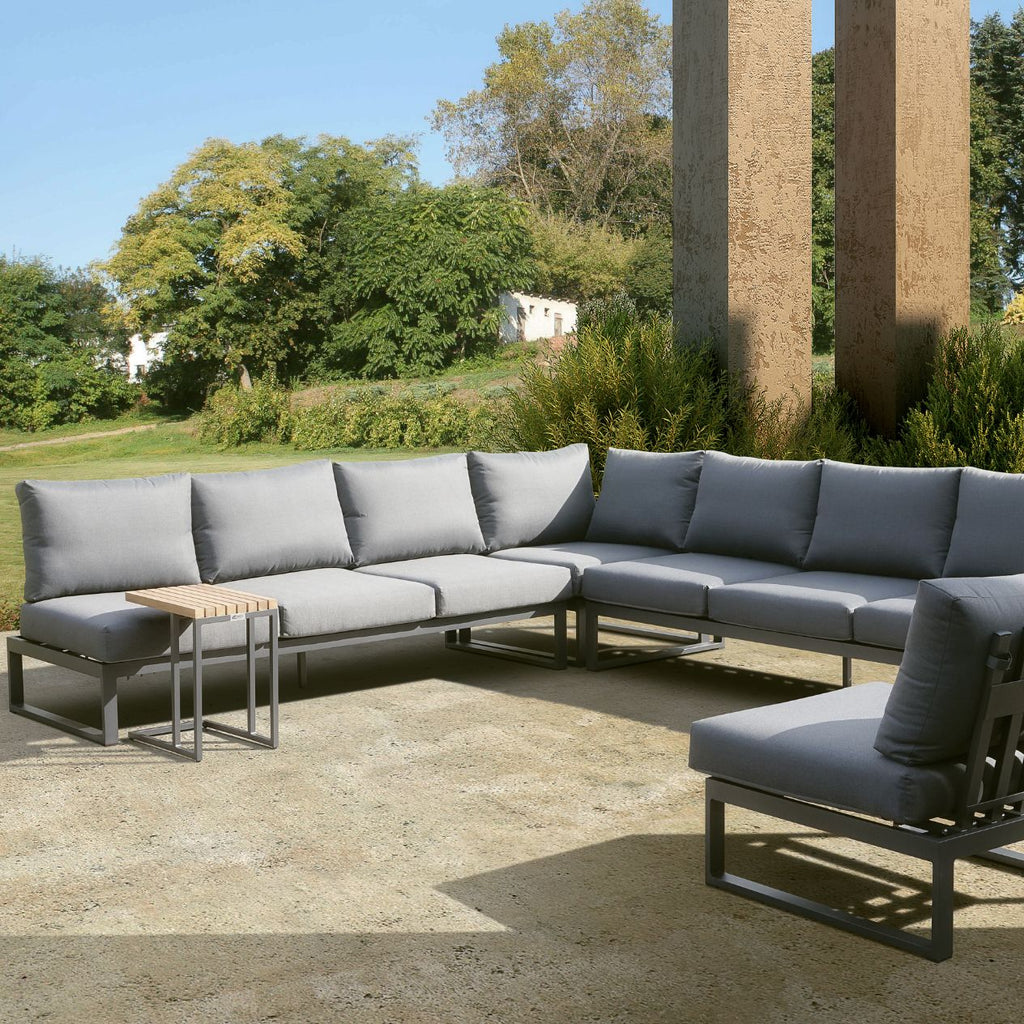
Choose an outdoor sofa or dining table as your main piece to establish your primary zone. A compact table with comfortable chairs works well as a focal point in dining areas. You could also set up a lounging zone by placing an outdoor sofa or sectional around a coffee table. This division lets you enjoy meals and relax without needing extra space.
Solo vs social setups
Your balcony's furniture layout should work for both personal time and entertaining guests. A cozy reading corner with a comfortable chair and side table fits perfectly for quiet moments alone. When friends visit, flexible seating options like poufs and stools offer extra spots to sit that you can easily move or store away.
Using rugs to define space
Outdoor rugs act as visual anchors that create natural boundaries between zones. A rug under your dining table marks a dedicated eating space, while one beneath lounge furniture creates a relaxation area. Larger balconies benefit from multiple rugs - one for lounging and another for dining. This addition defines spaces clearly while adding style and comfort to your balcony's setup.
Conclusion
You can turn a small balcony into a beautiful outdoor retreat without needing lots of space. Smart furniture choices and thoughtful planning will do the trick. Taking accurate measurements will help you make better decisions. These dimensions let you pick furniture that fits perfectly in your space without making it feel cramped.
Your compact balcony needs space-saving solutions like foldable chairs, stackable stools, and modular seating. On top of that, it needs multi-functional pieces such as storage ottomans and convertible tables that maximize every square inch while keeping clutter away. These practical elements work together to create a usable space whatever the size limits.
Light colors and furniture with open frames definitely improve how spacious your balcony feels. Mirrors and vertical shelving make your space look bigger without taking up valuable floor area. The sunlight reflection adds to this effect naturally.
Smart zoning helps your small balcony accommodate different activities. Your outdoor space can serve multiple purposes, from a dining spot to a lounging area or both, with the right arrangement.
Note that a well-laid-out small balcony isn't about cramming in as many pieces as possible. Instead, pick quality items that serve your specific needs. Though compact, your balcony can become your favorite spot to enjoy morning coffee, read in the afternoon, or relax in the evening—making it a true extension of your home throughout the seasons.