




Recently viewed


How to Choose Teak Outdoor Furniture That Actually Fits Your Space and Style
Teak outdoor furniture shopping can feel overwhelming with many options available across different quality tiers. The challenge lies in understanding what separates quality construction from lower-grade alternatives and matching options to your outdoor aesthetic.
In this guide, we break down everything you need to know about selecting outdoor teak garden furniture, teak deck furniture and teak outdoor patio furniture. You will learn how teak wood outdoor furniture grades affect performance and what features matter most. We show you how to evaluate teak outdoor furniture sets and make a confident purchase decision.
Understanding Teak Wood Quality and Grades
Teak grading determines both the performance and longevity of your outdoor furniture. These classifications help you spot quality differences that separate furniture lasting for extended periods from pieces that deteriorate within a few seasons.
What Is Grade A Teak Wood
Grade A teak comes from mature trees, harvested from the heartwood at the centre of the log. This premium grade meets strict quality standards: a rich, even tone that provides uniform colour over time, straight grain for strength and stability, and complete absence of defects like cracks, knots, splits, or signs of infestation.
The defining characteristic of Grade A teak is its dense oil content. This provides natural protection against outdoor weather, temperature fluctuations, and damaging pests. These natural oils give the timber an oily or greasy feel when raw and unfinished. The honey-coloured appearance and close grain pattern create both aesthetic appeal and structural integrity.
Proper kiln-drying matters considerably. Quality manufacturers dry Grade A teak up to six weeks to achieve 10% moisture content (plus or minus 2%). This specific moisture level prevents warping, cracking, or splitting over time. Skip this process and you get defective teak that expands and contracts unevenly, breaking down joints and threatening stability.
Heartwood vs Sapwood Differences
Heartwood and sapwood represent different parts of the tree with distinct properties. Heartwood forms the dense inner section where teak oil concentration reaches its peak. Sapwood is the outer layer responsible for distributing water to branches and contains almost no protective oils.
The visual differences are striking. Grade A heartwood displays a consistent golden-brown colour with a smooth, glossy surface. Sapwood appears pale and uneven, becoming even patchier as it ages. This lighter colour indicates the absence of oils that make heartwood weather-resistant.
Structural differences go beyond appearance. The tight grain and high oil content in heartwood create exceptional resistance to moisture, rot, insects, and harsh weather conditions. Sapwood lacks these protective qualities and becomes prone to decay when exposed to outdoor elements. The timber is softer and tends to crack over time.
How Wood Grade Affects Performance
Grade A teak commands a premium position for a specific reason: only about a quarter of a felled teak log qualifies as Grade A heartwood. The remaining three-quarters consists of lower-grade sapwood that performs differently outdoors.
The performance difference is substantial. Grade A teak outdoor furniture delivers exceptional longevity with minimal maintenance. Lower grades break down faster due to their lower oil content, leaving them vulnerable to pests and weather damage. The reduced maintenance requirements of Grade A teak also factor into its appeal, as the timber's natural durability eliminates the need for frequent treatments or repairs.
Matching Teak Furniture Styles to Your Outdoor Space
Your outdoor space dictates which teak outdoor furniture styles will function best and look most cohesive. Matching furniture design to your specific layout, usage patterns and aesthetic priorities creates outdoor areas that feel intentional rather than randomly assembled.
Traditional Teak Outdoor Patio Furniture Designs
Classic teak outdoor patio furniture centres on designs that have defined outdoor leisure for generations. Among teak outdoor furniture, the Adirondack chair remains an iconic representation of relaxed outdoor living. Its signature slanted backrest and wide armrests set it apart. Steamer loungers and folding director's chairs deliver that same enduring appeal.
Garden benches provide versatile seating along walkways or tucked into garden corners. These pieces work as standalone accents or as part of larger arrangements. A classic sofa paired with two chairs creates a reliable layout for any outdoor space. The sofa serves as the focal point while chairs arranged opposite form natural conversation areas.
Teak dining sets provide the foundation for outdoor entertaining. Think about your space size first to ensure proper fit on your patio or deck. Extendable dining tables accommodate varying guest counts without occupying excessive space permanently. Teak rocking chairs add movement and comfort to verandahs or covered patios. Chaise lounges suit poolside areas for relaxation.
Modern and Contemporary Teak Styles
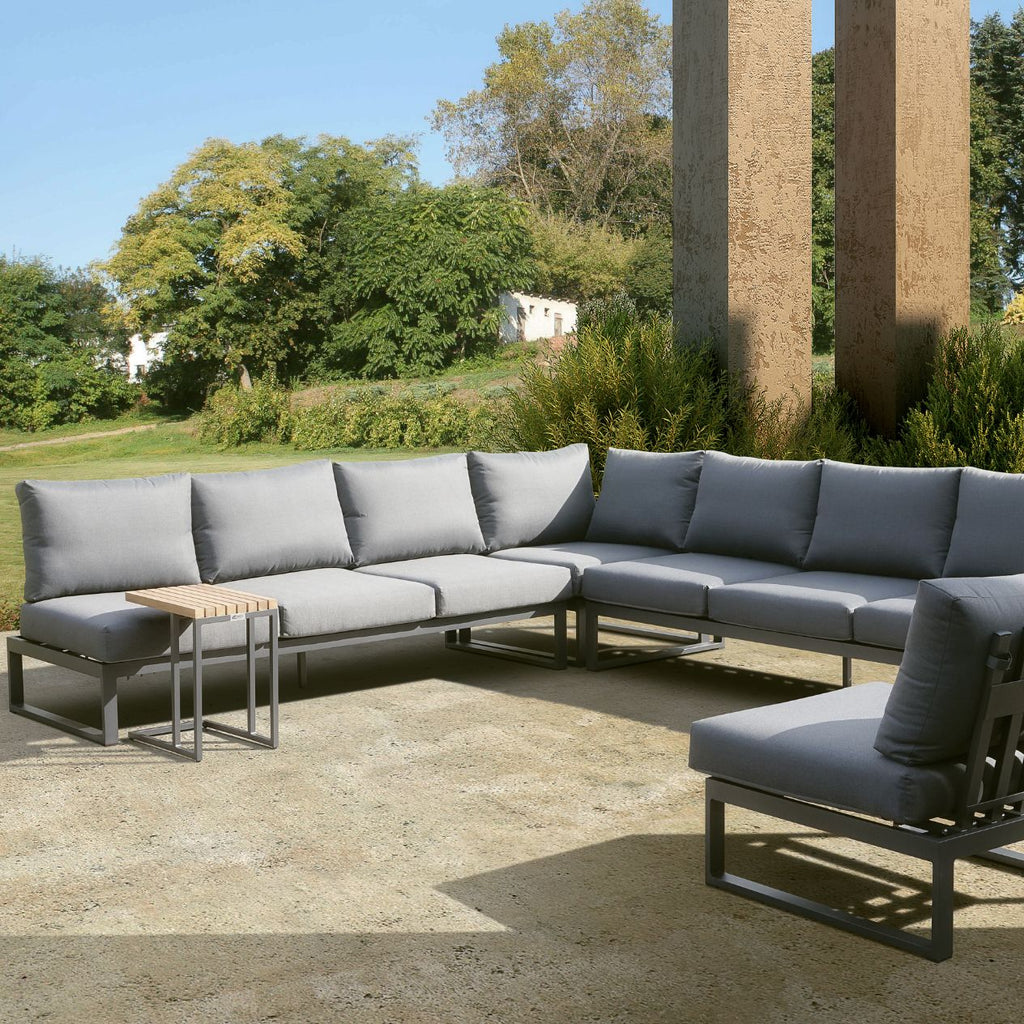
Contemporary teak outdoor furniture blends traditional craftsmanship with innovative designs and mixed materials. Sleek lines and geometric shapes define this aesthetic and create furniture that feels both current and enduring. Modular teak sofas allow configuration changes as your needs evolve. They function as standalone chairs, loveseats or full sectionals.
Sculptural teak dining tables serve as anchor pieces for outdoor dining areas. These designs often incorporate contrasting materials for visual depth. Teak pairs well with rope, aluminium, concrete and ceramic materials. This allows flexibility in both modern and transitional outdoor designs. The combination of teak's warm tones with contemporary aluminium frames creates dining sets that merge warmth with modern structure.
Folding and Space-Saving Options
Folding teak outdoor furniture sets solve storage and space constraints on boats, balconies and smaller decks. These pieces maintain the same Grade A teak quality and precision manufacturing as stationary furniture. The folding mechanism allows easy storage while the classic design carries a nautical character.
Space-saving designs work well for outdoor areas where entertaining happens frequently but flexible furniture is needed. You can fold and store pieces flat during downtime, then quickly set them up for gatherings. This versatility proves valuable whether you have limited or generous patio space.
Teak Deck Furniture for Specific Areas
Selecting teak deck furniture requires evaluating your available space, layout and specific seating needs. Think about whether you prioritise dining versus lounging during the planning of your furniture arrangement. Chair dimensions and seat height affect comfort and functionality in different areas.
Material combinations create visual interest across deck zones. Performance rope seating adds textural contrast while maintaining comfort. Natural stone tabletops anchor spaces with substantial presence. Your preference between natural patina development or maintaining the golden teak finish also influences which pieces suit your deck's aesthetic.
Essential Features to Consider When Shopping
Construction quality separates teak outdoor furniture sets that maintain integrity for extended periods from pieces that loosen and fail within seasons. Specific features reveal which furniture will deliver lasting performance before purchase.
Construction Methods and Joinery
Mortise and tenon joinery is the strongest indicator of premium teak outdoor furniture construction. This method creates an interlocking connection where a precisely cut cavity (mortise) in one piece receives a shaped projection (tenon) from another piece. The joint distributes weight and reduces reliance on visible hardware.
Look for tight, flush joints with minimal gaps when you inspect outdoor teak garden furniture. Check for limited exposed screws or brackets and solid timber construction rather than veneer framing. Dovetail joints add exceptional strength where boards meet at right angles in drawer construction. The joint prevents pieces from pulling apart under stress.
Precision-cut joints allow timber to expand and contract with temperature and humidity changes. Metal hardware loosens over time as timber moves, but joinery that is executed properly maintains stability through these cycles.
Cushion Quality and Fabric Options
Solution-dyed acrylic fabrics deliver superior outdoor performance for teak deck furniture cushions. These fabrics resist fading, mildew, mould and water damage with strong colourfastness.
The solution-dyeing process embeds colour pigments throughout the fibre rather than applying them to the surface. This results in exceptional UV fade resistance that maintains appearance through extended outdoor exposure. These fabrics are water-resistant, durable and soft to touch. Acrylic, nylon, polyester and olefin rank as the strongest outdoor fabric choices due to their resistance to stains, mildew and abrasion.
Size and Seating Capacity
Seating capacity depends on table size and dining style. Allow 60 to 70 cm spacing between chairs for family dining. Formal settings require 76 to 84 cm per chair. A 150 cm round table seats six adults in formal settings or eight in casual arrangements. Rectangular tables maximise space: a 180 cm table accommodates six people, while 245 to 270 cm lengths seat eight to ten depending on width.
What to Look for When Buying Teak Outdoor Furniture
Selecting the right vendor matters as much as choosing the right furniture. Where you purchase teak outdoor furniture affects quality assurance and long-term support.
Questions to Ask Before Purchasing
Make sure you are receiving Grade A teak by asking about sapwood content. Broad streaks of light timber indicate lower-grade sapwood mixed with heartwood. Ask about joinery methods; mortise and tenon with dowels represents superior construction. Vendor longevity matters. Businesses with extended operation and loyal customer bases demonstrate reliability.
Ask for information about certifications like FSC (Forest Stewardship Council) or SFI (Sustainable Forestry Initiative) that prove legal, sustainably sourced timber.
Red Flags to Watch For
Sellers claiming special pricing without stock on hand should raise concerns. If delivery takes three to four weeks, you may be dealing with a redistributor passing off lower quality as premium.
Contact information that is missing signals problems. No physical address, phone number or contact link indicates a questionable operation. Look at reviews with a critical eye; identical writing styles suggest fake testimonials. Return and refund policies must exist before you purchase teak outdoor furniture.
Caring for Your Teak Outdoor Furniture
Cleaning and Regular Maintenance
Clean teak outdoor furniture with mild soap and warm water using a soft-bristled brush. Scrub in the direction of the grain and rinse thoroughly. Allow pieces to dry completely in a well-ventilated area. Avoid pressure washers as high pressure damages the timber surface.
For stubborn stains or mould, use a mixture of one part white vinegar to ten parts water. Bird droppings and sunscreen require immediate removal as they cause permanent staining when left on surfaces.
Managing the Natural Patina
Untreated teak outdoor furniture develops a silvery-grey patina as surface oils disperse under UV exposure. This weathering affects only the surface while internal timber maintains structural integrity. Many owners prefer this natural look and maintain it with occasional soapy water cleaning.
To restore the original golden colour, scrub with a hard bristle brush along the grain using specialised teak cleaner. Light sanding with 120-grit sandpaper removes the grey layer and reveals original honey tones underneath. After restoration, apply UV inhibitors and protective oils to delay future silvering.
Oil Treatment and Protection
Apply oil to your teak outdoor furniture three to four times per season to maintain the golden colour. Furniture in direct sunlight requires more frequent treatment than shaded pieces. Reapply protective oils when water stops beading on the surface, indicating existing protection has degraded.
Apply oil treatments in shade and avoid direct sunlight that causes premature hardening before proper absorption. Surfaces must be dry before application to prevent trapping moisture beneath the oil layer.
Seasonal Storage
Store teak outdoor furniture indoors during extended off-seasons if possible. Garages or covered sheds work well. Clean furniture thoroughly before storage to prevent mould growth. Weatherproof covers protect pieces left outside, and elevating furniture off ground using blocks prevents moisture damage.
Conclusion
Quality teak outdoor furniture delivers strong long-term performance when you select the right grade and construction. Grade A heartwood provides the durability and weather resistance that lower grades cannot match.
Choosing the right vendor makes a genuine difference. Verify the timber grade, examine joinery methods, and confirm construction quality before you purchase. Your research now translates into teak outdoor furniture that serves your family across many seasons of outdoor enjoyment.
FAQs
Q1. How can I tell if teak timber is genuine and high quality? Authentic high-quality teak displays a warm golden-brown colour with a straight grain pattern. The timber should feel slightly oily to the touch due to its natural oil content. Look for consistent colouring without pale streaks, which indicate lower-grade sapwood. Grade A teak comes from the heartwood and has a dense, even texture with no visible knots, cracks, or defects.
Q2. How does Grade A teak compare to other outdoor timber options? Grade A teak offers exceptional durability compared to other outdoor timbers. Its high natural oil content provides weather resistance, termite protection, and longevity that alternatives like acacia or eucalyptus cannot match. Teak maintains structural integrity, comfort, and visual appeal through extended outdoor use. While other timbers require more frequent maintenance and treatment, Grade A teak's natural oils provide built-in protection that reduces ongoing upkeep.
Q3. What should I look for in a teak outdoor furniture vendor? Look for vendors who specialise in teak and can clearly identify the timber grade used in their pieces. Ask about sapwood content, joinery methods (mortise and tenon is superior), and FSC or SFI certification for sustainable sourcing. Established vendors with extended track records and strong customer feedback demonstrate reliability. Be cautious of sellers without clear contact information, those with extended delivery times suggesting they lack stock, or those with suspiciously uniform reviews.
Q4. Should I choose teak or acacia timber for outdoor furniture? Teak is the superior choice for outdoor furniture. Its high natural oil content provides exceptional weather resistance, termite protection, and longevity that acacia cannot match. Teak maintains structural integrity through extended use. While acacia offers solid performance with proper maintenance, teak's natural durability and minimal maintenance requirements make it the stronger performer for Australian outdoor conditions.
Q5. How should I maintain my teak outdoor furniture? Clean teak outdoor furniture with mild soap and warm water using a soft-bristled brush, scrubbing in the direction of the grain. Apply teak outdoor furniture oil three to four times per season to maintain the golden colour, or allow the natural silvery-grey patina to develop. Reapply oil when water stops beading on the surface. Store furniture under cover or indoors during extended off-seasons and clean thoroughly before storage to prevent mould growth.