





Furniture for Small Outdoor Spaces: Balcony Layouts by Width
A balcony that feels cramped usually isn't too small. More often, the furniture on it is the wrong size: a table a few centimetres too wide, chairs that can't be pulled out, or a lounge bought for a backyard. Choosing furniture for small outdoor spaces comes down to measuring first, then matching table size, chair width and storage features to the room you actually have. This guide gives you layouts for balconies around 150 cm, 200 cm and 300 cm wide, the table diameters and chair widths that suit each one, and the stackable pieces that free up floor space when you're not using it. Every measurement comes from Remarkable's product listings, so you can check a setting against your tape measure before you buy.
Measure Before You Buy
The most common small-space mistake is buying first and measuring later. A six-seater daybed looks reasonable in a showroom and then blocks the door once it's on a balcony.
Start with three measurements:
- Width: the distance from the wall or sliding door to the balustrade. This guide uses it to group layouts.
- Length: the run of the balcony from one end to the other.
- Clear zones: door swings, air-conditioning units, drainage outlets and any step that furniture can't sit across.
Then decide how you'll use the space. A morning coffee spot, a dinner table for two or a place to stretch out with a book each need different furniture, and trying to fit all three into a small balcony usually means none of them works well.
Leave Room to Move
Furniture for small outdoor spaces only works if you can move around it. Remarkable's dining guidance suggests allowing about 60 cm of table edge per diner and at least 60 cm behind each chair so it can be pulled out. On a narrow balcony, that clearance often decides the layout more than the furniture does.
Table Diameter and Chair Width
Once you have your measurements, the two figures to check on every listing are table size and chair footprint.
Tables
Small balcony tables in the current range include:
- Iowa round side table: 50 cm diameter and 50 cm high, about 4 kg. Large enough for two cups and a plate.
- Adeline round table: 70 cm diameter and 72 cm high, with a high-pressure laminate top on a powder-coated aluminium frame. Comfortable dining for two.
- Nardi Clip square table: 70 cm by 70 cm and 75 cm high, about 11 kg, with adjustable feet for uneven tiles.
- Nardi Cube square table: 80 cm, in fibreglass-reinforced resin, giving each of four people one side.
- Vernon narrow dining table: 160 cm by 40 cm and 75 cm high, about 12 kg, and listed as a four-seater. Its 40 cm depth is what makes it work on narrow balconies.
As a rule, a 50 cm to 70 cm round table suits two people, an 80 cm square suits up to four at a squeeze, and a long narrow table suits four when the balcony is long but not deep.
Chairs
Chair width tells you how many fit along a table or wall. Chair depth tells you how far they'll push into the walkway.
- Largo director chair: 52 cm wide, 54 cm deep, about 5 kg.
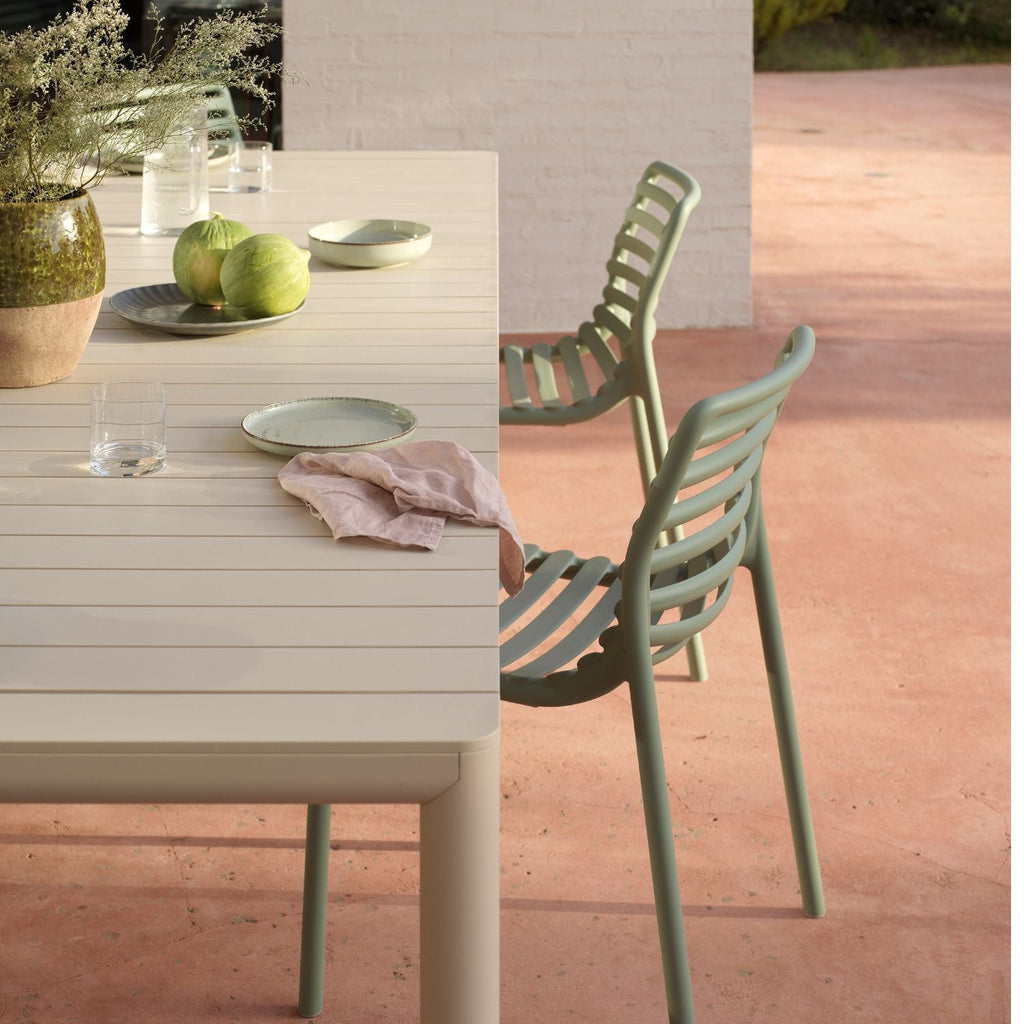
- Nardi Doga armless chair: 53 cm wide, 55 cm deep, about 4 kg, stackable.
- Nardi Bora chair: about 59 cm wide, 57 cm deep, about 4 kg, stackable, with drainage holes in the seat.
- Lawson rope dining chair: about 60 cm wide, 61 cm deep, about 6 kg, stackable, with high-density foam cushions.
- Nardi Net chair: about 61 cm wide, about 59 cm deep, about 4 kg, stackable.
Armless chairs are usually the narrowest option and tuck further under a table, which frees up walkway when the setting isn't in use.
Balcony Layouts by Width
The layouts below assume the width is measured from the door or wall to the balustrade. Length matters too, so check that both dimensions work before you commit.
Balconies Around 150 cm Wide
At this width, sit side by side facing the view instead of across a table from each other. Two Largo director chairs with a 50 cm Iowa side table between them run about 154 cm along the balcony, while the chairs take up only 54 cm of depth. That leaves close to 100 cm of clear walkway between the chairs and the door.
If you want to dine, a narrow table against the wall with chairs on one side is the next step up. The Vernon's 40 cm depth plus a 55 cm Doga chair and room to pull it out needs roughly 160 cm, so it suits balconies at the wider end of this range. Stack the chairs against the wall when you're done.
Balconies Around 200 cm Wide
A 200 cm width opens up a proper table for two. A 70 cm Adeline round table with a pair of Lawson chairs, or the 70 cm square Nardi Clip with two stackable Bora chairs, both work well. Place the table so the chairs sit along the length of the balcony and you keep a clear path across the width.
For lounging instead of dining, a pair of Anchorage reclining armchairs with ottomans suits this width. Each armchair is 82 cm wide and 80 cm deep, and each ottoman 64 cm wide and 55 cm deep, so a chair and ottoman in a line take about 135 cm of depth and leave room to walk past. The backrests adjust, so the same pair works for morning coffee and an afternoon read.
Balconies Around 300 cm Wide
At 300 cm, four people can eat together. The 80 cm Nardi Cube with four stackable Net chairs needs roughly 200 cm from chair back to chair back, leaving room to pull chairs out on one side. Alternatively, the Vernon narrow table with two chairs on each side takes about 150 cm of depth before clearance, which suits a long, deep balcony and keeps more floor open.
This is also the width where you can combine zones: a compact dining setting at one end and a two-seater lounge or a pair of armchairs at the other. Outdoor balcony lounges are scaled for exactly this kind of layout. Browse outdoor balcony dining settings to compare pre-matched tables and chairs, or mix your own from outdoor balcony tables and outdoor balcony chairs.
Compact Furniture: Your Small Outdoor Space's Best Friend
Big backyard dining sets get the attention, but compact pieces do more of the work in small spaces. When you compare furniture for small outdoor spaces, three features matter most.
Stackable Chairs
Stackable chairs give you seating when guests arrive and floor space when they leave. The Doga, Bora, Net and Lawson chairs all stack, and the Casper round aluminium stool, about 43 cm across, 45 cm high and about 3 kg, stacks in sets of two or four. A stack of four stools takes up roughly the floor space of one. Outdoor stackable dining chairs are the place to start if storage is your main constraint.
Folding and Adjustable Pieces
Folding chairs and tables can be stored flat behind a door or in a cupboard between uses, which suits balconies that double as drying areas or thoroughfares. If you shop for folding pieces, check the hinge and locking mechanism, since these take the most wear outdoors.
Adjustable tables are the other space-saver. The Nardi Spritz round resin table has two preset heights, working as a low coffee table or a higher side table, and is easy to assemble and take apart for storage.
Multi-Use Pieces
An outdoor bench works as seating, a footrest or a side table. A storage box can hold cushions or pot plants and move to a corner when you need the floor. Ottomans, like those in the Anchorage setting, give you a footrest, an extra seat or a spot for a tray.
Material Matters For Small Outdoor Spaces
Small spaces are often exposed spaces. Upper-floor balconies catch more wind and sun than a sheltered backyard, so furniture for small outdoor spaces needs materials that handle both.
Powder-coated aluminium is the most practical frame material for balconies. It doesn't rust, it's light enough to rearrange, and it handles salt air in coastal apartments. The Largo director chair weighs about 5 kg, so moving it to follow the shade takes one hand.
Resin furniture, such as the Nardi range made in Italy from fibreglass-reinforced polypropylene, is light, UV-resistant and easy to hose down. Many resin chairs have drainage holes, so rain doesn't pool in the seat.
Rope and synthetic wicker add texture and let breezes pass through, which keeps a small space from feeling closed in. Pair them with aluminium frames for a lightweight setting.
On windy balconies, lighter chairs should be stacked or moved against a wall when strong winds are forecast, and check your strata rules before setting up.
Find Your Small Space Style
A small space looks larger when the setting is visually simple. Choose one main colour for frames and cushions, then add pattern in small doses through scatter cushions. Small-scale patterns such as herringbone or chevron on accent pillows, with block colours on the main cushions, keep the space from looking busy.
Open, lightweight frames also help. Slim aluminium legs and woven backs let you see through the furniture to the floor, which makes the balcony read as bigger than a solid, boxy setting of the same size. Less is more: if a piece doesn't earn its place, leave it out.
Add Ambience
Once the furniture for small outdoor spaces is in place, add the details that make you want to use it.
Lighting
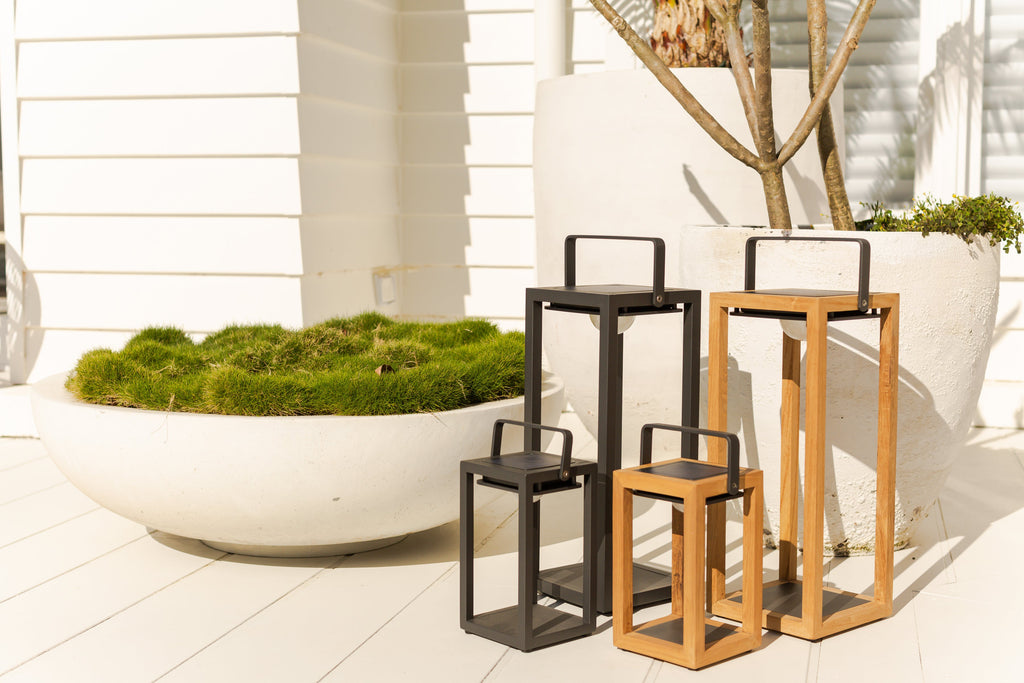
Solar lamps avoid the need to run power outdoors, and fairy lights or tea lights add a soft glow without taking up floor space. Lighting at different levels, from the floor to the table to overhead, makes a small space feel layered. Outdoor lightings include options sized for balconies.
Greenery and Shade
Vertical gardens and hanging planters add greenery without using floor space, and a pair of potted plants at either end of a lounge or bench frames the setting. Outdoor planters come in sizes that suit balcony corners. A compact garden umbrella adds shade where there's no roof overhead.
Underfoot
An outdoor rug softens tiles and defines the seating zone, which helps a small area feel organised. Artificial turf is another option for a softer surface.
Making the Most of a Small Outdoor Space
The right furniture for small outdoor spaces starts with a tape measure, not a catalogue. Measure your balcony's width, length and clear zones, choose a table size and chair footprint that leave about 60 cm to move, and favour stackable pieces so the space works on quiet days and busy ones. Then visit a Remarkable showroom or browse online to compare settings against your measurements.
FAQ
What materials are commonly used in small outdoor furniture?
Powder-coated aluminium, resin, rope and synthetic wicker are the most common. They're weather-resistant, light enough to move and suit exposed balconies.
What is the most weather-resistant outdoor furniture for my small space?
Powder-coated aluminium is an excellent choice. It doesn't rust, it's lightweight and it handles sun, rain and salt air with minimal upkeep. Resin is another low-maintenance option.
Can stackable chairs be left outside in all weather conditions?
Stackable outdoor chairs are designed to be weather-resistant, but it's still a good idea to stack them under shelter during storms or strong winds. This protects their finish and stops lighter chairs from moving.
What types of cushions are suitable for small outdoor furniture?
Choose outdoor cushions with water-repellent, UV-resistant fabric such as solution-dyed acrylic or olefin, over high-density or quick-dry foam. Removable covers make cleaning easier.
What size table suits a small balcony?
A 50 cm to 70 cm round table suits two people, an 80 cm square table suits up to four, and a narrow 160 cm by 40 cm table seats four along a long balcony.
Share this


