





Recently viewed


A well-chosen balcony lounge does something simple but powerful — it turns a few square metres of concrete into a space you actually want to spend time in. Whether you're after a quiet morning coffee spot or somewhere to host friends on a warm evening, the furniture you pick makes all the difference.
At Remarkable Furniture, we've put together this guide to help you think through the whole process — from measuring your space to picking materials that genuinely hold up in Australian conditions.
Before you buy anything, spend ten minutes with a tape measure. It sounds obvious, but it's the step most people skip — and it's exactly why so many balconies end up with furniture that's either too big, too small, or awkwardly arranged.
Measure first, buy second
Note down your balcony's length and width, then sketch a rough layout on grid paper. It doesn't need to be architect-quality — just something that helps you visualise where pieces will actually sit. While you're at it, check:
- Doorways and entry points that need to stay clear
- Any corners, columns, or odd angles
- Overhead structures that might limit height
A good rule of thumb: leave 60–90 cm between furniture pieces so movement feels natural, not cramped. If you're including a dining setting, make sure chairs can pull out fully without hitting a wall or railing.
Watch how sun and wind move through the space
Spend a day noticing where the sun hits your balcony — morning, midday, afternoon. Note where natural shade falls and how wind behaves in different spots. This kind of observation changes where you'll want to position seating.
If your balcony catches strong wind regularly, factor that into your material and weight choices. Lighter pieces may need to be anchored or brought inside during rough weather. Securing furniture to railings with straps is a simple fix that's easy to overlook until something blows over.
Be honest about how you'll use it
A balcony used mainly for solo reading needs different furniture than one designed for hosting. Ask yourself:
- Is this a quiet retreat for one or two people?
- Do you want to eat out here regularly?
- Will guests need seating occasionally?
If you're working with a tight footprint, multifunctional pieces earn their place — foldable chairs, nesting tables, storage benches. Modular options give you the flexibility to rearrange as your needs shift across seasons.
Types of Balcony Lounge Sets
There's no single "best" configuration — it depends on your space, your habits, and how many people you're typically accommodating.
2-seater and 3-seater lounge sets
For most balconies, a 3-seater lounge hits the sweet spot between comfort and footprint. It's enough for a small gathering without dominating the space. Pair it with a couple of lounge chairs and you've got something that feels more like a proper outdoor room.
If your household includes elderly residents, look for chairs with solid arms and a slightly raised seat height — easier to get in and out of without feeling like you're climbing out of a hole.
Corner lounges for L-shaped balconies
Corner lounges are genuinely clever for compact spaces. They tuck into a corner and free up the centre of your balcony for movement, a coffee table, or a plant or two. Compared to a collection of standalone pieces, they create a cleaner look with more seating.
Many L-shaped configurations from Remarkable Furniture let you choose right-hand or left-hand orientation — worth checking before you order so the layout actually works with your space.
Individual chairs vs. full sets
Individual balcony lounge chairs make sense when space is genuinely tight or when you want flexibility. Folding chairs are particularly useful — they store flat and come out when you need them.
Full sets offer a more cohesive look and are usually designed so the pieces work well together proportionally. A compact 3-piece setting — small table, two deep chairs — is often all you need for a dedicated relaxation corner.
Modular lounges
Modular systems are the most adaptable option, especially if your balcony serves different purposes at different times. Individual sections connect and rearrange, so you can shift from a cosy two-person setup to a larger configuration when you have people over.
Most modular pieces are lightweight enough to move without much effort, which makes experimenting with layouts genuinely practical rather than theoretical.
Choosing the Right Materials
Australia's climate is hard on outdoor furniture — UV exposure, humidity, coastal salt air, and temperature swings all take a toll. Picking the right material upfront saves you from replacing pieces far sooner than you should have to.
Aluminium
Aluminium is probably the most practical choice for Australian balconies. It doesn't rust, it's light enough to move easily, and it needs almost no maintenance beyond an occasional wipe-down. Powder-coated aluminium adds another layer of protection against fading and scratching — the coating is baked on rather than painted, so it holds up better over time.
For coastal locations especially, aluminium is hard to beat.
Synthetic wicker
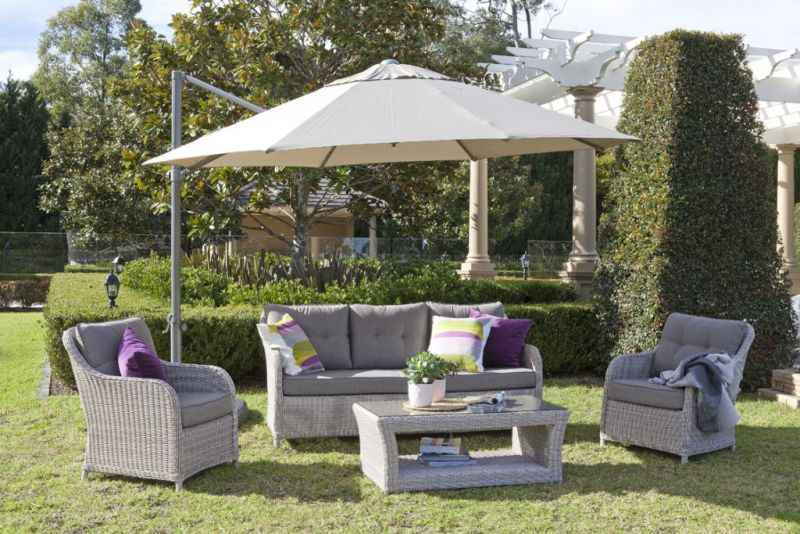
Modern outdoor wicker has very little in common with the traditional stuff that falls apart after a season outside. Quality synthetic wicker — typically high-density polyethylene (HDPE) over an aluminium frame — handles moisture and UV exposure well and keeps its shape.
The appeal is partly aesthetic: wicker has a relaxed, resort-style look that works in a lot of different settings. And because cushions do most of the comfort work, you can refresh the whole look just by swapping covers.
Teak and timber
Teak is genuinely exceptional as an outdoor timber. Its natural oil content makes it resistant to rot, insects, and warping — well-maintained teak can last well over 30 years. It starts golden-brown and weathers to a silver-grey over time, which many people actually prefer.
The trade-off is cost and maintenance. Teak needs periodic oiling to stay in good condition, and it's typically more expensive than aluminium or wicker options.
Outdoor fabrics
Cushion fabric matters more than people realise. Solution-dyed acrylic is the benchmark for outdoor upholstery — it resists UV fading, mold, and mildew, and holds its colour through extended sun exposure. Recycled polyester performs similarly and tends to feel softer.
Avoid natural fibres like jute or sisal outdoors — they deteriorate quickly. The good news is that quality outdoor fabrics now come in a wide range of textures and finishes, so you're not stuck with the plasticky look that used to be the default.
Design and Style Considerations
Getting the furniture right is half the job. The other half is making the space feel intentional rather than like a random collection of outdoor pieces.
Colour and your home's palette
Your balcony doesn't need to be a perfect extension of your interior, but some visual connection helps. A few approaches that work well:
- Analogous colours — shades that sit next to each other on the colour wheel — create a calm, cohesive feel
- Monochromatic schemes — different tones of one colour — look clean and deliberate
- Contrast — a bold furniture colour works if it's balanced with neutral surroundings, not competing with them
For small balconies, lighter tones generally make the space feel more open.
Cushions
Cushions are the easiest way to update a balcony lounge without replacing furniture. Removable, washable covers let you shift the look seasonally without any real expense. Just make sure they're made for outdoor use — indoor cushions left outside will deteriorate quickly regardless of how good they look.
Small-space strategies
If your balcony is compact, the furniture you choose needs to earn its footprint. A few things that genuinely help:
- Modular or foldable pieces that adapt to different uses
- Side tables that double as extra seating
- Wall planters and railing containers that add greenery without using floor space
Arrangement matters as much as selection. Pushing furniture against walls or into corners opens up the centre of the space and makes even a small balcony feel more usable.
Care and Maintenance
Good furniture lasts — but only if you look after it. The maintenance involved isn't complicated, it just needs to be consistent.
Covers
A quality weather-resistant cover is worth buying alongside your furniture. Look for covers with breathable vents — they block rain and UV while preventing the moisture buildup that leads to mold. Always make sure furniture is clean and dry before covering it.
Cleaning by material
- Metal frames: a mix of one cup white vinegar to two litres of warm water works well
- Timber: light sanding followed by an oil treatment keeps it in good shape
- Cushions: remove covers, wash with mild soap, and dry completely before storing
- Wicker: a soft brush and mild soapy water; avoid high-pressure cleaning
Stay away from harsh chemicals or abrasive cleaners on any surface — they strip protective finishes faster than the weather does.
Seasonal upkeep
You don't need to dismantle everything at the end of summer. Leaving frames outside under covers is fine; cushions are better stored indoors to avoid compression and moisture damage. Clean everything thoroughly before storage, check for any damage after bad weather, and you'll extend the life of your furniture significantly.
FAQs
What should I measure before buying balcony lounge furniture? Measure the full length and width of your balcony, note any doorways or columns, and sketch a rough layout before committing to anything. Allow at least 60–90 cm between pieces for comfortable movement.
Which materials work best for Australian balconies? Aluminium and HDPE synthetic wicker are the most practical for most Australian conditions — low maintenance, rust-resistant, and UV-stable. Teak is excellent if you're willing to maintain it. For coastal areas, aluminium is particularly well-suited.
How do I make a small balcony feel bigger? Choose furniture with a smaller footprint — corner lounges, foldable chairs, nesting tables. Use lighter colours, keep the centre of the space clear, and add greenery vertically rather than on the floor.
How often should I clean outdoor furniture? Wipe down after heavy rain or dust, do a proper clean every few months, and give everything a thorough wash at the end of the season before covering or storing. Deal with spills promptly — they're much easier to clean fresh.
How do I connect the look of my balcony to my interior? You don't need to match exactly — just pick a colour palette that feels related to your indoor space. Cushions and soft furnishings are the easiest way to create that visual link without committing to a full redesign.