





Recently viewed


Best Outdoor Umbrella Guide
Does your outdoor umbrella barely last a single season? Finding the perfect shade solution might look easy, but there's a lot more to consider than you might think.
What you'll learn:
- The pros and cons of different umbrella types
- Critical features that determine quality and durability
- Expert secrets about shade selection
- How to match the perfect umbrella to your specific outdoor area
Understanding the Different Types of Outdoor Umbrellas
Picking the right outdoor umbrella becomes easier when you know what's available and how each type works best. Let's look at several distinct styles that serve different needs and spaces.
Wall-mounted umbrellas
Wall-mounted umbrellas are a smart solution when floor space is tight. They attach right to your wall, so you don't need poles or bases taking up precious floor area. These umbrellas work perfectly on balconies, narrow decks, and small courtyards by maximizing usable space while providing good shade.
Tilting umbrellas
Tilting umbrellas solve a common problem - the sun that keeps moving across the sky. These smart umbrellas let you adjust the canopy at different angles to track the sun all day. You won't be limited to those few hours when the sun sits directly overhead.
You'll find two main tilting systems: collar tilt and push-button tilt. Collar tilt works by turning a mechanism around the pole, while push-button lets you adjust after pressing a release. This flexibility means no more moving chairs and tables around to stay in the shade as the sun moves.
Double-sided umbrellas
Double-sided umbrellas are your best bet for maximum shade coverage. With two canopies on one frame, these umbrellas protect twice the area. They shine in large outdoor dining spaces, commercial areas, and big patios that need lots of coverage.
Each side of the dual canopy usually adjusts independently, giving you amazing flexibility in shade placement. The frames are reinforced to handle the larger coverage area and stay stable in different weather conditions. These umbrellas are perfect when you need to shade big spaces or host larger gatherings.
Key Features That Define the Best Outdoor Umbrellas
Quality features make all the difference between a short-lived purchase and a lasting outdoor investment when you're choosing an umbrella. The best outdoor umbrella combines several key elements that ensure both functionality and durability.
UV protection and waterproofing
Every outdoor umbrella must protect you from harmful ultraviolet rays. Top-tier umbrellas use fabrics with UPF (Ultraviolet Protection Factor) ratings of 50+, which block at least 98% of UV radiation. UV Standard 801 sets the bar higher by testing fabrics in real-life conditions—including when wet, stretched, or after multiple washes. This ensures consistent protection throughout the umbrella's life.
Premium options come with water-repellent (not necessarily waterproof) canopies. This difference matters because quality umbrellas resist light to moderate rainfall but aren't designed as permanent waterproof structures. You should look for "water-repellent" labeling on solution-dyed fabrics to get maximum protection.
Frame materials: aluminum vs. wood vs. steel
Your umbrella's structural integrity and durability depend on its frame. Each material brings unique advantages:
Aluminum frames strike the perfect balance between strength and weight. Anodized or powder-coated aluminum resists corrosion well, making it ideal for coastal areas. These frames weigh about half as much as steel, so you can move them easily.
Fiberglass frames work great in high-wind areas because they're flexible—they bend without breaking during strong gusts and bounce back to their original shape. They cost 2-3 times more than steel, but their durability makes them worth the investment.
Wood frames (typically teak, eucalyptus, or bamboo) look classic but need more maintenance to avoid warping or cracking. Gardens and natural settings showcase their beauty best.
Steel frames are incredibly strong but weigh more and might rust unless properly treated.
Tilt and rotation mechanisms
Adjusting your umbrella throughout the day makes it much more useful. Most cantilever umbrellas let you tilt them using levers, cranks, or knobs on the pole. Better models rotate 360 degrees, so you can follow the sun without moving the entire base.
These adjustment features not only give you the best shade but also help protect your umbrella from strong winds when positioned correctly.
Ease of assembly and storage
Practical features matter a lot for long-term satisfaction. Seasonal users should look for umbrellas they can fold or carry easily for storage. Quality umbrellas usually open smoothly—using crank lifts, push-button systems, or pulley designs.
A good base keeps your umbrella stable and portable. Some models use heavy-duty steel base plates with protective coatings that stand up to different weather conditions.
What Experts Don’t Tell You About Choosing the Right Shade
Most shoppers look at style and price when buying outdoor umbrellas. They miss key factors that could make or break their long-term satisfaction. Retailers rarely highlight these details that separate a frustrating purchase from a shade solution lasting many years.
Why base weight matters more than you think
Poor base weight causes most outdoor umbrella failures. Even the best umbrella becomes risky in a light breeze without proper anchoring. Your base should weigh at least 10 times the umbrella's weight for market umbrellas and 15 times for cantilever models. Sand or water-filled bases work better than solid ones. They offer better stability thanks to their lower center of gravity.
This vital detail often gets overlooked, resulting in toppled umbrellas that damage property or cause injuries. Make sure to check if the base comes included or you need to buy it separately. Many manufacturers exclude bases to show lower prices.
How wind resistance is often overlooked
Umbrella marketing rarely mentions wind ratings. Even mild breezes can harm poorly designed models. Good umbrellas can handle winds of 15-25 mph. Better designs tackle 35+ mph conditions using smart features like wind vents and flexible ribs.
Ask about specific wind resistance before buying to avoid headaches later. Note that proper closing techniques help your umbrella last longer in windy conditions. Always close and secure covers when not using the umbrella.
Color fading and fabric longevity
Dark colors soak up more UV radiation. They break down faster despite their dramatic initial look. Light colors typically stay fresh 1-2 years longer. Factor in future maintenance needs when picking canopy colors.
Solution-dyed fabrics have color running through the entire fiber. They last much longer than surface-dyed options. Fabric quality becomes even more important in coastal areas with salt exposure or high pollution to prevent early wear.
The real effect of umbrella size on comfort
A bigger umbrella isn't always your best choice. Large canopies in small spaces feel overwhelming and block air flow. Small umbrellas fail to shade properly as the sun moves across the sky.
The perfect umbrella extends 2 feet beyond your seating area in every direction. This accounts for the sun's movement throughout the day. Don't forget height clearance - keep the canopy edge 7 feet off the ground. This lets people walk underneath without ducking.
How to Match an Umbrella to Your Outdoor Space
The right shade solution needs more than just a quality umbrella. A perfect match between your umbrella and outdoor space creates a comfortable, functional area you'll love to use.
Measuring your space correctly
Start with accurate measurements of your outdoor area, not just the umbrella spot. Look up to check vertical clearance so you can avoid any conflicts with overhanging structures, branches, or eaves. Your umbrella needs at least half a meter of space around it to move comfortably. The area should be clear first - this helps you see how everything will fit and prevents problems with nearby features. This initial prep work lets you understand any space limitations before you invest in your shade solution.
Choosing the right size for your furniture
Your furniture and umbrella sizes need to work together with a practical formula. A good rule for dining tables is to add 60-90 cm to each side of your table measurement for proper coverage. Standard sizes typically work like this:
- 1.8-2m umbrellas: Ideal for bistro tables or small seating areas
- 2.5-3m umbrellas: Perfect for medium dining tables seating 4-6 people
- 3.5m and larger: Best for large tables or wide lounge areas
A 1.2m table pairs well with a 2-2.5m umbrella, while a 2m table needs a 3-3.5m umbrella for the best coverage.
Design and color coordination tips
Your umbrella should fit naturally with your outdoor esthetic. Match its style with your existing furniture. Sleek, monochromatic umbrellas work great with modern, minimalist settings, while natural textures or vibrant patterns look better in bohemian or rustic spaces. The pole and frame materials should complement elements in your current furnishings.
Placement tips for maximum shade
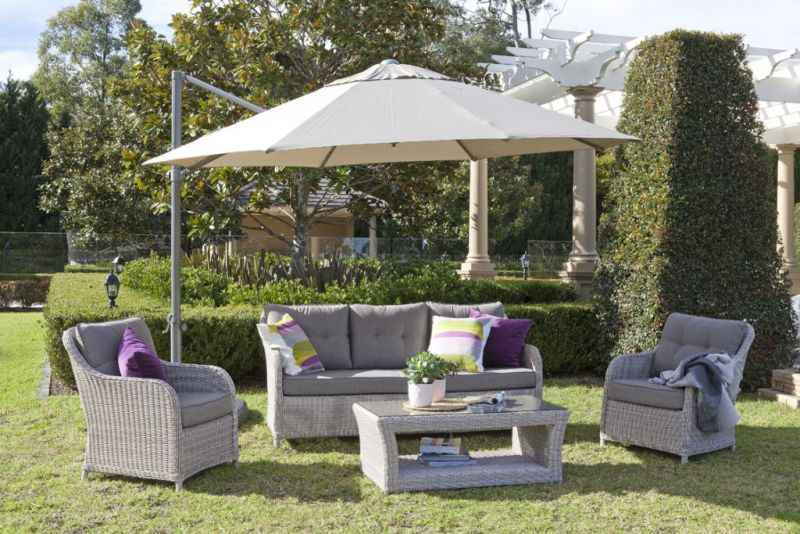
Track the sun's movement throughout the day to position your umbrella strategically. South or west-facing areas usually offer maximum coverage during peak sunlight hours. Cantilever models need special attention - think about where you spend most time in your yard and whether you'll need to shade multiple areas with the 360-degree rotation feature. Your umbrella must sit on flat, stable ground, especially with larger canopies that can catch wind like sails.
Conclusion
Picking the perfect outdoor umbrella involves more than just looks or cost. Different umbrella styles serve specific purposes - market umbrellas suit smaller spaces, while cantilever designs give you more options for arranging furniture. Quality features like UPF 50+ protection, durable frame materials, and premium fabrics will determine your shade solution's lifespan.
Small details you might miss can make a big difference in how happy you'll be with your purchase. The base weight is crucial - you'll need 10-15 times the umbrella's weight to keep it stable. You should also check the wind resistance specs before making your final choice. Light-colored, solution-dyed fabrics last substantially longer than darker ones, especially in sunny spots.
Getting the right measurements is key to matching an umbrella to your space. Your ideal shade should stretch at least two feet beyond where people sit while staying at the right height. Taking time to figure out what you need helps avoid ending up with coverage that's too small or an umbrella that's too big.