




Recently viewed


Grey couches rank among the most sought-after furniture pieces, and with good reason too. They blend comfort with style and naturally fit into almost any décor scheme. You can create a cosy reading nook or make it a contemporary centrepiece in your living room. A grey sofa's versatility makes it a timeless choice.
The biggest advantage of a grey couch lies in its amazing adaptability. Grey looks stylish and works beautifully with any colour palette. Your décor can change completely, but your grey couch will still look right at home.
Why grey couches are a timeless choice
Grey couches aren't just another passing trend. They're proof of what makes great home design work. While patterns and bold colours quickly go out of style, grey has managed to keep its place as a timeless foundation piece.
Grey's lasting appeal comes from how well it adapts to any space. A mix of black and white with subtle undertones makes grey "the most neutral neutral." It anchors any colour scheme. This chameleon-like quality helps it go together with any style or palette without dominating the room.
Grey couches make other colours stand out like black does. They also keep things looking clean and fresh like white. So homeowners can play around with cushions, throws, and accessories without worrying about mismatched colours. Interior designer Emma Carstens puts it well: "Grey is the perfect neutral. It matches everything and is the ideal partner in crime for those who want to bring colour accents into their homes without fear of clashing".
Grey also knows how to connect different colours and create balanced palettes. Its rich depths soften the contrast between room elements, which creates visual balance. Homes with open floor plans benefit from grey as their base colour. It creates a sense of unity and continuous connection throughout the space.
Grey couches work great with:
- Warm neutrals like tan or beige to create layers of depth and interest
- Metallic accents to add a modern edge and increase light
- Bold patterns in rugs or cushions for perfect balance
- Seasonal decor you can swap without colour conflicts
Best of all, grey serves as a timeless base that works with changing styles and priorities. One expert says it perfectly: "Trends will come and go, but grey will always slip right into a new palette perfectly".
Choosing between light grey and dark grey couches
Picking between light and dark grey couches is one of the biggest choices you'll make while shopping for furniture. The colour you pick affects everything from how big your room looks to how often you need to clean your sofa. Let's look at what designers know about this important choice.
When to choose a light grey couch
Light grey couches are incredibly versatile and blend naturally with many colour schemes and decor styles. They make rooms look more open, which is one of their best features. Light grey brightens up spaces and makes them look bigger and more open - this helps a lot if you have a small living room or not much natural light.
You can match a light grey sofa with almost any colour to get the look you want. These couches help create a smooth flow in homes with open floor plans. They also help increase brightness in rooms that get lots of natural light, which makes spaces feel bigger.
A light grey couch might be right for you if:
- You have a small living area and want it to look bigger
- Your room doesn't get much natural light and needs brightening
- You like to change your decor accents and colour schemes often
- You want a fresh, airy look in your living space
Light grey couches really shine at making spaces feel open. One interior expert puts it this way: "Even if you only embrace one step above pure white, that subtle hit of colour will bring tremendous dimension to your space."
When a dark grey couch works better
Dark grey sofas add sophistication and cosiness while being really practical. The dark fabric hides dirt, stains, and pet hair better - perfect for busy homes or people who want easy maintenance. Light grey sofas show stains and dirt up to 40% more than darker ones, which matters a lot if you have kids or pets.
Dark grey couches create a warm, welcoming feel that works especially well in rooms with plenty of natural light. Their timeless appeal never goes out of style, adding luxury that stays fashionable. A dark grey sofa is a long-term investment in both style and function.
Dark grey proves more practical than other colours in real life. Someone who has owned several couch colours shares: "I can tell you that the dark grey one was the most practical of the lot. It's a great choice when you've got a busy family household, even with pets, for looking better for longer in between deep cleans".
How lighting affects your choice
Light changes how grey couches look in your space. This happens because light has different wavelengths, and when it hits something, some wavelengths get absorbed while others bounce back, creating the colour we notice.
Natural light shows colours most accurately, but artificial lighting can change how your couch looks. Light temperature, measured in Kelvin (K), plays a big part—warm light with lower Kelvin values looks yellowish or reddish, while cool light with higher values appears bluish.
Light's direction and strength create shadows and bright spots on your sofa, which changes how you see the colour. Light-coloured sofas usually look brighter under natural light, while dark couches might look deeper and richer.
You should test your favourite grey shade in different lights throughout the day. Design experts suggest taking fabric samples home to see how they look in both natural and artificial light before you buy. This simple step helps make sure your grey couch looks good no matter what time it is and matches your other furniture.
Understanding your space's lighting will help you make a better choice—one that looks good all day and fits perfectly with your current decor.
Understanding sofa shapes and configurations
Your couch's shape and structure are just as significant as picking the perfect shade of grey. The way you use your living space depends heavily on your sofa's configuration, which affects everything from foot traffic to how people interact.
Sectionals vs. standard sofas
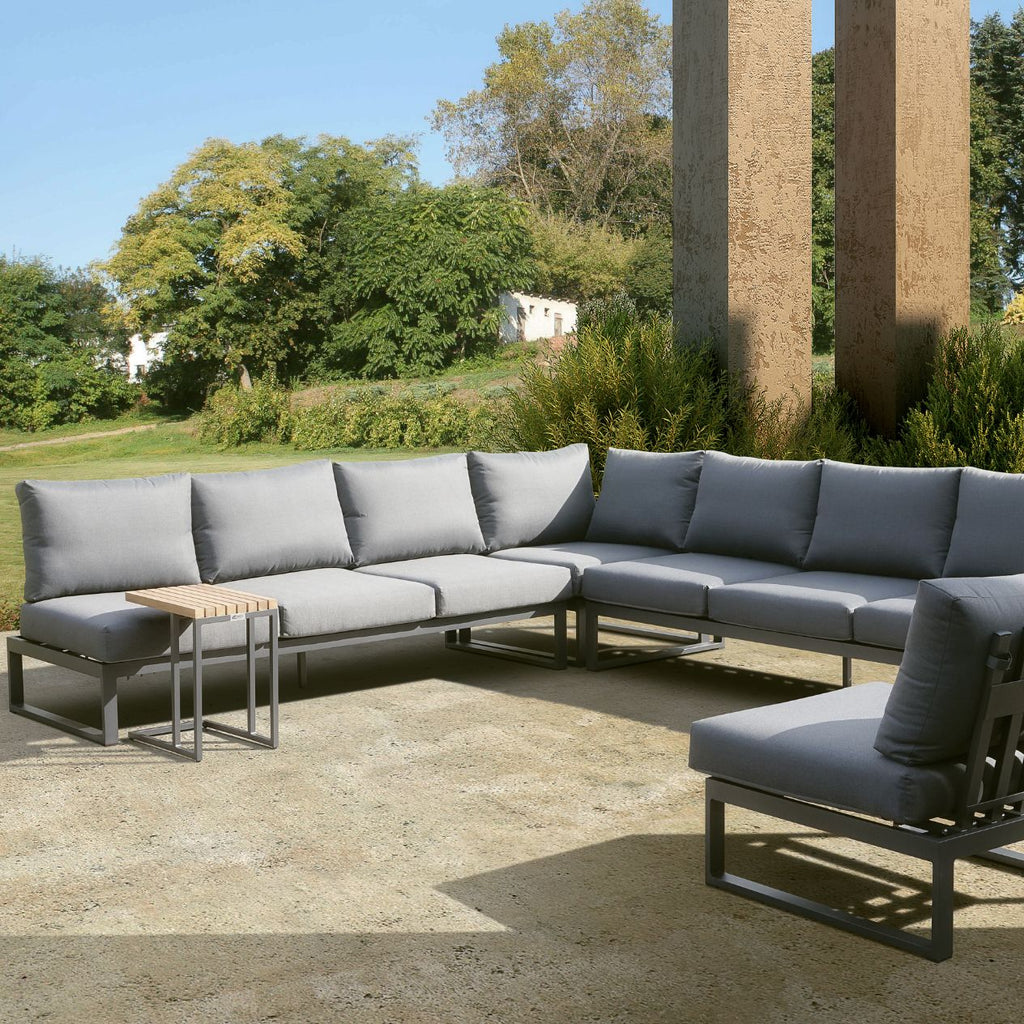
Different living situations call for either sectional or standard sofas. A sectional sofa has multiple sections you can arrange in different ways. These often include corner pieces and sometimes built-in recliners. Families and people who host guests frequently find sectionals ideal since they seat more people than standard sofas.
Standard sofas (also called traditional sofas) come as single-piece seating options. They accommodate multiple people and range from two-seater loveseats to larger three or four-seater options. Room placement becomes easier with these sofas since they don't need corner positioning.
Grey sectional couches give you these key benefits:
- Maximised seating capacity in a single furniture piece
- Corner utilisation that prevents dead space in room layouts
- Lounging options that allow for stretched-out relaxation
Standard sofas excel with:
- Mobility and flexibility in room arrangement
- Suitability for formal settings with a more structured appearance
- Easier movement when relocating or rearranging
Chaise lounges and modular options
Modular sofas stand out as the most flexible living room furniture. You can rearrange, add, or remove individual sections as needed. A grey modular sofa lets you create custom layouts that fit your space perfectly - a great choice for people who value adaptability.
Chaise lounges add extra leg support and create a relaxing seat. Grey couches with chaise sections blend style with function and work great for lounging or extra seating. As one manufacturer explains, "Experience the ultimate in lounge comfort with our chaise sofas, where design meets relaxation".
Modular sofas with chaise components bring several advantages:
- They grow with your lifestyle—add or remove pieces as needed
- Sections work in different arrangements for various occasions
- You can expand from a simple setup over time
Yes, it is the long-term versatility that makes modular options so appealing. "Our modular couches will evolve with your lifestyle—add or remove pieces anytime", making them an investment that adapts as your needs change.
Best shapes for small vs. large rooms
In stark comparison to this common belief, sectional sofas work well in both large and small homes. "Many people assume sectional sofas are only for large rooms, but certain sectional sofas are perfect for smaller spaces". Small spaces benefit from petite L-shaped sectionals tucked into corners, which help use floor space efficiently.
Small rooms work best with:
- Compact sectionals designed specifically for apartments and smaller homes
- Corner sectionals that fit snugly into corners, maximising limited square footage
- Armless sofas or designs with narrow arms that provide more seating without extra bulk
Large rooms can handle bigger configurations:
- U-shaped sectionals with two extended sections forming a U-shape, providing generous seating
- L-shaped modular sofas that help define distinct areas in open-plan spaces
- Conversation pits created with facing sectional components
"Simple lines, low backs, and slim profiles. Think mid-century modern designs, love seats, or two-seaters" work best in smaller spaces. These options give you plenty of seating without overwhelming the room.
Large rooms benefit from modular corner sofas that "provide ample seating without compromising on design" and create defined seating zones. Your grey couch's configuration should match both your style priorities and your space's practical needs.
Materials and fabrics: what really matters
The material you choose for a grey couch can make or break your satisfaction in the long run. Colour and configuration matter, but your upholstery choice determines how well your sofa handles daily use, fights off stains, and keeps its looks over time.
Fabric vs. leather: pros and cons
Grey couch owners face a choice between fabric and leather, each bringing its own set of benefits and drawbacks.
Fabric grey couches give you more options for texture and weave. They feel warm right away, unlike leather's cool initial touch, which makes them cosy from day one. You'll spend less on fabric sofas than leather ones, so there's more room in your budget. But they need more cleaning and might show their age faster than leather.
Leather grey couches add a touch of class that gets better with age. Good leather develops character marks over time instead of looking worn out. It stands up to tears, holes, and smells - perfect if you have pets. A manufacturer points out, "With just a bit of maintenance and care, you can expect a leather sofa to last for years".
Key considerations between fabric and leather:
- Maintenance: A quick wipe with a dry or damp cloth cleans leather, while fabric needs deeper cleaning
- Comfort: Fabric stays the same temperature; leather warms up as you sit
- Longevity: Well-cared-for leather outlasts fabric
- Price point: Leather costs more upfront but might save money over time
Performance fabrics for busy homes
Performance fabrics are a game-changer for grey couches in homes with kids, pets, or lots of guests. These smart materials fight off stains, keep their colour, and handle everyday wear better than standard fabrics.
These fabrics are built tough to handle spills, stains, and sun damage. Most have stain fighters built right in, so liquids bead up instead of soaking in. This gives you time to clean up messes before they set.
The best performance fabrics for grey couches include:
- Microfiber: This polyester fabric feels like velvet but fights water, stains, and fading - perfect for furniture that gets lots of use.
- Polyester blends: These synthetics clean up better and last longer than pure natural fibres without sacrificing comfort.
- Olefin: This tough fabric fights stains, mildew, wear, and sun damage, working well for both indoor and outdoor furniture.
Technology has boosted performance fabrics' durability. Some now include coatings that "bead liquid on contact" while staying soft and breathable. Others fight odours and stop bacteria - great news for pet owners.
How to choose based on lifestyle
Your daily life should guide your grey couch material choice. Families with young kids need "hardy, tightly woven materials that offer superior resistance to stains and wear". If your living room sees less action or serves as a formal space, you might prefer more delicate fabrics.
Pet owners should focus on scratch resistance and easy cleaning. Synthetic fibres like polyester handle pet damage better than silk or wool. Homes with allergy sufferers might prefer leather or certified hypoallergenic fabrics that don't trap dust and pet hair.
Thread count matters too - "the higher the thread count, the more tightly woven the material, and the better it will wear". More threads per square inch mean better durability.
A clear look at your lifestyle helps you pick the right grey couch. Think about how much use it will get, who'll sit on it (pets included), and how much maintenance you'll do. Mix these practical points with what you like to look at, and you'll find a grey couch that looks great and performs well for years.
Styling your grey couch with cushions and accents
The perfect accessories can turn your grey couch from a basic seat into your living room's showpiece. Smart styling choices let your grey sofa become a canvas that shows off your style and changes with your design priorities.
Colour combinations that work
Grey's versatility makes it a great base for countless colour schemes. Your light grey couch looks amazing with these colour options:
- Soft pastels like blush pink, powder blue, and mint green create an airy feel
- Bright pops of cobalt blue, teal, and sunshine yellow add energetic contrast
- Neutral tones like white, beige, and cream bring sophisticated elegance
- Earthy shades such as brown, mustard, and sage green add warmth
A dark grey couch looks best with rich, saturated colours. Deep charcoal sofas really shine with jewel-toned cushions in emerald, sapphire, or ruby. Warm shades like terracotta, rust, and mustard yellow add life while keeping everything balanced.
Your grey sofa's undertones should guide your colour choices. Cool grey sofas with blue or green undertones go naturally with turquoise and emerald accents. Warm grey couches with yellow or brown undertones match beautifully with gold, orange, or soft pink accessories.
Using texture to add depth
Texture creates interest and stops grey spaces from looking flat. Different materials add visual complexity even with few colours. Smooth, rough, shiny, and matte surfaces together create a rich, touchable environment.
Velvet cushions bring luxury and warmth to grey sofas. Their plush finish creates beautiful shadows and light play. Houndstooth patterns add sophisticated texture that ties everything together. A chunky knit or soft wool throw casually placed on your couch's arm makes it more inviting.
Different fabrics boost textural interest. Cotton, linen, and velvet cushions together make your grey sofa stand out. As one interior expert notes, "The soft velvet cushion adds richness and warmth, while the subtle houndstooth pattern brings visual interest and a touch of sophistication."
Natural elements make your sofa look even better. Wooden side tables, ceramic pieces, or fresh plants add organic textures that balance the upholstery's manufactured feel, creating a well-rounded space.
Seasonal styling ideas
Your grey couch lets you easily switch up looks between seasons by changing accessories. Summer calls for light linen cushions in cool blues and greens that remind you of the coast. Fall is perfect for deeper shades like burnt orange, rust, and olive green, with a cosy throw in matching colours.
Winter style needs layers—several cushions and thick throws in rich, warm fabrics like wool or velvet create a cosy spot. Spring brings new life with fresh floral patterns and bright accessories that capture the season's energy.
Holiday decorating becomes easy with your grey sofa as the backdrop. Christmas decorations in classic red and green really pop against grey. Non-traditional combinations like silver and blue or purple and gold look just as stunning—all working perfectly with your versatile grey base.
How to match your grey couch with room elements
A grey couch sets the foundation for your room's design scheme. The perfect sofa choice leads to the next vital step: making it work with your room's permanent features to create a designer-worthy space.
Wall colours that complement grey
Grey couches go together well with many wall colours. They work in design schemes of all types. Success depends on matching the right shades with your couch's specific tone.
For light grey couches, these wall colours work best:
- White or off-white creates a bright, airy atmosphere and makes spaces feel larger
- Soft blue tones add a calming, coastal feel
- Muted green builds a natural, peaceful setting
- Pale neutrals like beige or cream deliver a sophisticated look
Dark grey couches need a different approach. Light, airy wall colours keep the space from feeling too heavy. Natural light from nearby windows helps balance dark grey furniture's visual weight. Light, warm tones like cream and blush pink maintain an open atmosphere.
Note that grey furniture brings a modern, sophisticated look. White accents improve this aesthetic. This combination adds freshness and space—especially when you have small living rooms.
Rugs, curtains, and flooring tips
Your flooring choice affects how your grey couch looks in the space. White carpet adds cosy warmth and emphasises grey furniture's elegance. Cream tile creates balance and makes cool-toned grey furniture more inviting.
Your curtains should balance with both couch and window treatments. Neutral curtains work best with bold rug patterns. A neutral rug allows you to pick bolder curtain designs.
Rugs should contrast nicely with your grey couch and flooring. A bright rug can add personality to subtle, neutral walls and sofas. Warm neutrals like beige and cream create soft contrast with dark grey couches and add warmth to the room.
Creating a cohesive look
A neutral base shows off your grey sofa best. White walls reflect light to make rooms brighter and more spacious. Your grey couch becomes the focal point naturally.
Natural light helps create an open, welcoming living room. Light, airy curtains let in maximum sunlight. This natural light improves the room's atmosphere and shows off your furniture's colours and textures.
Smart furniture placement makes your grey couch stand out. Place the sofa in the centre facing the main entrance or lined up with key architectural features. Coffee tables, accent chairs, and side tables should frame the sofa to create an inviting area.
Texture and pattern add visual interest beyond colour. Different textures like velvet cushions, knitted throws, and linen curtains create depth. This layered approach lifts your grey couch's presence in its surroundings.
Sum up
Finding the perfect grey couch depends on your specific needs and lifestyle. Grey sofas have become timeless furniture pieces, and choosing your ideal match needs careful thought beyond just looks. The versatility of grey makes it a great foundation for countless design schemes. You can experiment with accessories and room elements without worrying about clashing colours.
A light grey sofa can brighten a small space, while darker shades work well for practical family living. Your choice will be a sophisticated anchor for years. The configuration options help your grey couch look stylish and function well in your unique living area. Room size and layout determine whether sectionals, modular designs, or standard sofas will work best.
Material choice plays a vital role in long-term satisfaction. Performance fabrics are great investments for busy households. Premium leather provides timeless elegance that ages well. Built-in storage, USB ports, and convertible options add functionality. These features turn your grey couch into a versatile living solution.
Grey couches adapt well as your style priorities change. You can easily swap cushions, throws, and surrounding decor to match seasonal changes and design trends. This flexibility explains why designers often recommend grey as a foundation piece, whatever your life stage or style preferences.
Good measurements, fabric research, and careful attention to undertones help avoid buying mistakes. Note that showroom lighting is different from home environments. Getting fabric samples before choosing a shade is essential. Your grey couch is an investment that, when chosen well, gives you years of comfort and style.