





Recently viewed


Grey Couch for Outdoor Living: Shade Selection, Materials and Placement
Grey is the most common colour choice for outdoor lounging furniture in Australia, and that's largely because it works with everything around it. A grey couch sits comfortably against timber decking, stone pavers, rendered walls, garden greenery, and pool surrounds without clashing or demanding attention. It's a background colour that lets the outdoor space do the talking.
Outdoors, grey also has practical advantages over lighter and darker alternatives. It hides surface dust and pollen better than white, absorbs less heat than black, and shows UV fading less obviously than bold colours. On the right frame and fabric, a grey couch handles Australian conditions with minimal upkeep.
This guide covers why grey works outdoors, how to choose between light and dark shades, which configurations suit different outdoor spaces, what materials perform best in Australian weather, and how to keep a grey outdoor couch looking clean season after season.
Why Grey Suits Outdoor Furniture
How Grey Handles Visual Wear
Outdoor furniture picks up dust, pollen, leaf stains, and watermarks as part of normal use. Grey — particularly mid-range tones — sits in the practical sweet spot between white (which shows every mark) and black (which shows dust and UV fading quickly). On a grey couch, minor surface dust blends into the colour rather than standing out, which means the furniture looks presentable for longer between cleans.
Grey also handles UV fading more gracefully than most colours. Bright colours lose their intensity noticeably within a season of direct sun. Black can develop a chalky appearance. Grey fades more gradually and less visibly, especially on UV-stabilised outdoor fabrics designed for Australian conditions.
Light Grey vs Dark Grey for Outdoor Use
The shade of grey you choose affects both how the couch looks in your outdoor space and how much maintenance it needs.
A light grey couch reflects more light and makes compact outdoor areas feel more open. It pairs well with pale pavers, light timber, and sandstone. The trade-off is that light grey shows dirt, food marks, and water stains more readily than darker shades — so it suits covered or semi-covered spaces where exposure to dust and rain is limited.
A dark grey couch absorbs more visual weight and anchors larger outdoor spaces. It hides surface marks, food spills, and general wear better than light grey, making it a more practical choice for uncovered patios, family entertaining areas, and spaces with pets or children. Dark grey also creates strong contrast against light-coloured surfaces like white rendered walls or pale stone.
If your outdoor area is uncovered and gets heavy use, dark grey is the lower-maintenance option. If the space is covered and you want a brighter, more open feel, light grey works well — but expect to clean cushion covers more frequently.
Outdoor Couch Configurations
Standard Outdoor Sofas
A standard outdoor sofa is a single-frame piece — typically a two-seater or three-seater — that provides a straightforward seating setup for patios, decks, and covered verandahs. Standard sofas are easier to position than modular or sectional configurations because they don't need corner placement or multiple connecting pieces.
For smaller outdoor areas, a two-seater grey couch paired with a coffee table creates a functional lounge zone without taking over the space. Three-seaters suit larger patios where you have room for a fuller seating arrangement.
Modular Outdoor Lounges
Modular outdoor lounges are made up of individual sections that connect to form larger configurations. You can arrange them in an L-shape, a U-shape, or a straight line depending on the space and the occasion.
A modular grey couch suits outdoor areas that serve different purposes at different times. You can spread sections out for a large gathering, pull them together for a compact setup, or separate a single module as standalone seating. Collections like the Lawson range show how modular designs combine weather-resistant frames with flexible layout options for Australian outdoor spaces.
Modular sections are typically heavier to move than standard sofas because each piece has its own frame and cushion set. Confirm the frame material is weather-resistant before leaving sections outdoors permanently — not all modular lounges are built for full outdoor exposure.
L-Shaped and Corner Configurations
An L-shaped outdoor couch defines a seating area and makes use of corner space that would otherwise sit empty. This configuration works well on larger patios and decks where the couch wraps around a corner or sits against two adjacent walls.
A grey couch in an L-shape creates a contained lounge zone without needing additional armchairs or side seating. It seats more people in less linear space than a standard sofa and naturally directs conversation inward.
Daybeds and Chaise Styles
Outdoor daybeds and chaise-style lounges are wider and deeper than standard sofas, designed for lying down rather than sitting upright. A grey daybed on a covered verandah or beside a pool creates a relaxed seating option that doubles as a rest spot.
These pieces take up more floor area than a standard couch, so they suit spaces where you have room to spare. They also benefit from being under cover — the larger cushion surface means more fabric exposed to weather if left uncovered.
Frame Materials for an Outdoor Grey Couch
Powder-Coated Aluminium
Aluminium is the most common frame material for outdoor couches in Australia. It's lightweight, rust-free, and handles UV exposure and heat cycling without warping or corroding. Powder coating adds a durable finish that resists scratching, chipping, and fading.
A grey couch on a powder-coated aluminium frame is easy to reposition for different outdoor layouts. The frame requires minimal maintenance — an occasional wipe-down or hose is enough to keep it clean.
Resin Wicker on Aluminium
Resin wicker woven over a powder-coated aluminium frame adds a textured, woven appearance to an outdoor couch while keeping the structural benefits of aluminium underneath. The wicker is UV-stabilised, doesn't absorb moisture, and hoses clean easily.
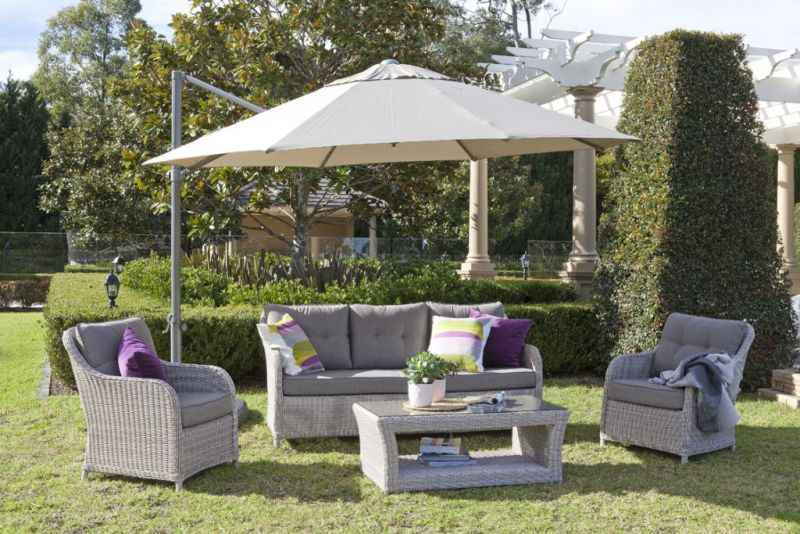
Grey resin wicker is one of the most popular outdoor lounge finishes in Australia. It suits covered patios, courtyards, and semi-covered entertaining areas. In a fully exposed position, confirm the wicker weave is rated for prolonged UV and moisture exposure.
Teak and Hardwood Timber
Teak frames bring natural warmth and weight to an outdoor couch. Teak is naturally weather-resistant and handles UV exposure without splitting or cracking. Left untreated, it develops a silver-grey patina that complements grey cushion fabric. With periodic oiling, it retains its original warm tone.
Timber-framed outdoor couches are heavier than aluminium, which makes them more stable in exposed or windy positions but harder to move. They suit spaces where the couch stays in one location.
Outdoor Cushion and Fabric Choices
Cushion fabric matters more on an outdoor couch than on most other outdoor furniture because the cushion surface area is larger, the furniture gets sat on for longer periods, and the cushions are harder to bring inside quickly if rain hits.
UV-Stabilised Outdoor Fabric
Outdoor cushion fabric needs to be UV-stabilised to hold its colour through extended sun exposure. Grey fades more slowly than most colours, but untreated fabric will still lose its tone over time. UV-rated fabric holds the grey shade significantly longer — this is especially important for lighter greys, which show fading more visibly than darker tones.
Choose fabric that's specifically rated for outdoor use. Indoor upholstery fabrics — even durable ones — aren't treated for UV or moisture and will deteriorate quickly in Australian outdoor conditions.
Water-Repellent Cushion Fills
Water-repellent outdoor cushions shed light rain and resist staining. The cushion fill should drain and dry quickly if moisture gets through — foam with drainage channels or quick-dry fill performs better than solid high-density foam, which holds water and takes longer to dry.
For an outdoor grey couch that stays outside through summer, quick-dry cushion fill reduces the risk of mould and mildew building up inside the cushion.
Cushion Storage and Covers
Storing cushions under cover when the couch isn't in use extends their life significantly. A weatherproof storage box, a covered bench seat, or simply bringing cushions inside overnight keeps them cleaner and drier.
If removing cushions isn't practical, outdoor furniture covers protect the entire couch from rain, dust, and UV between uses. Covers are particularly worthwhile for larger couch configurations where multiple cushions are harder to move individually.
Where to Place a Grey Couch Outdoors
Covered Patios and Verandahs
A covered patio or verandah is the most common spot for an outdoor grey couch. The roof provides protection from direct rain and reduces UV exposure on the cushions, which extends fabric life and keeps the colour consistent.
Under cover, a light grey couch works well — it brightens the shaded space and reflects available light. Pair it with a side table and a few outdoor cushions for a functional lounge setup.
Open Decks and Patios
On an uncovered deck, a dark grey couch is the more practical choice. It handles direct sun, rain, and dust better than lighter shades and doesn't show wear as quickly. Choose a frame and cushion combination rated for full outdoor exposure, and consider a furniture cover for extended periods when the couch isn't in use.
Position the couch where it gets some shade during the hottest part of the day if possible. Under a pergola, beside a wall that casts afternoon shadow, or angled away from the strongest sun reduces UV load on the cushions.
Poolside
A grey couch beside a pool creates a comfortable seating area for drying off, socialising, or supervising. Poolside furniture faces splash, sunscreen residue, and sustained UV — so the frame must be rust-free and the cushion fabric must be water-repellent.
Powder-coated aluminium or resin wicker frames handle poolside conditions without corroding. Avoid timber frames in direct poolside positions unless the timber is sealed and rated for moisture exposure.
Courtyards
In a courtyard, a grey couch anchors the seating area and works with the surrounding walls, paving, and plantings. Courtyards are often partially enclosed, which provides some weather protection while still exposing furniture to sun and rain.
A modular grey couch suits courtyards that serve different purposes — you can reconfigure the sections for a dinner party, a casual afternoon, or a quiet evening without needing separate furniture for each occasion.
Keeping a Grey Outdoor Couch Looking Good
Grey outdoor couches need the same basic care as any outdoor furniture — regular surface cleaning and cushion management.
Frames — Hose down or wipe aluminium and resin wicker frames periodically. For teak, a light scrub with soapy water removes surface grime. Avoid abrasive cleaners on any frame finish.
Cushion covers — Remove and hose clean, or machine wash if the fabric allows it. Grey shows less surface dirt than white, but food and drink stains still need prompt attention. Water-repellent fabric makes cleanup easier because spills sit on the surface rather than soaking in.
Cushion storage — Store cushions under cover or bring them inside during extended wet periods. This is the single most effective thing you can do to extend cushion life on any outdoor couch.
Furniture covers — For larger couch configurations that are harder to clear, a fitted furniture cover protects against rain, dust, bird droppings, and UV between uses.
What to Check Before Buying
Frame material — Powder-coated aluminium and resin wicker over aluminium are the most weather-resistant, low-maintenance options for Australian conditions. Teak works well but needs periodic oiling.
Cushion fabric rating — Water-repellent, UV-stabilised fabric is the baseline for outdoor cushions. Confirm the fabric is specifically rated for outdoor use, not just marketed as durable.
Cushion fill — Quick-dry fill or foam with drainage channels dries faster after rain than solid foam. This reduces mould risk on a couch that stays outdoors.
Configuration — Decide whether a standard sofa, modular sections, or an L-shaped layout suits your space and entertaining style before ordering. Measure the area and confirm the configuration fits with room for movement around it.
Shade of grey — Light grey suits covered spaces and makes compact areas feel open. Dark grey handles uncovered positions and heavy use with less visible wear. Match the shade to your exposure level and cleaning tolerance.
Cover or storage plan — For any outdoor grey couch, have a plan for cushion protection during extended rain or off-season. Covers, storage boxes, or indoor stacking all work.
The Right Grey for Your Outdoor Space
A grey couch built for outdoor conditions holds its colour, comfort, and structure through Australian weather with straightforward care. Grey sits between the extremes of white and black — it hides everyday dust, fades gradually under UV, and works visually with almost any outdoor surface or colour scheme.
Choose the shade based on your space and how much cleaning you're willing to do. Pick a frame and fabric rated for outdoor exposure. Plan for cushion storage or covering during wet weather. With those basics in place, a well-chosen outdoor grey couch becomes a practical centrepiece for your patio, deck, or courtyard — one that holds up season after season without needing much from you.
Browse the full range of outdoor sofa lounges and outdoor modular lounges to find grey options suited to your outdoor setup.
Frequently Asked Questions
Is a grey couch a good choice for outdoor use in Australia?
Grey is one of the most practical colour choices for outdoor furniture in Australian conditions. It hides surface dust and pollen better than white, absorbs less heat than black, and shows UV fading less visibly than bold colours. On UV-stabilised outdoor fabric, grey holds its tone through extended sun exposure with minimal upkeep.
What is the difference between light grey and dark grey for an outdoor couch?
Light grey reflects more light and works well in covered or semi-covered spaces, making compact areas feel more open. Dark grey hides surface marks, food spills, and general wear more effectively, making it the better option for uncovered patios and high-traffic areas. If your outdoor space is fully exposed, dark grey requires less frequent cleaning.
What frame material lasts longest on a grey outdoor couch?
Powder-coated aluminium is the most weather-resistant and low-maintenance frame option for Australian outdoor conditions. It's rust-free, lightweight, and handles UV exposure and heat cycling without warping. Resin wicker over aluminium offers a textured look with similar durability. Teak is naturally weather-resistant but heavier, and benefits from periodic oiling to maintain its original tone.
How do I protect the cushions on an outdoor grey couch?
Store cushions under cover or bring them inside during extended wet periods — this is the most effective way to extend cushion life. Choose cushions with water-repellent fabric and quick-dry fill to reduce moisture retention and mould risk. When the couch isn't in regular use, a fitted outdoor furniture cover provides additional protection from rain, dust, and UV.
Can I leave a grey couch outside all year round?
A grey couch with a powder-coated aluminium or resin wicker frame and UV-stabilised, water-repellent cushion fabric can stay outdoors through Australian seasons. The frame handles weather exposure without corroding, and quality outdoor fabric resists UV fading and moisture. For best results, store or cover cushions during extended wet periods and hose down the frame periodically to remove surface grime.