





Recently viewed


Grey is a practical colour choice for outdoor dining chairs. It sits between the extremes of white (which shows every mark) and black (which absorbs heat and shows dust), making it one of the lowest-maintenance colour options for furniture that gets daily outdoor use. A grey dining chair works visually with timber tables, stone surfaces, dark and light outdoor settings, and most other outdoor furniture colours without clashing.
Outdoor dining chairs need to handle UV, rain, heat, and regular use without fading, rusting, or falling apart. Grey hides the visual effects of outdoor wear better than most colours — but the frame material, seat construction, and fabric rating still determine how well the chair actually performs over time.
This guide covers shade selection, chair styles, frame and cushion materials, table matching, and comfort — everything you need to choose a grey dining chair that works in your outdoor space and holds up through Australian conditions.
Why Grey Works for Outdoor Dining Chairs
Grey blends into outdoor environments without competing for attention. Against timber decking, garden greenery, stone pavers, or a rendered courtyard wall, a grey dining chair sits quietly in the setting and lets the table, the food, and the surroundings take centre stage. It's a background colour that works with almost everything around it.
From a maintenance standpoint, grey handles outdoor wear well. Dust, pollen, and minor surface marks are far less visible on grey than on white. UV fading is less obvious on grey than on bold colours or black. And on powder-coated or resin frames, grey finishes hold their tone through extended Australian sun exposure with minimal attention.
Grey also gives you flexibility if you change other elements of your outdoor space. A new table, different cushions, a repainted wall — grey chairs work with all of them without looking mismatched.
Light Grey vs Dark Grey for Outdoor Dining
The shade you choose affects both the look and the practicality of your outdoor dining chairs.
Light grey dining chairs reflect more light and feel visually lighter in a setting. They suit covered patios, lighter-toned outdoor surfaces, and spaces where you want the seating to feel open and airy. The trade-off is that light grey shows food marks, water stains, and surface dust more readily — so it suits dining areas where cushion covers are easy to remove and clean, or where the chairs sit under cover.
Dark grey dining chairs anchor a space more firmly and hide everyday wear better. Charcoal and slate tones work well in uncovered outdoor areas, entertaining spaces that see heavy use, and setups where children or pets are part of the picture. Dark grey also creates stronger contrast against light-coloured tables and pale outdoor surfaces.
If your outdoor dining area is uncovered and gets regular family use, dark grey is the more forgiving option. If the area is covered and you prefer a brighter, lighter look, light grey performs well with a basic cleaning routine.
Outdoor Dining Chair Styles in Grey
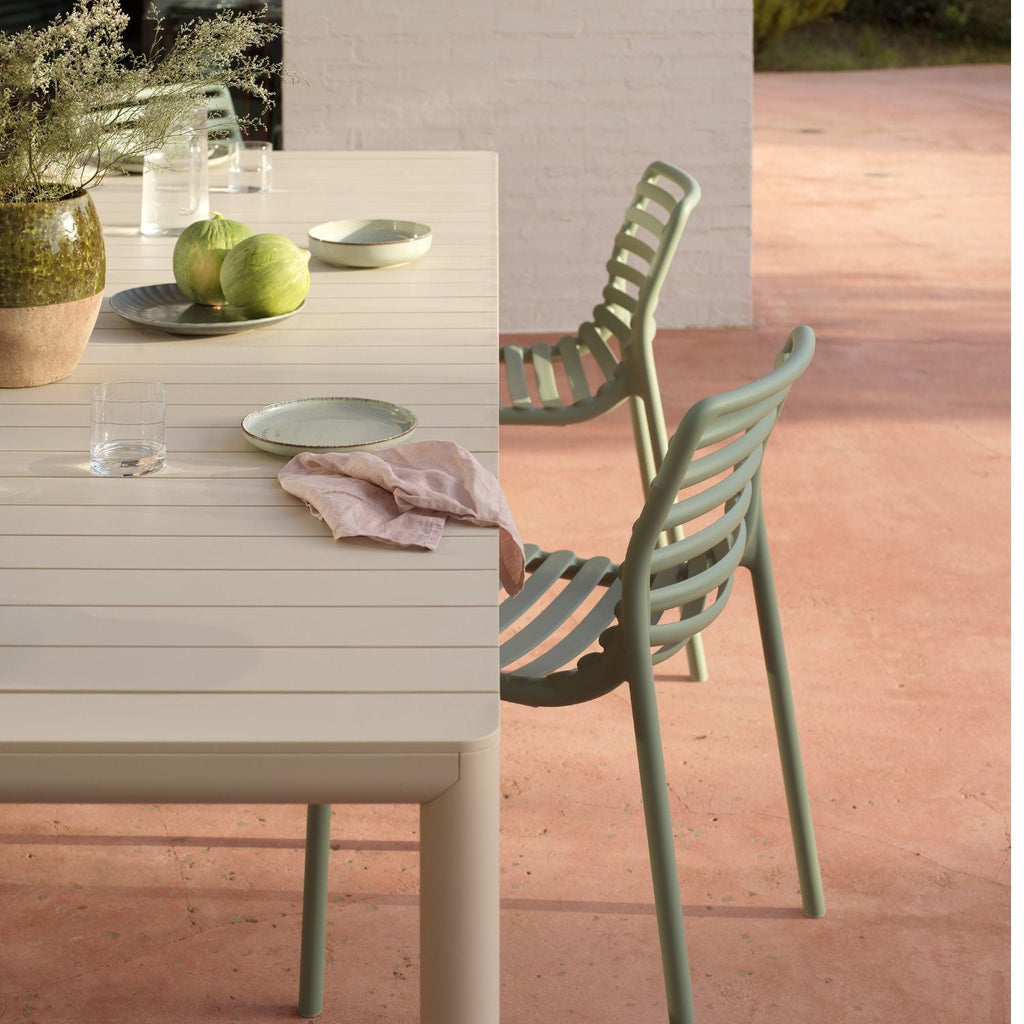
Armless Side Chairs
Armless dining chairs have a slim profile that saves space along the sides of an outdoor dining table. They tuck in neatly when not in use, keep sightlines open across the table, and work well in tighter dining setups where shoulder room is limited.
Most outdoor dining settings use armless side chairs as the primary seating. They're lighter, easier to move, and take up less visual space than dining armchairs.
Dining Armchairs
A dining chair with arms provides more support and a more relaxed seating position, which makes a difference during longer outdoor meals. Arms give you somewhere to rest while talking, and the wider frame creates a more grounded feel at the table.
Dining armchairs take up more width than side chairs — check that the arms clear the table edge and that you can fit the number of chairs you need around your table with comfortable spacing. A common approach is to place armchairs at the table ends and armless chairs along the sides.
Stackable Dining Chairs
Stackable outdoor dining chairs nest vertically for storage, which makes them one of the most practical options for outdoor use. If you need extra chairs for entertaining but don't want them out permanently, stackable designs let you store four to six chairs in the footprint of one.
Stackable grey dining chairs are typically made from resin or powder-coated aluminium — both lightweight, weather-resistant, and easy to move. They suit rental properties, apartment balconies, and any outdoor dining area where storage space is limited.
Frame Materials for Outdoor Grey Dining Chairs
Powder-Coated Aluminium
Aluminium is lightweight, rust-free, and handles UV and heat cycling without warping or corroding. Powder coating bonds a durable grey finish to the frame that resists scratching, chipping, and fading. Aluminium dining chairs are easy to move and reposition — useful when you rearrange outdoor dining layouts for different occasions.
Grey powder coating holds its colour well in Australian conditions. Lighter greys may show minor colour shift over extended UV exposure, but the change is gradual and far less noticeable than on brighter colours.
Resin Wicker on Aluminium
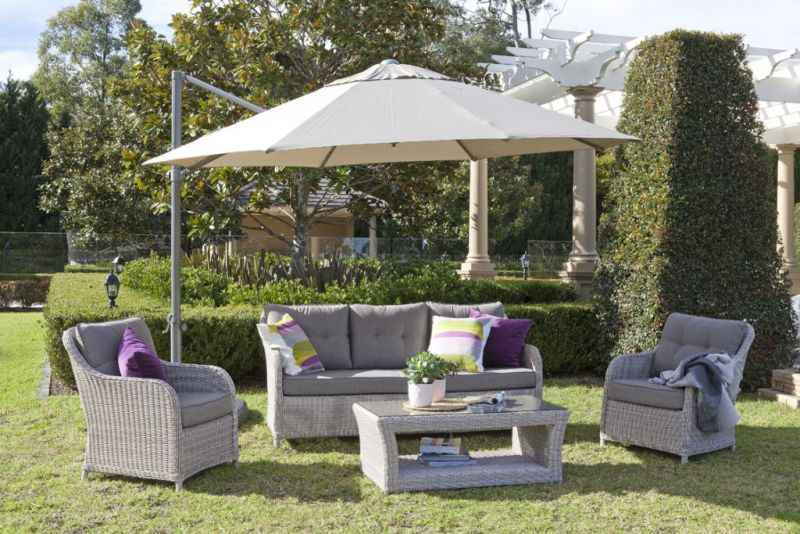
Resin wicker woven over a powder-coated aluminium frame gives a textured, finished look while maintaining full weather resistance underneath. The wicker is UV-stabilised, doesn't absorb moisture, and hoses clean easily. Wicker dining chairs in grey suit covered patios and courtyards where you want a softer visual texture at the dining table.
Grey wicker adds warmth and depth to the chair's appearance compared to a bare aluminium frame, and the woven texture creates subtle visual interest that complements natural outdoor surroundings.
Rope Weave on Aluminium
Rope dining chairs use UV-stabilised synthetic rope woven over an aluminium frame. The rope creates a lighter, more open profile than solid wicker, which helps the chairs feel less bulky around a dining table.
Grey rope weave dries quickly after rain and handles coastal salt air well. It's a practical choice for exposed balconies, beachside outdoor dining, and spaces where the chairs get wet regularly.
Teak and Hardwood Timber
Timber dining chairs with grey cushions or grey-stained finishes bring natural warmth to an outdoor dining setting. Teak is the benchmark hardwood for outdoor furniture — naturally weather-resistant, UV-stable, and built to last in exposed conditions.
Left untreated, teak develops a silver-grey patina that naturally complements grey cushion fabric. With periodic oiling, it retains its original warm tone. Timber frames are heavier than aluminium, which adds stability but makes the chairs harder to move frequently.
Seat Cushions
If your grey dining chair uses seat or back cushions, check that the fabric is rated for outdoor use. Water-repellent, UV-stabilised fabric is the standard for outdoor cushions — it sheds light rain, resists staining, and holds its grey colour through extended sun exposure.
Removable, hose-clean cushion covers make maintenance straightforward. For dining chairs, tie-on cushion pads that attach to the seat prevent them from sliding or blowing off in wind.
Matching Grey Dining Chairs to Your Outdoor Table
Grey dining chairs work with most outdoor table materials and finishes — that's one of their main advantages. A few pairing guidelines help the combination look intentional rather than accidental.
Timber tables — Grey chairs complement both light and dark timber. A warm-toned teak or eucalyptus table with grey wicker or grey rope chairs creates a natural, balanced pairing. The grey offsets the timber's warmth without competing with it.
Stone or concrete tables — Grey chairs on a grey or charcoal stone table create a tonal, cohesive look. To avoid everything blending into one shade, vary the grey tones — lighter chairs with a darker table, or vice versa.
Aluminium or metal tables — Grey chairs with a matching grey aluminium table create a clean, consistent outdoor dining setting. This suits modern outdoor areas where a uniform material and colour palette is the goal.
White tables — Grey chairs against a white table create clear contrast without being stark. This pairing works well in bright outdoor areas where you want definition between the seating and the surface.
You don't need the chairs and table to match exactly. A slight difference in tone or material between the chairs and table adds visual interest and keeps the setting from looking too uniform.
Comfort for Longer Outdoor Meals
Outdoor dining meals — particularly in summer — tend to run longer than indoor ones. Comfort matters more when people are sitting for an hour or two rather than a quick weeknight dinner.
Back support — A dining chair with a supportive backrest makes a noticeable difference over a long meal. Contoured backs or gently angled backrests encourage a more comfortable seated position than flat, upright backs.
Seat depth — A seat depth of roughly 40 to 45 centimetres suits most adults comfortably. Too shallow and you feel perched; too deep and shorter guests can't sit back without their feet lifting off the ground.
Cushioning — Outdoor dining chairs with seat cushions are more comfortable for extended sitting than bare frames. Even a thin outdoor cushion pad adds meaningful comfort without the bulk of a full lounge cushion.
Armrests — For the chairs where guests tend to linger (usually the ends of the table), armrests add comfort and a more relaxed seating position.
What to Check Before Buying
Number of chairs needed — Count the seats you need for everyday use and for entertaining. Stackable extras let you scale up for guests without permanent clutter.
Frame material — Powder-coated aluminium is the most weather-resistant and low-maintenance option. Resin wicker and rope weave add texture. Teak adds natural warmth but is heavier to move.
Cushion fabric — If the chair uses cushions, confirm they're water-repellent and UV-stabilised. Removable, washable covers are easier to maintain long-term.
Table compatibility — Check that the chairs fit around your table with comfortable spacing. Arms need to clear the table edge. Allow roughly 60 centimetres between chair centres for shoulder room.
Shade of grey — Light grey suits covered areas and brightens a dining setup. Dark grey handles uncovered positions and heavy use with less visible wear.
Stackability — If storage is limited, stackable chairs save space between uses and scale easily for gatherings.
A Versatile Foundation for Outdoor Dining
A grey dining chair in the right material handles Australian outdoor conditions with minimal fuss. Grey works with virtually any table finish, hides everyday wear better than lighter colours, and fades less visibly than bold shades. It's a practical, low-profile colour choice that lets the dining experience — the food, the company, the setting — take priority over the furniture.
Choose a frame rated for outdoor weather, cushions with water-repellent and UV-stabilised fabric, and a shade that matches your exposure level and cleaning preference. With those basics right, a set of grey outdoor dining chairs anchors your alfresco dining area for seasons without demanding much attention.
Browse the full range of outdoor dining chairs and outdoor dining settings to find grey options suited to your table and outdoor space.