




Recently viewed


How to Choose the Perfect Large Outdoor Umbrella
Large outdoor umbrellas shield you from harmful UV rays and let you spend more time outside without sunburn risks or heat issues. You need the right shade solution that works well for your home patio or business outdoor space.
Extra large outdoor umbrellas give you maximum coverage that works great for bigger spaces like decks, patios, and pool areas. Quality outdoor umbrellas use UV-resistant fabrics that block harmful rays and stay vibrant without fading.
How large umbrellas improve outdoor comfort
The right size outdoor shade solution can change your entire outdoor experience. Large outdoor umbrellas create cooler, more comfortable areas that let you enjoy the outdoors whatever the weather. The temperature beneath these umbrellas drops by a lot compared to surrounding areas. This makes even the hottest summer days more bearable.
Large outdoor umbrellas give you plenty of room to move around while staying protected. Your guests can mingle comfortably without fighting for shade during outdoor gatherings. You can even enjoy outdoor meals during peak sunshine hours. These umbrellas turn what could be uncomfortable midday meals into enjoyable experiences.
These substantial shade solutions create welcoming environments that draw people outdoors, whether on residential patios or in commercial spaces. Many designs come with adjustable tilt mechanisms and 360-degree rotation. This gives optimal coverage as the sun moves across the sky.
UV protection and weather resistance benefits
Large outdoor umbrellas do more than provide comfort - they protect your health through UV blocking capabilities. Quality umbrellas use UV-protected, solution-dyed acrylic canopies that resist fading even after long sun exposure. Premium models block up to 99% of harmful UV light and shield you from potential skin damage.
Australia's best large outdoor umbrellas feature built-in air vents that improve airflow and reduce lift on windy days. High-quality models stand up to various weather challenges. Heavy-duty options can handle winds up to 80 km/h, while top commercial-grade varieties remain stable in winds reaching 160 km/h.
Double-layered canopy fabrics keep you dry during unexpected light showers. These umbrellas are year-round investments rather than seasonal additions to your outdoor space.
When to choose an extra large outdoor umbrella
You might need extra large outdoor umbrellas in several specific situations:
- Spacious entertaining areas - For patios or decks where you frequently host gatherings, a 4-metre classic umbrella offers extensive coverage for large seating arrangements
- Dining spaces - A 12-foot (approximately 3.65m) umbrella works ideally for tables seating six people, while tables seating four require around 3 to 3.3 metres of coverage
- Poolside settings - Cantilever or side-post umbrellas work best for swimming pool areas, as they allow you to tilt and rotate the umbrella to block the sun while swimming
- Commercial spaces - Restaurants, cafés, or outdoor venues benefit from extra large commercial-grade umbrellas that help expand business capacity by creating additional comfortable seating areas
Your space and furniture dimensions determine the size you need. Extra-large tables need the largest available options (typically 12 feet or larger) with height adjustment and tilt functions to handle different sun angles throughout the day.
Careful measurements of your area become vital before purchase. You should measure both the space you want to shade and the furniture that will sit beneath it. This helps ensure your investment provides the right coverage without overwhelming smaller spaces or leaving larger areas exposed.
Types of Large Outdoor Umbrellas
Looking for the right large outdoor umbrella can be tricky. You'll find several styles out there, and each one works best in different settings. Let's break down the options to help you pick the perfect shade solution.
Centre post vs cantilever umbrellas
These two popular designs work quite differently and can really change how you use your outdoor space. Centre post umbrellas use a classic design where the pole sits right in the middle of the canopy. These traditional umbrellas, also known as market umbrellas, give you stable support and work great for café seating, outdoor dining, and beer gardens.
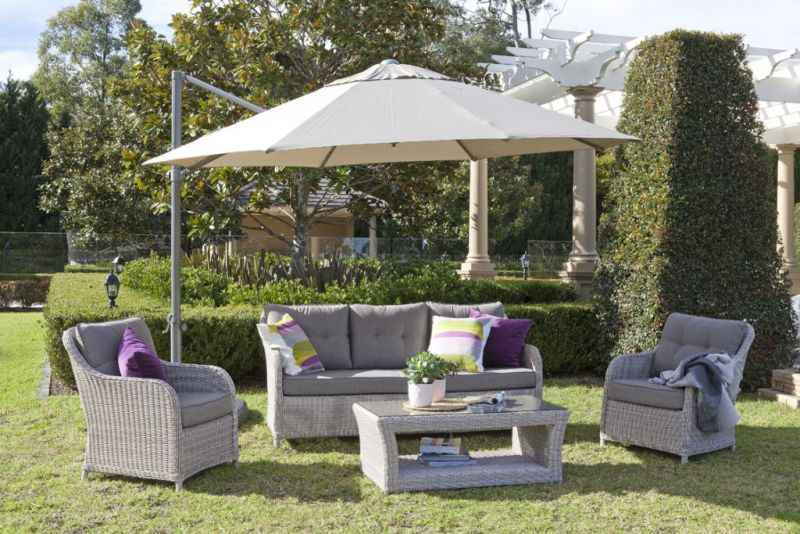
Cantilever umbrellas take a different approach. They hold the canopy from the side with an offset pole, which leaves the space underneath clear. You won't have to arrange your furniture around a centre pole, and most models can spin all the way around and tilt to follow the sun. These are perfect next to pools since you can place the shade exactly where you need it without getting in the way of swimmers.
Your space will help you decide which type to get. Centre pole umbrellas stay more stable in smaller areas and don't need such heavy bases. The cantilever ones need stronger bases because their weight sits off to one side, but you get more open space underneath.
Freestanding vs table-integrated models
Freestanding umbrellas come with their own weighted base, so you can put them anywhere outdoors. They're great for hard surfaces like tiled patios or hardwood decks because you don't have to bolt them down.
Table-integrated umbrellas fit right into your dining or coffee table's umbrella hole. They look neat and tidy, and you won't need a separate base. This setup works really well for outdoor dining areas where people naturally gather around a table.
The freestanding ones usually come with heavy bases made of aluminium, resin, or concrete to keep them steady. Some heavy-duty commercial ones work better bolted to the ground, but you can still fold them up when you're done using them.
Retractable and tilting options
Adding adjustable features gives you better control over your shade. Retractable umbrellas fold away easily when you don't need them—perfect if you get a lot of wind or like keeping things minimal when you're not entertaining. They work great with modular furniture and portable decks, giving you lots of flexibility.
You'll find two main types of tilting mechanisms: collar tilt and push-button tilt. Collar tilt works by turning a mechanism around the pole, while push-button tilt lets you press a button near the canopy to adjust it. These features are a great way to get consistent shade as the sun moves across the sky.
The best models often combine several adjustment options. To name just one example, some cantilever designs let you rotate and tilt the canopy, while retractable ones include telescopic poles that adjust the height when folded.
Now that you know the main types of umbrellas, you can choose one that fits your outdoor space perfectly. Think about how you'll use it and pick something that looks good, works well, and lasts long.
Choosing the Right Size and Shape for Your Space
The perfect large outdoor umbrella creates balanced coverage that protects your guests without dominating your outdoor area. Your specific space needs will determine the most suitable choice.
Measuring your patio or deck area
Start by clearing all furniture and obstacles from your outdoor space to get accurate measurements. The length and width measurements should account for umbrella coverage that extends 0.5-1 metre beyond your table or seating on all sides. This extra space will protect everyone as the sun's position changes throughout the day.
Space beneath the umbrella isn't your only concern - movement space matters too. A half-metre clearance around the umbrella lets chairs move easily and air flow naturally. This eliminates awkward furniture shuffling and helps guests stay comfortable in the shade all day.
Round, square, and rectangular canopy shapes
Your umbrella's shape affects more than looks - it determines how well the space works. Square umbrellas give you 30% more shade than octagonal ones of equal size. A three-metre square umbrella shades about 9m², while its octagonal counterpart covers only 6.4m².
The right shape should match your furniture:
- Square umbrellas work best with square or rectangular tables and create modern appeal, especially near walls
- Octagonal/round umbrellas pair naturally with circular tables and add traditional charm, blending beautifully with garden greenery
- Rectangular umbrellas match oval or rectangular dining sets and shade long spaces effectively
Best sizes for dining, lounging, and poolside use
Proper sizing makes a vital difference in dining comfort. Your umbrella should reach 60-90cm past each table edge. Here's a quick guide:
- Small bistro tables (1.2m): 2-2.5m umbrellas work best
- 4-6 person tables (1.5m): 2.5-3m umbrellas provide ideal coverage
- 6-8 person tables (2m): 3-3.5m umbrellas give perfect shade
Lounge areas need more coverage. Single chaise lounges do well with 8-9 foot (2.4-2.7m) canopies, while sectionals and larger seating groups need 11-13 foot (3.3-4m) options.
Pool areas have special requirements. Cantilever designs excel here because you can adjust them without pole interference. Large pool decks might need multiple big umbrellas or extra-large 4-5m models to avoid gaps in coverage.
Small umbrellas make guests chase shade spots, while oversized ones can crowd your space. Accurate measurements help you pick a large outdoor umbrella that balances protection and style in your outdoor space.
Materials That Make a Difference
Your large outdoor umbrella's quality and performance depend on what it's made of. Smart choices about frames and fabrics will help your investment last through seasons while looking great.
Frame materials: aluminium, wood, and steel
Aluminium frames blend modern looks with practical benefits. These sturdy yet light structures won't rust or corrode, which makes them perfect near the coast. Anodised aluminium gives extra protection from weather and creates a clean, modern look. Quality aluminium frames stay stable even though they weigh less than other options.
Wooden frames add natural warmth and charm to outdoor spaces. Hardwoods like teak or camphor create solid frames that stand up well to moderate winds. Wood stays cool to touch on hot days, unlike metal options. You'll need regular upkeep to stop the wood from cracking or warping.
Steel gives you amazing strength and durability. We used it mostly in umbrella bases and structural parts. Powder-coated steel fights off corrosion better, but scratches in this protective coating can rust if you don't fix them quickly. Steel's heavy weight helps it resist wind better, so it works great for permanent commercial setups.
Durability and maintenance tips
Good maintenance will make your umbrella last longer. Check frames often for rust or corrosion, especially where metal parts meet. Wooden frames need sanding now and then, plus some water-based exterior varnish to stay strong and look good.
Different fabrics need different care. You can clean acrylic and Olefin canopies with mild soap and water, and sometimes even use bleach for tough stains. Make sure your umbrella dries completely before you store it - this stops mildew and keeps it looking and working great.
Features and Accessories to Look For
A large outdoor umbrella needs more than just its simple structure. The right accessories will boost stability, durability, and make it more useful in different weather conditions.
Weighted bases and stands
The right base is vital for umbrella stability. Your base weight should match your umbrella size. A 9-foot umbrella needs at least a 50-pound base, while larger models need 75 pounds or more. Cantilever umbrellas are more sensitive to wind, so a 10-foot canopy needs 150-175 pounds of weight. An 11-foot model needs 220+ pounds or more.
You can choose bases made of cast iron, steel, concrete, or plastic. Many come with wheels or handles that make moving easier. Some cantilever models use ballast block frames that work with concrete weights—usually 25kg blocks measuring 48×48cm.
Wind vents and tilt mechanisms
Wind vents are openings in the canopy that reduce wind resistance by a lot. They let breezes pass through and stop the umbrella from catching wind, flipping inside out, or breaking. Double-vent systems work better than single vents in strong winds.
You'll find three main tilt mechanisms: collar tilt (turn a mechanism around the pole), push-button tilt (press a button and adjust manually), and crank tilt (built into the opening mechanism). Each type gives you different levels of convenience and flexibility in positioning.
FAQs
Q1. What size outdoor umbrella should I choose for my space? The size of your outdoor umbrella depends on your specific needs. For a bistro table seating two, a 6 to 6.5-foot umbrella is suitable. A 7 to 7.5-foot umbrella can shade a table for four or a single chaise lounge. For larger spaces, consider umbrellas up to 11-13 feet. Always ensure the umbrella extends 60-90cm beyond each table edge for optimal coverage.
Q2. Which materials are best for outdoor umbrella frames? The best materials for outdoor umbrella frames depend on your priorities. Aluminium is lightweight, rust-resistant, and ideal for coastal environments. Wooden frames, often made from teak or camphor, offer natural charm but require more maintenance. Steel provides exceptional strength and durability, making it suitable for permanent commercial installations.
Q3. What features should I look for in a high-quality outdoor umbrella? Look for umbrellas with wind vents to reduce wind resistance, tilt mechanisms for flexible positioning, and appropriate base weights for stability.
Q4. How many ribs should a good outdoor umbrella have? While the basic type of umbrella has eight ribs, high-quality outdoor umbrellas may feature 12, 16, or even 24 ribs. These "multi-rib umbrellas" provide enhanced stability and durability. The number of ribs can affect the umbrella's wind resistance and overall strength.
Q5. What type of umbrella is best for poolside use? For poolside settings, cantilever umbrellas are often the best choice. These umbrellas have an offset pole that allows for flexible positioning without obstructing the pool area. They can typically rotate 360° and tilt to track the sun's movement, providing optimal shade throughout the day. Choose a size based on your specific pool deck dimensions, with larger options (4-5m) suitable for extensive areas.