





Recently viewed


Outdoor Round Tables and Chairs: How to Choose the Right Set for Australian Conditions
Choosing an outdoor round table and chairs is a practical decision. The set you select needs to handle Australian sun, heat, coastal humidity and real-world family use — not just look right on delivery day. This guide covers sizing, materials, chair selection and maintenance so you can make an informed choice that performs for the long term.
Types of Outdoor Round Table and Chair Sets
Outdoor round dining sets come in several configurations. Each addresses specific space requirements and how you use your outdoor area. Understanding these differences helps you select a round table and chairs that suits your household.
Fixed Round Tables
Fixed round tables maintain a constant diameter without extension mechanisms. They work well when your seating requirements are consistent and your outdoor area supports a permanent footprint. Common diameter options range from 900 mm through to 1800 mm. A 1200 mm fixed round table seats four people comfortably for daily use, while a 1700 mm diameter accommodates six without crowding.
Fixed tables eliminate moving parts. Fewer mechanical components means less to maintain outdoors — an important consideration when furniture is exposed to Australian weather conditions throughout the season.
Extendable Round Tables
Extendable round dining tables solve the challenge of accommodating extra guests without occupying floor space permanently. These tables shift from round to oval when expanded. A 1200 mm round table with a single leaf extends to approximately 1200 mm × 1500 mm and seats six comfortably. Larger 1500 mm round tables with leaves become 1500 mm × 1800 mm ovals for eight.
Extension mechanisms vary by design. Self-storing leaf systems keep the additional surface tucked beneath the tabletop when not in use, reducing the risk of warping from temperature variation — particularly relevant in climates with wide daily temperature swings.
Drop-Leaf Round Tables
Drop-leaf tables feature hinged sections that fold down when not required. This design suits smaller patios, balconies and courtyards where space flexibility matters. With one or both leaves lowered, the table can sit against a wall to free up floor area.
Allow 900 mm of clearance around the table for comfortable movement. When leaves are folded, this becomes achievable even in compact outdoor spaces.
Pedestal Base vs Leg Base
The base style affects seating comfort and stability. Pedestal bases use a single central support column and provide unrestricted legroom around the full perimeter. This makes it straightforward to add extra chairs when guests arrive. Pedestal tables suit round tops particularly well.
Leg-base tables distribute weight across four supports and offer strong stability for larger surfaces and heavier frame materials such as powder-coated aluminium or hardwood timber. The trade-off is reduced legroom at corners and less flexibility when fitting additional seats at short notice.
How to Choose the Right Size
Your outdoor area dimensions determine which round table and chairs will fit properly. Measure the length and width of your available space before selecting. Mark where you intend to position the table, then measure outward to confirm adequate clearance to walls, railings, garden beds or other furniture.
Space and Clearance
Allow 900 mm on all sides between the table edge and any obstruction. This spacing permits foot traffic to move around the table comfortably. Where space is limited, 600 mm is the functional minimum, but 1200 mm provides a genuinely comfortable feel — particularly if the table sits near doorways or access paths.
Allow 450 mm to 600 mm from the table edge to the back of each chair when occupied. People walking behind seated diners need approximately 900 mm total from the table edge to any wall or boundary.
Seating Capacity by Table Diameter
Round tables range from approximately 900 mm to 2100 mm in diameter and seat four to twelve people depending on size. Chair width affects maximum capacity. Wider outdoor chairs with armrests will reduce the number of seats a table can accommodate compared with armless dining chairs.
- 900–1050 mm: seats up to 4
- 1100–1300 mm: seats up to 6
- 1350–1500 mm: seats up to 8
- 1650–1800 mm: seats up to 10
- 1950–2100 mm: seats up to 12
Match your table size to typical meal attendance. A 1350 mm table suits five to six people. A 1500 mm table works well for regular family dining with room for occasional guests.
Chair Clearance and Walkway Space
Each person requires a minimum of 600 mm width and 380 mm depth at the table. Space chairs 600 mm to 750 mm apart for ease of movement. The distance between the chair seat and the tabletop should measure 250 mm to 300 mm for comfortable positioning.
Materials Built for Australian Conditions
Material selection determines how long your outdoor round table and chairs will perform. In Australian conditions — intense UV exposure, heat cycling, coastal humidity and salt air — material choice is the single most important factor in long-term durability.
Powder-Coated Aluminium
Powder-coated aluminium is engineered for outdoor performance. It resists rust and corrosion, maintains structural integrity across extreme temperature ranges, and stands up to UV exposure without degrading. Aluminium frames are lightweight yet strong, making them practical to reposition as needed.
The powder-coating process bonds a protective finish to the metal surface, providing an additional barrier against moisture, salt air and surface scratching. For Australian coastal and inland conditions, powder-coated aluminium is a proven, low-maintenance frame material.
Teak Hardwood
Teak is a dense hardwood with natural oils that provide inherent resistance to moisture, insects and decay. It performs well in harsh outdoor environments without requiring chemical treatment. Over time, teak develops a silver-grey patina when left untreated — this is a natural weathering process, not deterioration.
Teak’s density makes it suitable for structural outdoor furniture that needs to handle daily family use, entertaining and Australian weather conditions across multiple seasons.
Resin Wicker on Aluminium Frames
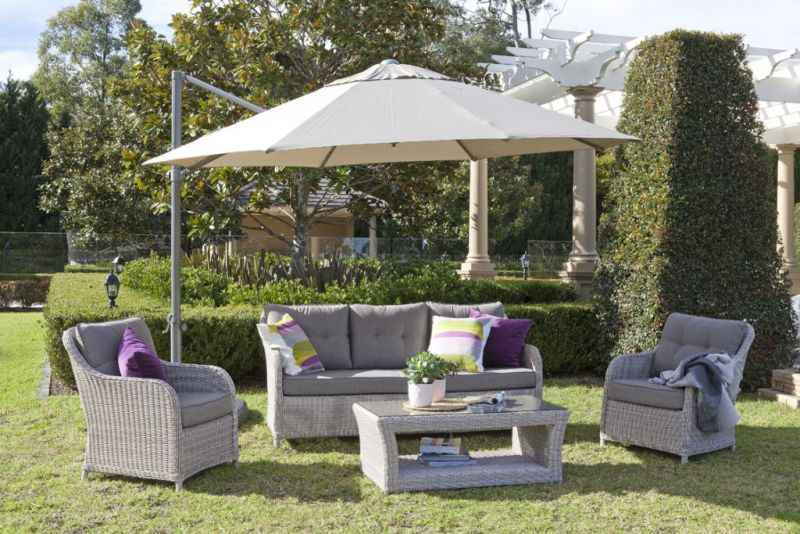
Resin wicker woven over powder-coated aluminium frames combines a natural woven appearance with weather-resistant performance. UV-stabilised resin wicker resists fading, cracking and peeling under prolonged sun exposure — a critical requirement for Australian outdoor furniture.
This combination is hose-clean, quick to dry, and requires minimal ongoing upkeep compared to natural wicker, which degrades rapidly in outdoor conditions.
Selecting Chairs for Your Round Table
Chair selection determines both the functionality and visual consistency of your outdoor setting. The circular table shape creates angled seating positions that influence which chair styles work most practically.
Armless vs Armed Chairs
Armless outdoor dining chairs suit round tables particularly well. They slide beneath the table cleanly and allow you to fit more seats around the perimeter. For round tables seating six or more, armless chairs maximise usable space.
If arm support is a priority for comfort, look for chairs with low-profile arms that tuck beneath the table edge. This maintains the practical benefit of easy chair positioning while adding support.
Curved-Back vs Straight-Back
Curved-back chairs echo the table’s shape and provide consistent support at the varied angles created by round table seating. Each chair should occupy roughly equal arc around the table circumference — space chairs 150 mm to 200 mm apart at their widest points for comfortable proportions.
Matching vs Mixed Chair Styles
A matched set of chairs and table creates a cohesive, practical outdoor setting. If you prefer variation, keep at least one element consistent across all chairs — material, frame colour, or seat height. This ensures the setting reads as intentional rather than mismatched.
Care and Maintenance
The right maintenance approach protects your investment and extends the working life of your outdoor round table and chairs. The good news: furniture engineered for Australian conditions is designed around low-maintenance care routines.
Routine Cleaning
Clean surfaces regularly with a soft cloth, mild soap and warm water. For aluminium frames, a hose-down removes surface dust and salt residue. Wipe along the grain on timber surfaces. Avoid leaving standing water on any surface — wipe dry after cleaning.
Resin wicker cleans easily with a garden hose and soft brush. Cushion covers should be removed and hosed clean periodically, then allowed to dry fully before replacing.
Seasonal Protection
Position outdoor furniture away from areas that concentrate heat — beside dark walls or under unventilated metal roofing, for example. UV exposure is unavoidable in Australian conditions, but UV-rated materials and powder-coated finishes are engineered to handle sustained exposure without premature degradation.
During extended periods of non-use, protective covers reduce exposure to dust, leaf litter and bird droppings. Store cushions in a dry, ventilated space when the furniture is not in regular use.
Timber-Specific Care
Teak and hardwood timber furniture can be left to weather naturally or maintained with a periodic application of timber oil to preserve the original colour. If left untreated, teak will develop its characteristic silver-grey patina — this does not affect structural performance.
Avoid harsh chemical cleaners on timber surfaces. A mild soap solution and soft-bristle brush are sufficient for routine cleaning.
Indoor vs Outdoor Round Tables
Indoor dining tables are typically selected for appearance and are not engineered for weather exposure. Outdoor round table and chair sets are built differently. Frames use corrosion-resistant materials such as powder-coated aluminium or treated hardwood. Fabrics are UV-stabilised and water-repellent. Construction methods account for temperature cycling, moisture and sustained UV exposure.
If your dining area opens onto a patio or alfresco space, outdoor-rated furniture handles the transition between covered and uncovered areas without the risk of weather damage that indoor furniture would face.
Making the Right Choice
Choosing outdoor round table and chairs comes down to three practical questions: does it fit your space, does it seat the number of people you need, and is it built from materials that will perform in your local conditions?
Measure your outdoor area. Match the table diameter to your typical seating requirement. Choose materials engineered for Australian UV, heat and moisture exposure. Prioritise low-maintenance construction — powder-coated aluminium, teak, UV-stabilised resin wicker, and water-repellent cushion fabrics.
A well-chosen outdoor round dining set, built to last, becomes a practical centre point for your outdoor space — functional for daily family meals, robust enough for regular entertaining, and engineered to handle Australian conditions season after season.