





Recently viewed


Outdoor 5 Seater Sofa Buying Guide
An outdoor 5 seater sofa is one of the larger purchases you will make for your outdoor area — and one of the more complicated ones to get right. These settings span anywhere from 240 to 355 cm wide in L-shaped configurations, and longer again for straight modular arrangements. Depth ranges from around 75 to 110 cm. That is a substantial footprint, and the decisions around configuration, frame material, cushion construction and layout fit matter a lot more than most buyers realise until after delivery day. Whether you are looking at a modular outdoor 5 seater sofa, an L-shaped corner setting, or a straight fixed-frame design, this guide covers the things worth knowing before you buy.
Is an Outdoor 5 Seater Sofa Right for Your Space?
Outdoor Area Size and Proportion
An outdoor 5 seater sofa needs a genuinely spacious area to sit well. A small courtyard or narrow balcony is unlikely to absorb a piece this size without feeling overwhelmed. Larger decks, open patios and covered entertaining areas are where these settings tend to work best.
You will need at least 75 to 90 cm of clear walkway around the sofa, and a minimum 45 cm gap between the sofa and any coffee table in front of it. These clearances are the difference between an outdoor area that flows and one that feels like an obstacle course every time someone walks through.
Visual weight matters as much as actual dimensions. An outdoor 5 seater sofa with wide, solid arms and deep cushions will make a tighter space feel crowded. Settings with slimmer aluminium frames and open profiles allow more visual breathing room and keep the area feeling lighter — a meaningful difference on a standard suburban deck. Conversely, large open-plan entertaining areas often benefit from deeper modular configurations that create a defined lounge zone within the space.
Who Gets the Most Out of an Outdoor 5 Seater Sofa
Families with more than three members are the obvious candidates — everyone gets proper outdoor seating without crowding. The generous dimensions also make these settings genuinely useful for stretching out, afternoon reading, or accommodating extra guests when entertaining.
Households that entertain regularly benefit from the seating capacity. An outdoor 5 seater sofa with a chaise or corner section ensures everyone can sit comfortably during gatherings without pulling in mismatched chairs. Open-plan indoor-outdoor living areas also work well with larger outdoor settings — they anchor the outdoor zone and give it a clear purpose.
If your household regularly uses the outdoor area for extended periods, or you simply need seating for more than three or four people, the size is justified. The key is making sure the outdoor area can accommodate the footprint without compromising movement and access.
How an Outdoor 5 Seater Sofa Compares to Other Configurations
A standard outdoor 3 seater sofa typically measures 180 to 230 cm wide — roughly half the width of a typical outdoor 5 seater sofa. A 4 seater extends to around 230 to 280 cm. The size jump to a 5 seater is significant and needs to be planned for rather than assumed.
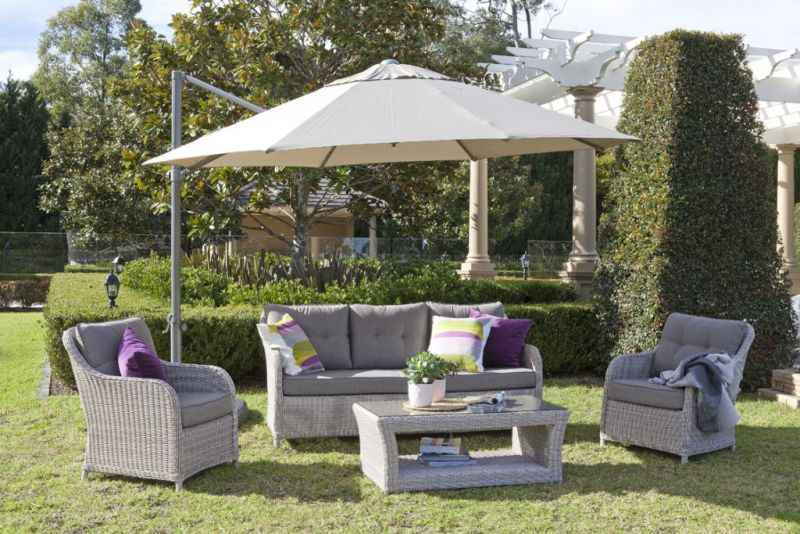
An outdoor 5 seater sofa set — a 3 seater paired with a 2 seater — offers more layout flexibility than a single large sectional. You can separate the pieces, rearrange them for different occasions, or position them in different zones of the outdoor area. L-shaped configurations provide continuous seating for five or more people and work well for corner placements on larger decks and patios. Straight modular arrangements offer simpler placement without committing to a fixed corner layout.
What to Look for in Construction and Quality
Quality construction is what separates an outdoor 5 seater sofa that holds up through years of Australian conditions from one that starts showing wear after a season or two. Most of what matters is in the frame, the joints and the cushion build — not the showroom appearance.
Why Aluminium Frames Are the Practical Standard
For an outdoor 5 seater sofa that will stay outside through Australian summers, the frame material is the most important decision. Powder-coated aluminium is the practical standard for good reason.
Aluminium does not rust. Unlike steel, which can corrode when its coating is compromised, aluminium is naturally resistant to oxidation. In coastal areas where salt air accelerates corrosion in other metals, aluminium maintains its structural integrity without the same level of ongoing attention.
Powder coating adds a durable surface finish that resists UV degradation, scratching and chipping. A properly applied powder coat handles the kind of sustained UV exposure Australian outdoor furniture faces through extended summers — the finish does not peel or blister the way painted surfaces can under repeated heat cycling.
Weight is another practical advantage. An aluminium-framed outdoor 5 seater sofa is lighter than an equivalent steel or hardwood setting, which matters when repositioning sections, rearranging for guests, or moving pieces under cover ahead of severe weather. That lighter weight does not come at the cost of strength — aluminium framing provides reliable structural integrity for seating rated for regular daily use.
Maintenance is minimal. A hose-down and occasional wipe with mild soapy water is typically all a powder-coated aluminium frame needs. There is no oiling, sealing, sanding or refinishing required. For a large outdoor setting that will see years of use, that low-maintenance reality adds up over time.
What to Look for in Aluminium Frame Construction
Not all aluminium frames are built the same way. The quality differences are in the joints, the wall thickness of the extrusion, and the coating process.
Welded joints are stronger and more durable than bolted connections for primary structural points. Welded aluminium frames distribute stress more evenly and are less likely to loosen or develop play over time. Bolted connections can work well for modular sections that need to be separated, but the main frame joints should be welded where possible.
Wall thickness matters. Thicker aluminium extrusions provide better rigidity and load-bearing performance. On a large outdoor 5 seater sofa where multiple people will be seated at once, frame rigidity is not optional — it is what keeps the setting stable and comfortable under real use.
Powder-coat quality also varies. A well-applied powder coat is even, consistent and free of bubbles, thin spots or rough texture. Ask about the coating process if you can — multi-stage pre-treatment and curing at controlled temperatures produce a more durable finish than single-pass application.
Other Frame Materials Worth Considering
Teak is a strong alternative for buyers who want a timber frame on their outdoor 5 seater sofa. It handles moisture and UV exposure better than most hardwoods and has a long-established outdoor track record. It can age to a silver-grey patina if left untreated, or be maintained with teak oil. Teak suits buyers who value natural warmth and are willing to maintain the finish over time. On a 5 seater setting, teak frames will be heavier than aluminium equivalents, which is worth considering for repositioning and access.
Resin wicker over an aluminium subframe is another option for outdoor 5 seater sofas. The wicker provides a textured, softer visual profile while the aluminium underneath handles the structural work. The practical focus should be on weave quality, UV stabilisation and subframe construction. Well-made resin wicker handles sun, rain and temperature changes without the cracking or brittleness that can affect lower-quality alternatives.
Cushion Construction for Outdoor Use
On an outdoor 5 seater sofa, the cushion set is a significant part of the investment. Getting cushion construction right matters as much as the frame.
Cushions with a waterproof inner are important for any outdoor sofa that will stay outside. The waterproof inner prevents water from penetrating into the foam, allowing only the cover surface to dry quickly. This makes maintenance of your outdoor cushions much easier. On a 5 seater setting where the cushion volume is substantial, this protection makes a real difference to long-term performance.
Water-repellent outer fabric is the practical default for outdoor cushion covers. UV-stabilised performance fabrics resist fading and handle regular cleaning better than untreated alternatives. In Australian conditions — particularly in areas with strong afternoon sun — fabrics without UV treatment can fade and weaken within a season or two.
Removable, washable cushion covers are worth prioritising on a setting this size. Cleaning five or more seat cushions plus back cushions is a regular task — removable covers make it considerably easier.
Measuring Your Space and Planning the Layout
Accurate measurement before purchasing an outdoor 5 seater sofa prevents delivery problems and layout disappointments that are difficult to fix after the fact.
How to Measure Properly
Measure the length and width of the outdoor area, and note the position of fixed features — doors, bi-fold openings, steps, downpipes, barbecues, planters and pool fencing — that affect where the sofa can sit.
Use painter's tape or cardboard to mark the sofa's footprint directly on the ground. Walk around it. Sit in the space where the seat would be. Open the back door. Walk the usual path to the garden or pool gate. This simple step reveals layout problems that dimensions on paper do not.
Clearance Requirements
An outdoor 5 seater sofa needs at least 75 to 90 cm of clear walkway around it for comfortable movement. Leave roughly 45 cm between the sofa and any coffee table — enough to stretch legs while still allowing people to pass through. Main paths connecting the house to the garden, pool, barbecue or clothesline need a minimum of 90 cm to feel natural.
Position the sofa at least 10 to 15 cm away from walls, fences or balustrades. This gap allows airflow behind the frame, helps protect wall and frame finishes, and prevents moisture from sitting against surfaces where it can cause issues over time.
Getting the Sofa Through to the Outdoor Area
This is where many buyers get caught out — particularly with a piece as large as an outdoor 5 seater sofa. Every doorway, side gate, hallway and access path the setting must pass through needs measuring.
Modular outdoor 5 seater sofas have a significant advantage here. Individual modules — typically a corner piece, two or three armless sections, and an end piece — are each small enough to fit through standard doorways and side gates. A fixed-frame 5 seater is a much more difficult delivery proposition and may not fit through standard residential access at all.
For apartments, check lift dimensions: door opening width and height, plus interior width, depth and height. Even modular sections may need to be tilted at an angle inside a smaller lift.
Corner Placement vs Floating in the Space
An L-shaped outdoor 5 seater sofa does not have to sit in a corner. Corner placement works well on decks and patios where two edges back onto walls, fences or garden beds — it keeps the area feeling open while using the perimeter efficiently.
Floating the setting away from the edge can work on larger patios and in open-plan entertaining areas. It creates a defined lounge zone within a bigger space and leaves the perimeter clear for traffic, planting or additional furniture. Just make sure the placement does not block natural movement paths between the house and the rest of the outdoor area.
Maintenance and Long-Term Care
Cleaning an Aluminium-Framed Outdoor 5 Seater Sofa
Powder-coated aluminium frames require very little maintenance. A regular hose-down removes dust, pollen, leaves and general outdoor debris. Every few months, wipe the frame with warm water and a mild pH-neutral soap using a soft cloth or sponge. Rinse thoroughly and allow the frame to dry. Avoid abrasive cleaners, scouring pads and high-pressure washing, which can damage the powder-coat finish.
For teak-framed outdoor 5 seater sofas, periodic cleaning with a soft brush and soapy water keeps the surface clear. Apply teak oil if you want to maintain the original warm colour, or leave the timber to weather naturally to a silver-grey patina.
Resin wicker cleans well with a soft brush and soapy water. Pay attention to debris caught in the weave, particularly in joins and corners where leaves and dirt can accumulate.
Cushion Care
Outdoor cushions on a setting this size need regular attention. Vacuum or brush cushion surfaces to remove dust and loose debris before it works into the fabric. Blot spills promptly rather than rubbing, and wash removable covers in line with the manufacturer's care instructions.
Cushions with a waterproof inner are easier to maintain over time because the core stays protected even when the outer cover gets wet. Allow cushions to dry fully before stacking or storing — trapping moisture inside covers or storage bins leads to mould and odour.
Weather Protection
Fitted, breathable covers are worth using when the outdoor 5 seater sofa will sit unused for extended periods. Covers should fit snugly without trapping moisture underneath. Use them during wetter stretches, overnight when storms are expected, and whenever the furniture will not be used for a while.
Shade — whether from an umbrella, pergola, sail or retractable awning — reduces UV load and extends the useful life of both fabric and frame finishes. An outdoor 5 seater sofa in full, unshaded afternoon sun will weather faster than one under a covered structure. In Australian conditions, where UV intensity regularly exceeds what many global furniture designs are engineered for, shade makes a practical difference to material longevity.
Raising furniture slightly off the ground with feet or risers can help prevent water pooling around legs and joints after rain. Cushions should be stored dry in breathable bags or bins, and only sealed away once they are fully dry.
Common Mistakes Buyers Make With Outdoor 5 Seater Sofas
Underestimating the Footprint
An outdoor 5 seater sofa is a large piece of furniture. Buyers regularly underestimate how much space it occupies once it is in place. Taping out the footprint before purchasing is one of the simplest steps you can take to avoid this.
Not Checking Delivery Access
Measure every doorway, side gate and access path before ordering. Modular outdoor 5 seater sofas are significantly easier to deliver than fixed-frame designs — individual sections fit through standard residential access that a single large frame cannot.
Ignoring Frame Material
The frame is the foundation of the entire setting. On a piece this size, frame quality directly affects stability, durability and long-term maintenance. Powder-coated aluminium is the practical benchmark: it resists corrosion, handles UV, carries less weight than steel or hardwood, and requires minimal upkeep. Buyers who skip past frame material and focus only on cushion comfort or visual style often end up replacing the setting sooner than expected.
Not Considering Modular Flexibility
A fixed-frame outdoor 5 seater sofa locks you into one configuration. Modular systems — particularly aluminium-framed modular outdoor sofas — allow you to separate sections, rearrange the layout, add or remove pieces, and reconfigure for different occasions. For a setting this size, that flexibility can make a real difference to how well the outdoor area works over time.
Not Matching Materials to Conditions
A shaded inner-city courtyard and a north-facing coastal deck are very different environments. The materials that perform well in one may not hold up in the other. Ask specifically about UV ratings, corrosion resistance, powder-coat quality and fabric suitability for the conditions your outdoor area actually experiences.
FAQs
What size outdoor area do I need for an outdoor 5 seater sofa?
An outdoor 5 seater sofa typically spans 240 to 355 cm wide in L-shaped configurations. You will need at least 75 to 90 cm of clear walkway around the setting, plus space for a coffee table and any traffic paths connecting the house to other parts of the outdoor area. A larger deck, patio or covered entertaining area is usually needed to accommodate a setting this size comfortably.
What frame material is most practical for an outdoor 5 seater sofa?
Powder-coated aluminium is one of the most practical options. It resists rust and corrosion naturally, handles sustained UV exposure well, is lighter than steel or hardwood equivalents, and requires very little maintenance — typically just a hose-down and occasional wipe. Teak is a strong alternative for buyers who prefer a timber frame and are willing to maintain it.
What should I look for in the aluminium frame?
Look for welded joints at primary structural points, consistent wall thickness in the aluminium extrusion, and an even, well-applied powder-coat finish. Welded frames distribute stress more evenly than bolted connections and are less likely to loosen over time. Thicker extrusions provide better rigidity on a large setting where multiple people will be seated.
What cushion construction works best for outdoor use?
Look for cushions with a waterproof inner to protect the core, water-repellent outer fabric, and UV-stabilised materials. Removable, washable covers are worth prioritising on a setting this size, as cleaning multiple seat and back cushions is a regular task.
Is a modular or fixed-frame outdoor 5 seater sofa better?
Modular designs offer more flexibility — you can rearrange sections, add or remove pieces, and reconfigure the layout for different occasions. They are also significantly easier to deliver through standard residential access. Fixed-frame designs can work well in permanent setups where the configuration will not change, but they are harder to move and limit your options over time.
How do I protect an outdoor 5 seater sofa from weather damage?
Use fitted, breathable covers during extended non-use. Consider shade solutions — pergolas, awnings, umbrellas — to reduce UV exposure. Keep cushions dry and store them properly during long stretches of non-use. Regular cleaning removes dirt, leaves and moisture before they cause longer-term damage to frames and fabrics.