





Recently viewed


Aluminium Outdoor Setting Buying Guide: How to Handle Australian Sun, Salt and Wind
An aluminium outdoor setting is one of the few frame choices that asks very little of you once it’s in place. A well-made aluminium outdoor setting won’t rust, needs no oiling, and comes clean with a hose and a soft cloth. That doesn’t mean every aluminium setting suits every Australian backyard, though.
A charcoal frame on a north-facing deck can be too hot to touch by 2 pm. A chipped powder coat a few streets from the beach behaves very differently from one in a sheltered inland courtyard. And a lightweight chair that’s easy to move on a calm day can end up against the balustrade when a southerly blows through.
This guide covers what to check before you buy, how sun, salt and wind change your choice, which category suits your space, and how to size it properly. It draws on 24 years of Australian outdoor furniture expertise and the published specs of settings in our own range.
What to Know Before You Choose
Every piece in this collection uses a powder-coated aluminium frame. Two things make that combination work outdoors.
The first is the metal itself. Aluminium doesn’t rust, because rust is a reaction specific to iron and steel. Instead, its surface reacts with air to form a thin oxide layer that slows further corrosion. That’s why aluminium handles coastal humidity and salt air far better than plain or painted steel.
The second is the finish. Powder coating works a little like glazing a ceramic mug. A fine, dry powder is sprayed onto the frame, then baked in an oven until it melts and hardens into a continuous skin. Compared with liquid paint, that baked-on layer is thicker, more even and more resistant to chipping and UV fade.
The trade-offs are worth knowing too:
- Light weight cuts both ways. You can rearrange an aluminium outdoor setting without a second pair of hands, but lighter pieces need more thought on exposed balconies.
- Metal conducts heat. Frames warm up in direct sun, and darker colours warm up faster.
- The coating protects the metal. If it’s deeply scratched or chipped, especially near the coast, it’s worth touching up rather than leaving it.
None of these are reasons to avoid aluminium. They’re reasons to match the setting to where it will live, and that starts with the Australian climate.
How Sun, Salt and Wind Shape Your Choice
Much of the aluminium furniture advice online is written for mild European summers. Here’s what actually changes your decision in Australian conditions.
Sun: frame colour, heat and UV
In Australia, the sun-facing side of the house is the north. If your setting sits on a north- or west-facing deck with no shade, frame colour matters more than most buyers expect.
A white or light grey frame reflects more heat and stays more comfortable to touch on a summer afternoon. Charcoal and black frames look sharp, but they absorb heat and suit covered alfresco areas, pergolas or spots with afternoon shade. If you love a dark frame for an exposed spot, pair it with one of our cantilever umbrellas, which shade the table without a pole in the middle.
UV is the other factor. A quality powder coat is UV-resistant, but no finish is completely immune to prolonged harsh sun, and some gradual change in colour or gloss is normal in full exposure. Cushions matter just as much. Look for solution-dyed fabrics, where the colour runs through the whole fibre, and water-repellent outdoor cushions that dry out between storms.
Salt: what coastal homes should check
If you live within a few kilometres of the ocean, salt settles on everything outdoors. It draws moisture from the air, so surfaces stay damp longer than they look.
Aluminium copes with this well, which is why it’s a common choice for coastal homes. The weak points are elsewhere:
- Chips in the powder coat. Where the coating is broken, salt and moisture can creep underneath and lift the finish around the damaged spot. Touch up chips early.
- Fixings and hardware. Ask what the bolts and screws are made of. Stainless steel fixings hold up far better than plated steel in salt air.
- Built-up salt. Rinse the frame with fresh water every week or two, especially after strong onshore winds, and dry the cushions in the sun.
A breathable cover through the wettest months adds another layer of protection without trapping moisture against the frame.
Wind: weight, balconies and storm prep
Weight is where aluminium needs the most planning. On a ground-level patio, a typical aluminium outdoor setting stays put in everyday breezes. On a high-rise balcony or an exposed headland, it’s a different story.
These listed weights from our own range give you a sense of scale:
- A single aluminium dining chair with a rope backrest: about 8 kg
- A 180 cm aluminium dining table: about 33 kg
- A 3-seater aluminium lounge with cushions: about 30 kg
- An aluminium sun lounger with cushion: about 19 kg
Heavier pieces like tables and lounges are far less likely to shift than single chairs or side tables. For exposed spots, choose fuller frames over slim, open designs, keep cushions stored when you’re not using them, and move light chairs and side tables against a wall or indoors when severe storms are forecast.
Once you know what your space demands, choosing the right category is much easier.
Browse by Category
Each category below uses the same powder-coated aluminium frame system, so you can mix pieces across a space and keep a consistent finish. If you’re furnishing a whole outdoor area, start with the anchor piece, usually the dining table or the lounge, and choose the frame colour there first. Every other piece in your aluminium outdoor setting can then follow that finish, which keeps a mixed space looking deliberate rather than pieced together.
Outdoor Lounges
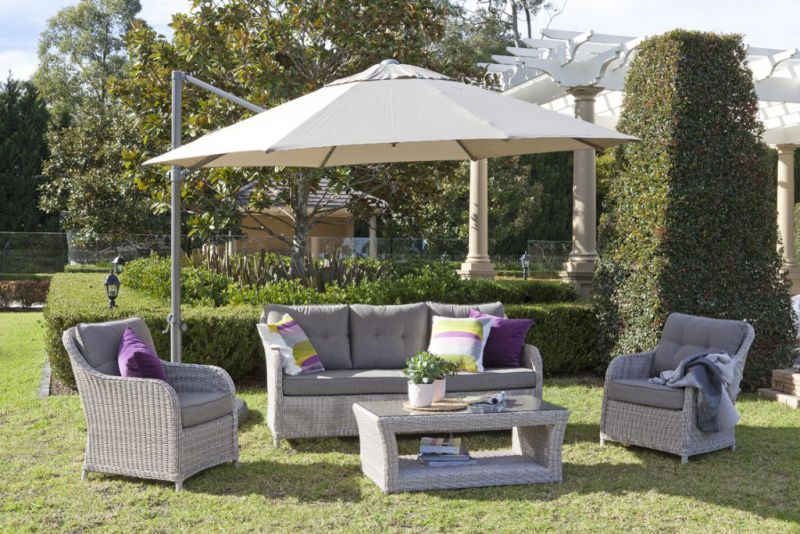
Modular configurations, two and three-seater sofas, and standalone armchairs, all with weather-resistant cushions. The Hannover 3 Seater Outdoor Aluminium Lounge, for example, measures 198 cm wide with a 39 cm seat height, uses water-repellent, UV-stabilised olefin cushions, and converts into a sun lounger. It comes with a charcoal frame or a white frame with light grey fabric. Best for covered alfresco areas and decks where you want one piece to do two jobs. Browse aluminium outdoor sofas.
Tables
Dining, coffee, side and bar-height tables, from compact 70 cm rounds for two to long rectangular tables seating 10 or more. Low-profile coffee and side tables keep drinks, books and phones within arm’s reach of the lounge. Best for building a setting around a table you already like, or for adding a coffee table to an existing lounge. Browse aluminium outdoor tables.
Dining Settings
Matched table-and-chair sets, with no guessing which pieces work together. The Adeline Outdoor Dining Setting pairs a 180 × 90 cm table with a light grey laminate top and four 63 cm aluminium chairs with olefin rope backrests and cushions. Best for families who want a complete aluminium outdoor setting in one decision. Browse aluminium outdoor dining settings.
Chairs
Dining chairs, armchairs, occasional chairs and balcony seating, in stackable and non-stackable designs. Stackable chairs suit smaller homes, holiday houses and anyone who stores chairs away in winter or before storms. Best for refreshing an existing table or mixing aluminium chairs with a timber or ceramic top. Browse aluminium outdoor chairs.
Bar Settings & Stools
Counter-height tables and stools for poolside bars, outdoor kitchens and raised entertaining areas. Some tables adjust between heights: the Adeline round pop-up table, for instance, moves between 72 cm and 102 cm, so one 70 cm table works for dining or as a bar setting on a small balcony. Browse outdoor bar settings.
Sun Loungers
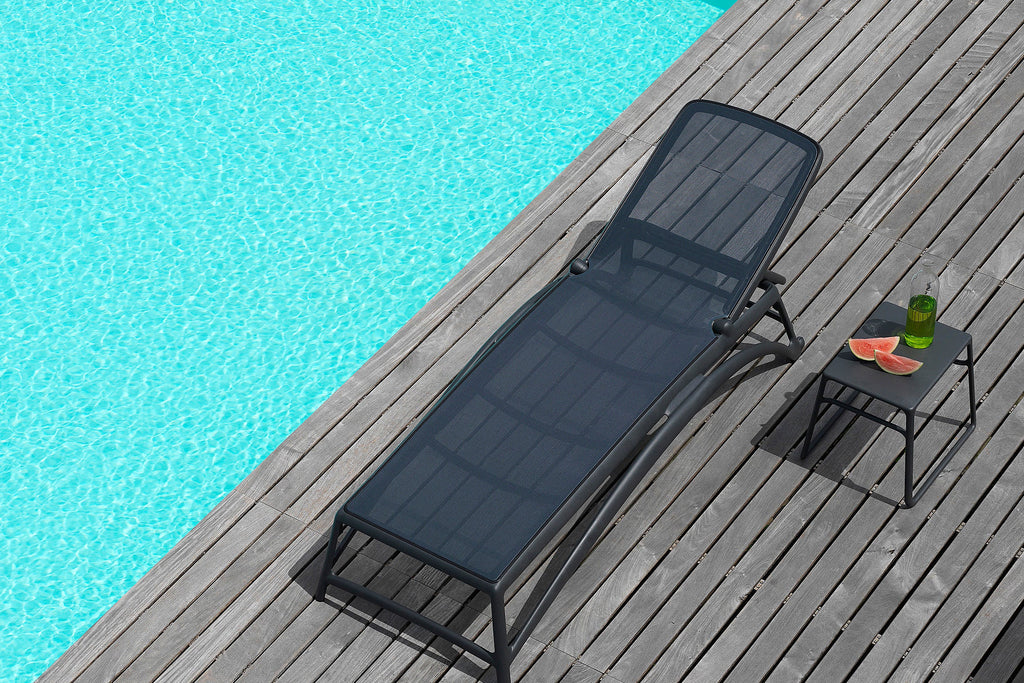
Reclining aluminium sun loungers with adjustable backs, in sling or cushioned designs. The Sorrento Outdoor Aluminium Sun Lounger measures 70 × 203 cm, adjusts from 36 cm to 90 cm high, and weighs 19 kg, light enough to follow the shade around the pool. Best for poolside and garden spots with all-day sun, ideally in a lighter frame colour. Browse sun lounges.
Match the Setting to Your Space
An aluminium outdoor setting that looks right in the showroom can feel cramped at home. A tape measure and five minutes save most sizing mistakes.
- Dining settings: allow about 60 cm of table edge per person, and more for wide armchairs. A 180 cm table seats four comfortably with 63 cm armchairs, or six with slimmer armless chairs.
- Clearance behind chairs: leave about 90 cm between the table edge and the nearest wall, step or balustrade, so people can pull out a chair and walk behind it.
- Small balconies: a 70 cm round table with two chairs fits most apartment balconies and leaves room to move. A height-adjustable table gives you dining and bar height in one footprint.
- Lounges: a 3-seater runs close to 200 cm wide. Leave 35 to 45 cm between the sofa and the coffee table, and keep walkways at least 90 cm wide.
- Outdoor bars: allow about 60 cm of bench or table edge per stool, and choose stools with footrests at counter height for comfort during longer gatherings.
- Sun loungers: plan for roughly 70 × 200 cm per lounger, plus space to walk along one side and room for the back to recline.
Mark the footprint on the ground with masking tape before you order, then walk around it as if the setting were already there.
Questions Worth Asking
Does aluminium outdoor furniture rust?
No. Rust only forms on iron and steel. Aluminium forms a natural oxide layer that slows corrosion, and the powder coating adds scratch and UV resistance on top. Near the coast, touch up any deep chips so salt can’t get under the finish.
How do you clean powder-coated aluminium?
Warm water, a soft cloth and mild detergent. Avoid abrasive cleaners or high-pressure washers, which can damage the finish. Most marks come off with a garden hose, and coastal homes should rinse every week or two.
Is aluminium too light for windy areas?
Tables and lounges carry enough weight to stay put in everyday wind. Lighter pieces like side tables and single chairs are worth moving or securing when severe storms are forecast, and on exposed high-rise balconies.
What size aluminium outdoor setting do I need?
Allow about 60 cm of table length per person and 90 cm of clearance behind each chair. For two people on a balcony, a 70 cm round is usually enough; for four to six, look at tables around 180 cm.
Can you mix aluminium chairs with teak or ceramic tables?
It’s one of the most common pairings in our showrooms. Slim aluminium chairs against a solid outdoor teak table look considered rather than matched, and the same applies to ceramic-top tables.
How long does powder-coated aluminium last outdoors?
With basic care, a quality powder-coated frame holds its finish for a long time in Australian conditions. Full sun, salt air without rinsing and untreated chips shorten that, while regular rinsing, covers in the off-season and early touch-ups extend it.
More to Explore
The right aluminium outdoor setting comes down to three questions: how much sun the spot gets, how close it is to the coast, and how exposed it is to wind. Answer those, measure your space, and the right frame colour, weight and category usually become obvious.
Before you visit, note which way your outdoor area faces and measure its length, width and any walkways. Then see the finish and test the weight in person at any of our showrooms in Sydney, Melbourne, Brisbane, the Sunshine Coast or the Gold Coast.