





Recently viewed


How to Choose the Right Outdoor Pool Umbrella
The right outdoor pool umbrella plays a vital role in creating a comfortable, safer swimming environment. Constant moisture, chlorine exposure and intense sunlight bombard a pool area day after day, which is why a shade solution engineered for these conditions matters more here than almost anywhere else in the backyard. A well-chosen outdoor pool umbrella handles that stress season after season without warping, fading or corroding.
Durability sits at the core of a good swimming pool umbrella. The structure uses marine-grade aluminium and stainless steel fittings that resist corrosion from chlorine, salt and moisture. Darker fabric colours perform better because they absorb UV light, which slows fibre breakdown and extends the canopy's usable life. A large outdoor pool umbrella with a properly UV-rated canopy delivers UPF 50+ protection to everyone gathered around the water. Gas-assisted lift systems built into many models with bases make daily adjustments effortless, which matters when the umbrella is opened and closed most days of summer.
Why a Pool Umbrella is a Must-Have
Pool umbrellas do far more than decorate the poolside. They deliver the shade, comfort and material protection that turn a hot slab into a space you actually want to sit in. The benefits stack up quickly across three areas.
Protects from harmful UV rays
Skin can burn in as little as 10 minutes of direct exposure under harsh Australian sun. A quality outdoor pool umbrella is the first line of defence. Well-made canopies use fabrics rated to UPF 50+, meaning only a small fraction of UV radiation reaches the skin below — blocking around 98% of harmful rays. That cuts the risk of sunburn, premature ageing and skin damage substantially.
The distinction matters: UPF-rated fabrics block UV, not just visible light. Shade that only dims the brightness can still let damaging radiation through, which is why the fabric spec on your outdoor swimming pool umbrella deserves close attention.
Improves comfort and usability of pool areas
A quality umbrella can keep the surface temperature underneath up to 10 degrees cooler than adjacent unshaded areas. That difference turns a space that punishes you into one you want to linger in.
A pool umbrella also expands how the area gets used through the week:
- Shelter from sudden rain showers
- Reduced glare bouncing off the water surface
- Protection for outdoor cushions, side tables and speakers from UV damage
Large outdoor pool umbrellas with tilt functions or full rotation let you shift coverage as the sun moves, without dragging chairs across the deck. Heavy-duty models hold up in gustier locations because their construction is built to remain stable — provided the base is matched to the canopy size. Explore the full range of Umbrellas, Shade & Heaters to match a model to your site conditions.
Adds aesthetic value to your outdoor space
The right outdoor pool umbrella carries visual weight in the space. Canopy shape — round, square, rectangular or hexagonal — can echo the pool geometry or the shape of your dining setting to create a cohesive layout. Larger canopy sizes, typically 330cm to 400cm, hold their own visually next to a large pool and provide the practical coverage those pools need.
Colour choice does double duty. Deeper tones such as charcoal, olive, deep teal and warm neutrals hold up better under UV while giving the outdoor space a restrained, considered look — closer to how a well-designed outdoor room reads than a beach kiosk.
Types of Outdoor Pool Umbrellas
There are several distinct umbrella types worth understanding before you buy. Each suits a different pool footprint and use pattern.
Cantilever umbrellas
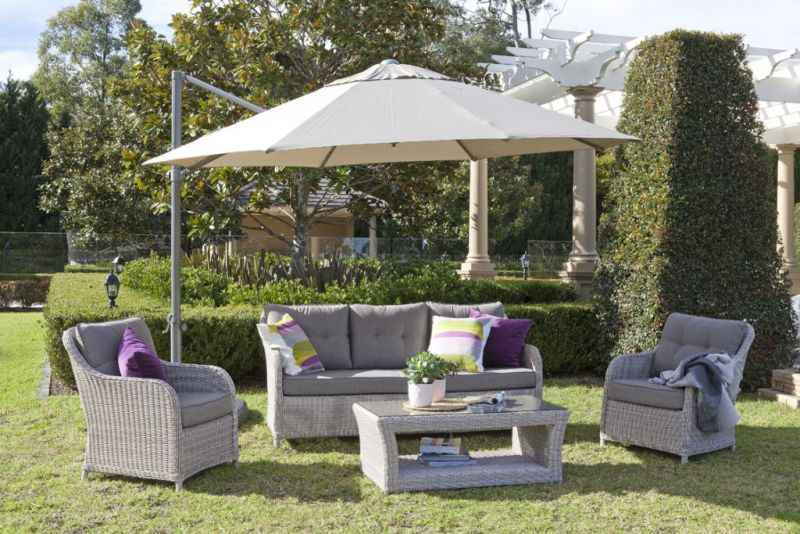
Cantilever designs — also called offset or side-post umbrellas — are the leading choice for pool decks. The pole sits to the side of the canopy, which frees the space directly underneath. That layout carries three practical benefits:
- Many models rotate a full 360 degrees, so coverage follows the sun without moving furniture
- No central pole obstructs sun loungers, dining tables or a row of chairs along the pool edge
- The clean, modern silhouette suits a considered outdoor space
Cantilever popularity keeps climbing because the format is flexible and the visual footprint is restrained. The side-mounted structure also handles wind well when the base is correctly weighted. Browse the full Cantilever Umbrellas collection to see the format applied across sizes.
Wall-mounted umbrellas
Wall-mounted umbrellas suit pool areas where floor space is tight or ground fixings are not possible. They anchor directly to a wall or pillar and remove the need for a floor base entirely.
The space-saving is only part of the appeal. Most wall-mounted models rotate through 180 degrees, so you can shift the shade line through the afternoon. Many also include gas-assisted lift systems that make one-handed operation practical.
Three checks before choosing wall-mounted: the wall surface can carry the load, the mounting height suits the shade angle you need, and the folded profile clears any nearby windows or doors when the umbrella is closed.
Large outdoor pool umbrella options
Large outdoor pool umbrellas suit generous pool areas that need substantial coverage. Commercial-format models with extruded marine-grade aluminium frames provide solid structural performance and are available from around 2 × 2 metres up to 6 metres across.
Heavy-duty formats often use 100mm to 105mm diameter poles, which is a step up from typical residential models and gives the umbrella noticeably better stability. Hotels and resorts commonly rely on this class of structure at the poolside.
Larger umbrellas often include useful features such as:
- Built-in extension options
- Smooth opening systems designed for repeated daily use
- Gas-assisted lift mechanisms
Mounting also matters at this scale. Surface plates work on decks and concrete. In-ground anchors are the most permanent option. Free-standing weighted bases give you the flexibility to reposition when needed. For heavier canopies, matched bases are essential — see the Outdoor Umbrella Bases range for options that suit each mounting method.
Choosing the Right Material and Fabric
The materials in your outdoor pool umbrella determine how long it performs in one of the harshest environments in the yard. Every component — frame, ribs, hardware and fabric — plays a part in how the umbrella holds up.
Marine-grade aluminium vs. standard materials
Structural integrity starts at the frame. Marine-grade aluminium has changed what's achievable at the poolside because it does not rust. This grade of aluminium resists corrosion even with sustained exposure to chlorine, saltwater and high humidity.
Standard aluminium frames can flake and corrode over time when repeatedly hit with pool chemistry. Marine-grade aluminium frames paired with stainless steel hardware give a much longer service life. Together they keep your swimming pool umbrella structurally sound through many seasons of hard use.
Hollow fibreglass poles are another strong option. Their advantages include:
- Non-conductive (a real benefit around water)
- Flex without breaking in high winds
- Rust-free and corrosion-resistant
- Safe to remain submerged in chlorinated or saltwater
UV-resistant and fade-proof fabrics
The canopy fabric is the main defence against harsh sunlight. Solution-dyed acrylic fabrics stand out as the strongest choice for outdoor pool umbrellas. In this construction, colour is added to the fibres during manufacture rather than coated on afterwards — which means the colour runs through the fibre and does not wash out or fade like surface-treated cloth.
Quality fabrics should provide:
- UPF 50+ protection, blocking around 98% of UV rays
- Fade resistance backed by an extended colour warranty
- Breathability, so heat does not build up underneath
- Water-repellent and mould-resistant treatment
An outdoor swimming pool umbrella also needs to handle moisture well beyond UV. The best canopies include built-in water repellency, so rain beads on the surface and rolls off rather than soaking in.
The distinction between water-resistant and waterproof matters here. Most high-quality canopies are breathable and water-resistant — air moves through, and most moisture is shed. Options with an added polyurethane undercoating provide a higher level of water protection.
Mould and mildew resistance is especially important in humid coastal areas. Quality fabrics use antimicrobial treatments that hold back fungal growth even under repeated moisture exposure, which keeps the outdoor pool umbrella looking clean and hygienic across seasons.
Acrylic fabrics cost more upfront, but the durability they add makes them the more sensible long-term choice for a pool setting.
Mounting and Placement Options
Securing your outdoor pool umbrella is as important as picking the right model. A strong gust can topple even a well-built umbrella if it isn't anchored properly. Here's how the main mounting options compare.
Surface plate vs. in-ground anchor
Surface plates give you flexibility around existing structures. You can bolt your swimming pool umbrella directly to concrete pavers or timber decking. That method keeps the umbrella stable without a permanent installation, which is useful if you may reshuffle the space later.
In-ground anchors are the most stable choice. They are set into concrete below ground level, which lifts wind resistance significantly. For vinyl and fibreglass pools, anchors can be placed in the pool deck right along the edge. Test different positions with a temporary stand first — sun paths shift through the day and across the year, and it's easier to move a stand than a poured anchor.
Free-standing base for flexibility
A free-standing base lets you position your outdoor pool umbrella wherever you need it. This suits situations such as:
- The shade line moves through the afternoon and different zones need cover
- You're renting and cannot make permanent changes
- Different furniture groupings need coverage at different times
Free-standing bases only work with enough weight. Quality bases include fillable chambers for sand or water to hold the umbrella down. In windier locations, add weight bags or sandbags to reinforce stability.
Wall-mounted options for tight spaces
Wall-mounted umbrellas solve space constraints because they need no floor footprint. They fix directly to walls or pillars, which makes them a fit for compact balconies, narrow pool decks or courtyard-style pools.
These models fold into a slim vertical profile when closed, so they stay clear of windows and adjacent structures. Many also include a tracking system that lets you slide the umbrella horizontally along the mounting rail to fine-tune the shade line through the day.
Outdoor pool umbrella with base: pros and cons
An outdoor pool umbrella supplied with a matched base keeps setup straightforward. The main advantage is a system engineered as a pair — the base weight, plate diameter and pole fit are all matched to the canopy load, which reduces guesswork and improves stability out of the box.
The trade-off is flexibility. Bundled bases may not accept additional counterweights for very exposed sites, and the combined package sits at a higher entry point than buying components separately — though it removes compatibility risk.
Base choice deserves the same attention as canopy choice. A heavier, correctly matched base is what keeps your outdoor swimming pool umbrella upright when the wind picks up.
Bringing It All Together
Picking an outdoor pool umbrella comes down to matching format, materials, mounting and coverage to your specific pool. A well-chosen umbrella blocks UV, keeps the space around the pool usable in the middle of the day, and holds up against the moisture and chemicals a poolside environment throws at it.
Each format serves a different situation. Cantilever models keep the space beneath clear. Centre-pole options are a straightforward choice for smaller decks. Wall-mounted designs suit tight footprints. Large-format umbrellas cover generous poolsides. Marine-grade aluminium frames handle the pool chemistry. UPF 50+ acrylic canopies protect the people underneath and resist fading. Correct mounting — whether in-ground anchor, matched free-standing base or wall mount — is what keeps the umbrella upright through the summer.
From there, the practical next step is browsing the collections that match your setup. Start with Outdoor Umbrellas & Stands for the full lineup, Garden Umbrellas for centre-pole formats, and pair your umbrella with Sun Loungers & Daybeds or Outdoor Lounges to complete the poolside setup.
FAQs
Q1. What size umbrella should I choose for my pool area?
The right size depends on the area you want to cover. For small settings, a 180cm umbrella works well, while larger gatherings may need 300cm or wider canopies. As a guide, match umbrella diameter to your table size: 180cm to 195cm for tables up to 75cm across, 225cm to 240cm for 120cm tables, and 270cm for 135cm tables.
Q2. Are cantilever umbrellas better for pool areas?
Cantilever umbrellas are often the preferred choice for pool areas because the offset design frees the space directly underneath. They offer full 360-degree rotation, no central pole obstruction, and a clean modern silhouette. The best pick still depends on the shape of your deck, the pool layout and how you use the space.
Q3. How important is fabric quality in a pool umbrella?
Fabric quality is the single biggest factor in canopy durability. Look for solution-dyed acrylic fabrics with UPF 50+ protection, fade resistance and water-repellent treatment. These fabrics hold their colour, block UV effectively and resist moisture and mould over the long haul.
Q4. What wind rating should I look for in a pool umbrella?
Wind ratings matter, especially in exposed or coastal sites. Commercial-grade cantilever umbrellas commonly carry ratings around 50km/h, with heavy-duty models rated up to 65km/h when properly installed. Note that free-standing bases can reduce effective wind tolerance compared with in-ground installations, so the base choice matters as much as the umbrella spec.
Q5. How do I choose the right mounting option for my pool umbrella?
The right mount depends on your site. Surface plates suit existing decks and pavers. In-ground anchors deliver the highest stability. Free-standing weighted bases give you the ability to reposition. Wall-mounted options work where floor space is at a premium. Weigh permanence, available space and how often you'll want to move the umbrella when making the call.