





Recently viewed


The Essential Guide to Choosing Outdoor Pool Chairs
Pool chairs face constant exposure to pool water, salt and Australia’s harsh sun, so material choice is the biggest factor in how long they last. UV fading is one of the most common problems with Australian pool deck furniture, while untreated timber and mild steel frames can corrode or warp within a few seasons. Standard pool lounge chairs are about 190 to 200 cm long and 65 to 75 cm wide, so they take up more deck space than most people expect. Whether you need poolside chairs for upright seating, outdoor pool chairs for reclining or stackable pool deck chairs that store easily, this guide helps you choose durable swimming pool seating for Australian conditions.
Which type of pool chair suits your space?
Think about how you use your pool deck before choosing a style. Most pool owners spend far more time sitting beside the water than swimming in it, so choosing pool chairs that suit your available space matters more than it may seem. Leave at least 100 cm of clearance around each seating group so people can move through the area easily, and keep pool pathways at least 90 cm wide so nobody has to squeeze past a lounger. A single sun lounge needs a footprint of roughly 120 x 210 cm, and two placed side by side need about 210 x 210 cm. These measurements provide a starting point when choosing upright chairs, reclining loungers or seating that sits in the water.
Poolside chairs for upright seating
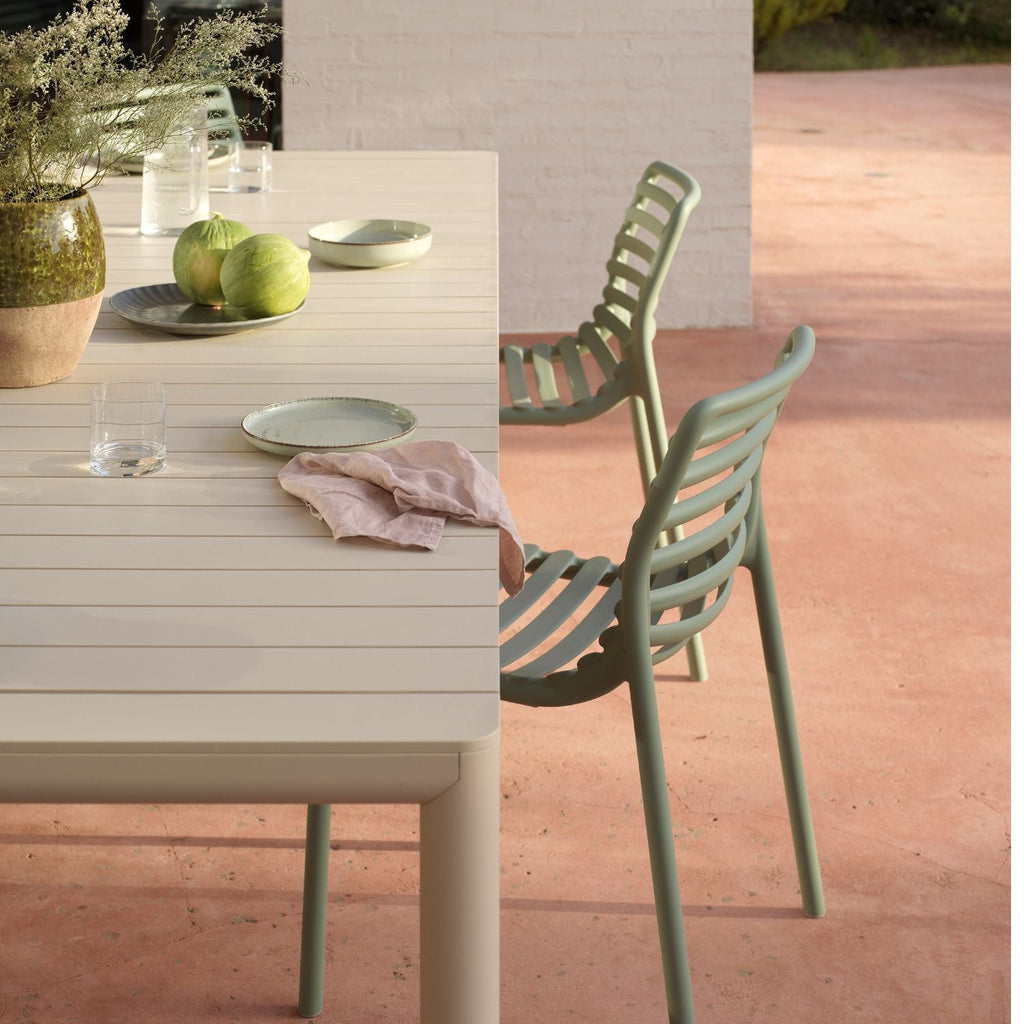
Poolside chairs keep you upright instead of stretched out. They suit anyone who wants to chat, hold a drink and stay involved without lying flat. Framed aluminium, timber and synthetic wicker chairs remain common choices, and Adirondack-style chairs suit decks where a full lounger will not fit. Group them around a small table to bridge the gap between formal dining chairs and a full lounging setup. Lightweight outdoor aluminium chairs with textile sling seats are a practical pick here, as they shed water quickly and are easy to shift as the shade moves.
Pool lounge chairs for reclining
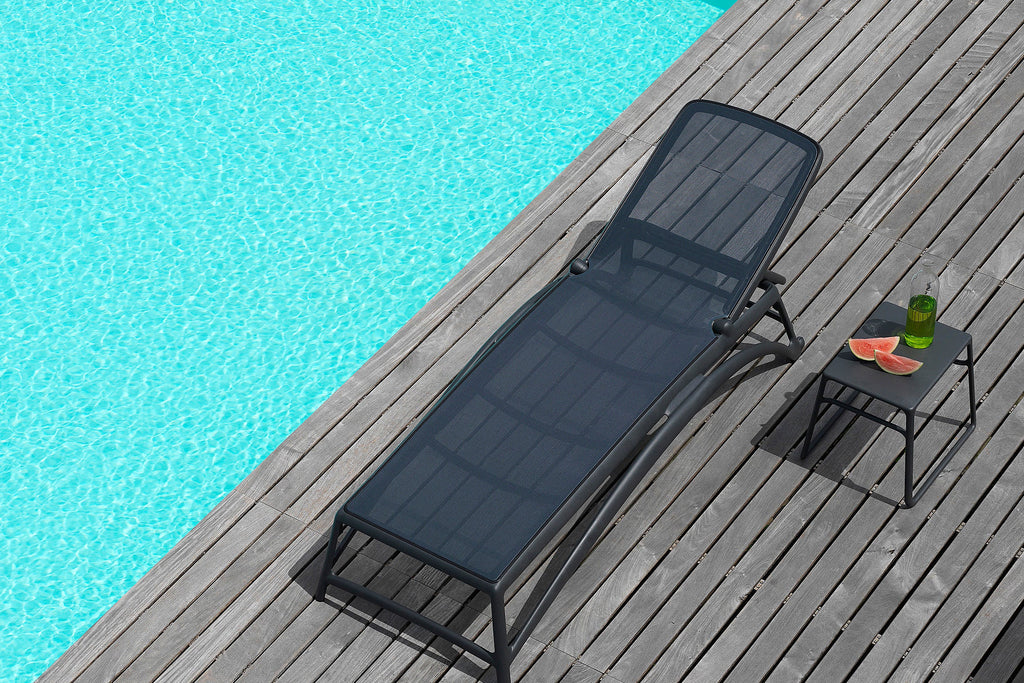
Pool lounge chairs, often called sun lounges or chaises, let you stretch out for sunbathing or reading, and they also suit an afternoon nap. Double loungers typically measure 1200 to 1600 mm wide, so check your deck depth before placing two together, or consider an outdoor daybed if you have room for one larger piece. Quality framed models usually offer several adjustable positions, from upright to fully flat, and wheels on the back legs make the frame easier to move than lifting it. Our sun lounges include aluminium designs with textilene seats that weigh from about 6 kg, a teak-look aluminium finish for a timber appearance without oiling, and a fibreglass-reinforced polypropylene lounger with four reclining positions, integrated wheels and a replaceable textilene seat.
In-pool loungers for shallow ledges
A pool with a tanning ledge or sun shelf can use in-pool loungers that sit partially submerged, offering a cooler way to sunbathe. Shelf depths usually range from 150 mm to 300 mm. Each model varies, though: a standard in-pool lounger suits roughly 0 to 23 cm of water, while deep-water versions handle 25 to 38 cm. Measure your ledge carefully because manufacturers provide exact water-depth ranges for each design. Larger shelves can pair loungers with upright in-pool chairs and a small side table for a more varied layout.
Plan Your Pool Deck in Zones
Once you know which pool chairs you want, decide where each one will go. Thinking about your deck in zones, based on distance from the water, helps you match each chair to the conditions it will face and keeps the area safe for swimmers.
Measure chair footprints and leave clear walking routes
Plan for a walkway of at least 90 cm around the pool, and keep furniture at least 80 cm back from the water’s edge. Our sun loungers run from 161 to 216 cm long and 59 to 80 cm wide, so leave 60 cm of clearance on each side, 90 cm where the space allows. A deck under 90 cm deep suits chairs no wider than 65 cm; from 90 to 150 cm you can fit a chair up to 70 cm; beyond 150 cm a full-size lounger fits comfortably. At the compact end, the June Sun Lounger is 59 cm wide and the Florida Sun Lounger is the shortest in the range, while the Iowa Upholstered Sun Lounger is the largest at 80 cm wide and 216 cm long.
Splash zone at the water’s edge
The area closest to the pool gets the most splashes and wet feet. Choose pool chairs with sling, textilene or UV-stabilised resin seats here, as they drain straight away and do not hold water. Skip thick cushions in this zone, and make sure every chair has non-slip feet for wet tiles and pavers.
Sunbathing zone
A little further back, sun lounges can sit in full sun for most of the day. Light-coloured frames stay cooler to the touch than dark ones, and an adjustable backrest lets you turn from sunbathing to reading without getting up. Add an outdoor side table between pairs of loungers for drinks, sunscreen and towels.
Shade and entertaining zone
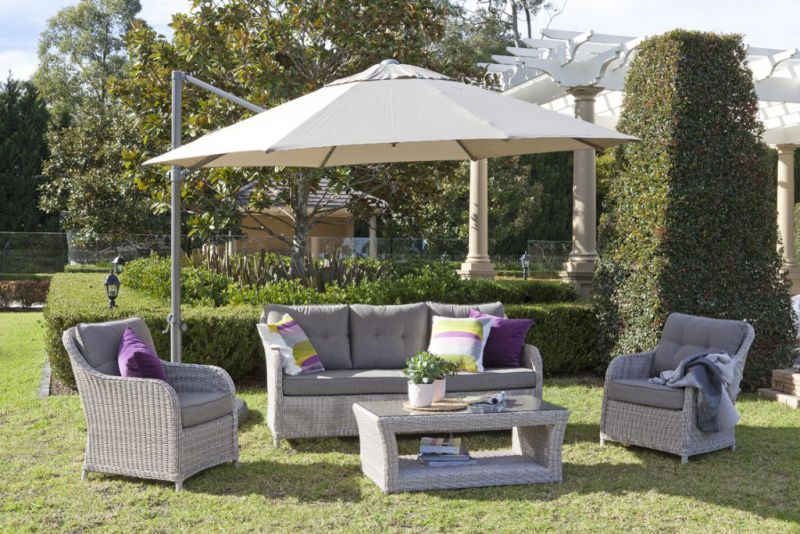
Further from the water, under a pergola or a garden umbrella, you can use cushioned armchairs and lounges for longer sessions. This is also the place for upright chairs grouped around a table for snacks and conversation between swims.
Pool fence safety zone
Australian pool fencing rules require a clear, non-climbable area around the pool fence, so chairs, tables and loungers must never sit where a child could use them to climb over. Check the requirements of your state or local council, and keep stackable or wheeled chairs away from the fence line when you tidy up.
Choose materials that stand up to pool conditions
Material choice affects how well pool chairs handle repeated exposure to sun, pool chemicals and moisture. Some material combinations last far longer than others.
Powder-coated aluminium: coating quality and corrosion risks
Powder-coated aluminium resists corrosion around treated pool water and salt water because the coating protects the surface from chemical attack. Salt and pool chemicals can still cause pitting where the coating or oxide layer has defects, so a thick, even coating matters. Pre-treated, powder-coated finishes perform much better than bare aluminium. Dark surfaces can become very hot in direct sun, so light-coloured coatings offer better comfort for bare skin. With proper upkeep, a well-finished aluminium frame can stay in service for many swimming seasons.
UV-stabilised resin: resistance to sun and water
UV-stabilised polypropylene and resin seats do not absorb water, swell or warp. They dry faster than fabric, and pool water does not damage them. Quality UV-stabilised resin helps in-pool loungers resist fading on shallow ledges and in water up to 23 cm deep.
Synthetic wicker and timber: limits near the pool
HDPE synthetic wicker handles pool water and UV exposure well and keeps its colour, although low-quality resins may crack or fade over time. You can keep the weave looking presentable by cleaning it with mild detergent every three months. Natural rattan breaks down faster in moisture and sunlight, so avoid using it close to water. Timber adds warmth, but pool water strips its natural oils and can cause warping or splintering without regular oiling. Treated teak and cedar hold up better.
Outdoor fabrics and cushions: fade resistance and drying time
Solution-dyed acrylic fabrics resist fading because the colour runs through the whole fibre, and they clean up with mild soap and water. Textilene sling seats, a woven mesh with a coated finish, drain and dry quickly, which is why they are common on sun lounges. Avoid cotton-filled cushions and standard foam because they absorb water, dry slowly and can develop mildew. Water-repellent outdoor sun lounge cushions add comfort, but take them indoors during heavy rain or store them under cover to extend their service life.
Frame joints and fixings: small parts that affect lifespan
Regular use can loosen screws, bolts and joints, so check them from time to time. Angled frames and drainage holes prevent water from collecting in crevices, which is where corrosion often begins. Pool chemicals can enter through scratches or cracks and speed up corrosion, so inspect fixings often for damage, and choose stainless-steel hardware where possible.
Check comfort, fit and safety before buying
Comfort and safety checks matter just as much as material choice. Testing a few features before you order can prevent you from buying pool chairs that look good but are awkward to use.
Test seat support, recline settings and ease of getting up
Notch-and-peg mechanisms lock into four to six positions and have fewer parts that can corrode. Sling designs that do not recline drain water at once and work well closest to the pool. Zero-gravity frames recline into a legs-up position and use a continuous lock, although more components remain exposed to pool spray. An adjustable back that moves from flat to angled lets you read, sunbathe or sit upright, which makes it easier to get up and back into the pool without leaving the chair awkwardly.
Check non-slip feet, stability and weight limits
Non-slip rubber or plastic foot caps prevent frames from sliding on wet tiles, concrete or timber decking. Weight limits differ between models, so check the stated weight rating for each chair and lounger and make sure it suits everyone who will use it. Heavier frames stay put in a breeze, while very light ones may need to be moved under cover on windy days.
Choose wheels or stackable designs for easy moving
Rear wheels make chairs easier to reposition on smooth concrete, tile or composite decking, but they may catch on gapped paving. Some aluminium sun loungers in our range have two rear wheels and weigh under 10 kg. Stackable chairs clear the deck fast and can stack four to six high, and our outdoor stackable dining chairs work well as extra poolside seating for guests. Folding designs store flatter, though they take longer to set up.
Buy outdoor pool chairs you can maintain for the long term
A chair that needs replacing after a few summers is rarely the better choice. Compare how long the frame, fabric and fixings should last, and how much upkeep each one needs, before you commit.
Compare upkeep and replacement needs
Factor in cushion replacements, timber re-oiling and touching up chips in the finish when you compare pool chairs. Aluminium and resin frames with replaceable sling seats usually need the least ongoing work, while timber needs regular oiling to stay in good condition beside the water.
Read warranty terms for poolside use
Warranty cover varies between products and parts, so check what applies to the frame, finish and fabric, and whether poolside use is covered. Cover often differs for commercial settings such as holiday rentals or apartment complexes. Keep your proof of purchase, and register the product if the manufacturer asks you to.
Check spare parts, delivery and assembly options
Replacement feet, wheels, slings and cushions are often sold separately. Confirm that parts will remain available for your model, and check whether chairs arrive assembled or need to be put together on delivery.
Clean pool splashes and dirt using approved methods
Rinse the furniture with fresh water regularly and wipe it with a soft cloth and mild soap. Avoid harsh cleaners, abrasive pads and pressure washing. Wait about 48 hours after adding pool chemicals before putting loungers back on a shelf.
Use covers and dry storage during long breaks
Breathable covers protect furniture left outside from rain and airborne dirt, dust and pollen. Fitted outdoor sun lounge covers suit loungers that stay by the pool through the cooler months. Store cushions in a dry box to prevent mildew during wet spells.
Choosing Pool Chairs for a Safe, Comfortable Deck
Choosing pool chairs comes down to matching the material, size and fittings with your deck and water conditions. Materials such as powder-coated aluminium or UV-stabilised resin, along with solution-dyed fabrics and textilene slings, help furniture last longer. Proper clearances, sensible zoning and stated weight ratings also keep the area safe.
Constant exposure to pool water and sun makes ongoing care as important as the original purchase. Make the right choices, and your pool chairs should provide many seasons of safe, comfortable use.
FAQs
Which materials make the longest-lasting pool chairs?
UV-stabilised resin and quality powder-coated aluminium are durable choices for poolside use. Resin resists water and fading, while aluminium needs an intact coating to protect against corrosion.
What makes some pool loungers last longer than others?
Better frame materials, a quality finish, replaceable slings and cushions, and stainless-steel fittings all help pool loungers last longer. Compare likely maintenance and replacement needs rather than judging by appearance alone.
How do I choose a lounger for a shallow pool ledge?
Measure the ledge’s water depth and available space, then check the manufacturer’s approved depth range. Choose a model designed for in-pool use and check its stability and weight limit.
Are upright pool chairs or reclining loungers more comfortable?
Upright chairs suit chatting and enjoying a drink, while reclining loungers let you stretch out. Test seat support, adjustable positions and how easily you can get up before buying.
Which pool chairs are easiest to move and store?
Chairs with rear wheels are easier to reposition on smooth decking. Stackable chairs save storage space, while folding designs pack flatter but take more time to set up.