





Recently viewed


Quality rattan outdoor furniture with UV-protected PE rattan delivers significantly longer service life compared to untreated alternatives. The challenge lies in distinguishing between natural and synthetic materials, understanding construction quality, and selecting pieces that withstand your climate. This guide walks you through choosing durable outdoor rattan pieces, from material comparisons to maintenance practices that extend your furniture's life.
Rattan Outdoor Furniture: Materials and Construction
Natural Rattan vs Synthetic Rattan
The material behind your outdoor furniture determines whether it survives a season or lasts much longer. Natural rattan comes from climbing palm fibres found in tropical regions of Asia, Africa, and Australia. These organic materials look appealing, but they cannot withstand outdoor weather conditions. Natural rattan absorbs moisture and leads to warping, cracking, and mould growth when exposed to rain.
Synthetic rattan offers a different performance profile. Made from high-density polyethylene (HDPE), this man-made material replicates the texture and appearance of natural rattan while resisting UV rays, moisture, and temperature extremes. Quality synthetic rattan delivers extended service with proper use. Natural rattan pieces left outdoors deteriorate considerably faster.
The construction process differs substantially. Natural rattan requires protective coatings to extend its outdoor lifespan. Synthetic versions incorporate UV inhibitors, antioxidants, and light stabilisers into the material during manufacturing. The non-porous structure of HDPE rattan makes it waterproof.
PE Wicker and Resin Construction
PE rattan, also called polyethylene rattan, represents the highest quality synthetic option available. The material undergoes a specialised production process where HDPE is extruded at high temperatures with colourants infused throughout, rather than applied as a surface coating. This prevents fading and provides colour that penetrates the entire strand.
Not all synthetic materials perform the same. PVC and nylon wicker rank as the least durable options. Polyethylene and high-density polyethylene deliver superior weather resistance. PE rattan maintains its shape through harsh storms and high humidity, though covering the furniture during extended periods of non-use adds to its functional life.
The weaving method matters just as much as the material itself. High-quality pieces feature hand-woven and hand-tied strands over frames, with beginnings and ends hidden underneath for a seamless finish. This approach creates furniture that withstands heavy outdoor wear and maintains structural integrity.
Frame Materials: Aluminium, Steel, and Timber
Your outdoor wicker set requires a solid foundation beneath the woven exterior. Aluminium frames offer the lightest weight option, with factory-welded construction that resists rust and oxidation. Cast aluminium provides heavier, more stable pieces suited for windy environments.
Steel frames deliver substantial weight and durability, though they require powder-coated finishes to prevent corrosion. Galvanised steel handles water exposure in non-salt environments, whereas stainless steel works better near coastal areas. Both types conduct heat, making cushioned seating necessary for comfort during summer months.
Timber frames blend naturally with outdoor environments. Teak ranks as the most weather-resistant option. Cedar, acacia, and eucalyptus work as alternatives and offer the advantage of not absorbing heat like metal. Timber requires regular oiling or sealing to maintain quality outdoors.
Weather-Resistant Coatings and Finishes
Modern outdoor wicker furniture has specialised surface treatments designed to reflect sunlight. These preserve material integrity against prolonged outdoor exposure and prevent UV degradation. Quality synthetic wicker has UV treatment loaded into the HDPE material, providing strong UV resistance.
Powder-coated finishes on metal frames create an additional barrier against rust and corrosion. Steel frames benefit most from this treatment, which should be inspected each season for any chips or wear spots that could compromise protection.
Key Features That Determine Durability
UV Protection and Fade Resistance
Quality rattan outdoor furniture incorporates UV stabilisers into the polyethylene material during manufacturing. Virgin PE rattan with these additives maintains a smoother, more uniform surface and retains colour longer under sunlight. The material resists UV damage better than natural alternatives and maintains flexibility instead of drying out and cracking.
Lower-grade outdoor rattan using recycled PE rattan becomes brittle faster under sun exposure. It fades unevenly and cracks or deforms sooner in hot climates. High-quality pieces feature smooth strands with consistent thickness, even colour throughout the weave, and tight but breathable weaving patterns.
UV radiation breaks down surface protection over time and weakens pigments in synthetic rattan and fabrics. Heat accelerates material ageing by speeding oxidation. Thermal expansion and contraction from repeated hot days and cooler nights can loosen woven strands and add stress to joints.
Water Resistance and Drainage Design
PE rattan offers waterproof performance due to its non-porous structure that does not absorb water. Open rattan weaving allows moisture to escape rather than pool. Raised legs keep the furniture off wet surfaces. Table designs that avoid trapping water prove critical in humid environments where airflow prevents mould growth.
Cushion Quality and Fabric Types
Solution-dyed acrylic fabrics resist fading, water damage, and mildew in outdoor wicker cushions. The solution-dyeing process saturates colour throughout yarn fibres before weaving. This prevents colour release from water or UV rays. These fabrics are waterproof, mould and mildew resistant, and chlorine safe.
Olefin fabric provides a practical alternative with water resistance that dries quickly and withstands sunlight without fading. Acrylic-polyester blends combine water resistance and fade protection from acrylic with polyester's durability. High-density foam maintains shape under load, while webbing or support systems distribute weight evenly.
Browse outdoor cushions rated for weather exposure to find options that suit your outdoor wicker set.
Structural Reinforcement Points
Frame construction determines load capacity across three areas in outdoor wicker furniture. Aluminium offers lightweight, rust-resistant strength when welded correctly. Steel provides heavier, high load capacity. Wicker over metal derives strength from the internal frame structure rather than the weave itself. Weld quality, cross-bracing, and load distribution across legs and base affect stability over time.
Choosing the Right Rattan Outdoor Furniture for Your Space
Measuring Your Patio or Deck Area
Space planning determines whether your furniture enhances or overwhelms your outdoor area. Measure the exact length and width of your deck or patio before shopping. Document railings, posts, door locations, and any built-in features like planters or storage boxes. Rope, string, tape, or chalk can mark furniture footprints on your actual surface. This provides a visual reference that prevents sizing mistakes.
Traffic flow matters as much as total area. Allow at least 90 centimetres of clearance in high-traffic areas, though 120 centimetres works better where people pass through frequently. You need a minimum of 60 centimetres to create simple walking paths and 76 centimetres in front of doors. Barbecues and pools need 120 to 150 centimetres of clearance for safety and functionality.
Dining configurations typically need a 3 by 3 metre open patio space to arrange comfortably. This spacing allows 60 to 90 centimetres between the table edge and walls or railings so chairs can pull out without obstruction. Conversation sets with sectional seating may need 4 by 4 metres depending on the configuration layout.
Conversation Sets vs Dining Sets
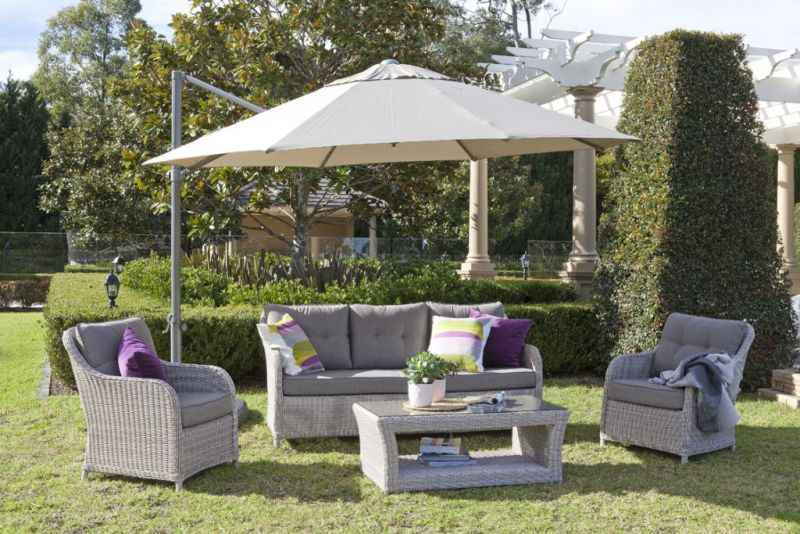
Conversation sets centre around relaxation and feature sofas, armchairs, and coffee tables designed for lounging. These outdoor rattan arrangements work well where guests sit back and chat casually. They suit afternoon coffee, reading, or evening relaxation. Modular pieces separate or combine into custom arrangements, with a coffee table as the centrepiece that brings the seating together.
Browse outdoor sofa lounges and outdoor armchairs to see conversation set options in wicker and rattan weaves.
Dining sets provide structured spaces for meals. They consist of a table and chairs in sizes ranging from intimate four-seat arrangements to large eight-plus seat configurations. These outdoor rattan dining pieces double as surfaces to play games, work, or tackle projects. Dining sets keep everyone connected through shared meals if you entertain frequently.
Bistro sets fit compact areas like enclosed patios or balconies. They scale down to include a coffee table and two armchairs. Cube sets also work well in small spaces, though you need about one metre of space around the table to accommodate chairs.
Sectional Configurations and Modularity
Modular rattan outdoor furniture allows arrangement flexibility that traditional sets cannot match. Individual pieces sold separately let you create anything from a small corner seat to a full outdoor sectional. This approach future-proofs your purchase. Existing pieces can join coordinating modules when you relocate or expand your space.
You can rearrange configurations repeatedly without commitment to a single layout. Separate modular seats work for everyday family use, then rearrange them when company arrives to give everyone personal space. Sectional pieces adjust into various layouts based on your needs.
Climate Considerations for Your Region
Material selection for rattan outdoor furniture varies by regional weather patterns. Rainy or humid climates call for PE rattan that provides water resistance, while aluminium or coated metal frames prevent rust. Quick-dry foam cushions and outdoor-grade fabrics resist mildew in moisture-heavy environments. Pieces elevated slightly with improved ventilation extends its performance in coastal and humid regions.
Cold climates require materials that endure low temperatures without damage. Synthetic wicker made from polyethylene withstands freezing, while aluminium frames remain rust-resistant and lightweight to store easily in winter. Sunny climates need strong UV protection, with fully welded aluminium frames featuring powder coating to increase rust resistance.
Maintenance Practices for Longevity
Regular Cleaning and Debris Removal
Regular cleaning extends your outdoor wicker furniture's lifespan considerably when you perform it consistently. Use a handheld vacuum or brush attachment to remove loose dust and soil from woven surfaces. A toothbrush or cocktail stick works well to dislodge stubborn debris lodged in crevices without damaging the weave.
Clean your rattan furniture at least three times per season: before the outdoor season starts, during mid-summer, and before storing it away when cooler weather arrives. Wash surfaces with warm, soapy water and collect only the bubbles with a soft cloth to avoid oversaturation. Apply bubbles to cracks and crevices using a toothbrush. Place furniture in direct sunlight or a well-ventilated area to dry it out.
Wipe spills straight away with a damp cloth to prevent permanent staining. Rotate chair positions from time to time to get even wear across all pieces. Lift pieces by the frames rather than woven panels when you move them to prevent damage. Keep furniture feet clean and avoid dragging them across concrete or pavers.
Protecting Cushions and Covers
Most outdoor cushions are showerproof, not waterproof. Prolonged exposure to rain causes mould and discolouration. Store cushions in a dry area like a garage or shed when rain approaches or during winter months. Use breathable storage bags or containers with secure lids. Avoid sealed plastic bags that trap moisture and create mildew environments.
Water-resistant, breathable furniture covers with taped seams provide strong protection between uses. These covers allow condensation to evaporate rather than trapping moisture beneath.
Seasonal Storage Tips
Clean all outdoor wicker pieces thoroughly before winter storage to prevent mould and staining during inactive months. All pieces must dry out before storing, as moisture leads to mould, mildew, and rot. Move cushions indoors until spring if you live in areas with persistent cold and wet weather.
Inspecting and Tightening Hardware
Tighten all visible bolts and screws at the start of each season with a socket wrench or Allen key. Outdoor furniture joints loosen as frames expand and contract through temperature cycles. Check glide feet on chair legs and replace any cracked or missing pieces. Damaged glides cause wobbling and scratch deck surfaces.
Addressing Minor Repairs
Apply outdoor-rated adhesive to separated strands when you find loose wicker weaves and use a clamp to hold them tight until cured. Catching loose strands early prevents further unravelling and extends the life of the weave.
What to Look for Before You Buy
Assembly Requirements
Most rattan outdoor furniture sets arrive flat-packed and require assembly. Two people working together complete typical configurations in roughly 25 minutes. Start by inserting all screws loosely, then tighten them together after alignment.
Better-quality options feature welded construction with minimal assembly needs, while well-constructed pieces arrive with hand-woven finishes that require little to no setup.
Quality Indicators to Check
When comparing rattan outdoor furniture options, focus on construction quality rather than appearance alone. Check weld integrity on frames, wicker strand thickness, and weaving tightness. Thicker strands with textured surfaces resist tearing better than thin, smooth alternatives. Consistent colour throughout the weave indicates solution-dyed material rather than surface coating. Hand-woven construction with hidden strand ends signals higher build quality.
Browse the full range of outdoor wicker dining chairs, wicker armchairs, and outdoor dining settings to compare construction quality across different outdoor wicker options.
Built to Handle Australian Conditions
Quality rattan outdoor furniture delivers strong long-term performance with informed choices. PE rattan with UV protection, solid aluminium or steel frames, and weather-resistant cushions serve your outdoor space reliably across many seasons. Focus on materials that match your climate and on construction quality that holds up under real-world use.
Maintenance practices extend lifespan further. Clean regularly, protect cushions from prolonged moisture, and store pieces during harsh winters. Take the time to compare frame construction before purchasing. The right rattan outdoor furniture enhances your patio, deck, or courtyard for extended outdoor use with minimal upkeep.
FAQs
How often should I clean my rattan outdoor furniture?
Clean your rattan furniture at least three times per season: before spring, during mid-summer, and before winter storage. Use warm, soapy water with a soft cloth, and always ensure the furniture dries completely in sunlight or a well-ventilated area. For regular maintenance, vacuum or brush away dust and debris weekly to prevent buildup in the weave.
What is the difference between natural and synthetic rattan for outdoor use?
Natural rattan comes from tropical palm fibres and cannot withstand outdoor weather well, deteriorating quickly due to moisture absorption and warping. Synthetic rattan, made from high-density polyethylene (HDPE), is waterproof, UV-resistant, and delivers significantly longer service with proper care, making it the stronger choice for outdoor furniture.
Should I bring my cushions inside when it rains?
Store cushions indoors during rain and when not in use. Most outdoor cushions are showerproof rather than waterproof, meaning prolonged rain exposure causes mould and discolouration. Store them in a dry space using breathable storage bags or containers with secure lids to prevent mildew.
What type of frame material performs best for rattan outdoor furniture?
Aluminium frames offer the strongest combination of durability and weather resistance. They are lightweight, rust-resistant, and require minimal maintenance. Powder-coated steel frames also work well but are heavier, while stainless steel performs best in coastal areas with salt exposure.
How can I protect my rattan outdoor furniture from sun damage?
Choose furniture with UV stabilisers built into the PE rattan material during manufacturing for strong UV resistance. Use furniture covers when not in use, position pieces under shade structures or umbrellas when possible, and choose UV-stabilised cushion fabrics. Quality synthetic rattan with virgin PE maintains colour and flexibility better than recycled materials under sun exposure.