





Recently viewed


Outdoor Recliner Sofa: How to Choose One Built for Australian Conditions
An outdoor recliner sofa lets you adjust the backrest and footrest without leaving your seat, so one piece covers reading in the morning sun and stretching out after dinner. Choosing an outdoor recliner sofa is a different exercise from choosing an indoor lounge, because the frame, the moving parts and the fabric all have to cope with UV, heat cycles, rain and salt air rather than a controlled room. This guide works through the decisions in the order that actually matters when you are shopping: the space you have, the frame material, the seat count, then cushions and upkeep.
Start With the Space You Have
Space decides more than style does. Reclining seating needs clearance behind and in front, and that constraint rules options in or out before anything else. Use this as a quick shortlist.
Balcony or small courtyard: a single recliner chair or a compact two seater, ideally a wall-hugger design that slides forward as it reclines.
Covered alfresco or patio: a two or three seater sits comfortably here, with more freedom on cushion depth because the area is sheltered.
Poolside or open deck: prioritise corrosion resistance and quick-drying cushions, since the seating is fully exposed.
Large entertaining area: a modular corner lounge with one or two reclining positions gives you seating for a group without locking the layout in place.
If you already know which of these you are working with, you can jump straight to Outdoor Sofas and filter from there.
Choose by Frame Material
Frame material is the single biggest factor in how long an outdoor recliner sofa keeps working. Reclining seating has hinges, pivots and a mechanism, and those points are where weather damage shows up first.
Powder-coated aluminium
Aluminium does not rust, and a powder-coated finish adds a further barrier against UV and moisture. It is light enough to reposition on a deck and stable enough for a reclining mechanism to operate smoothly over time. For coastal properties, this is the frame to start with. Browse the Outdoor Aluminium Sofas range to see how the frames are built.
Timber and teak
Teak and comparable hardwoods carry natural oils that help them handle outdoor exposure. Left untreated, the surface weathers to a grey tone; oiled periodically, it holds its warmer colour. Timber frames are heavier, which suits permanent positions rather than seating you plan to move around. See the Outdoor Timber Sofas collection.
All-weather wicker and resin
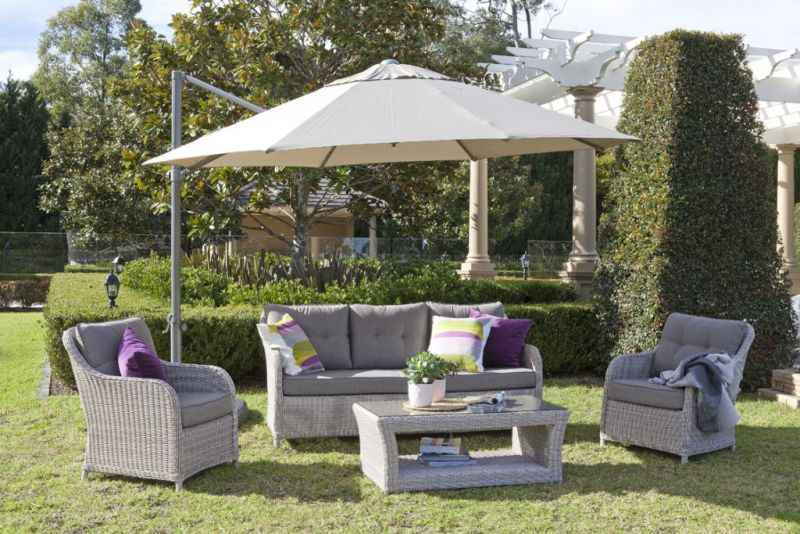
UV-stabilised synthetic wicker is woven over an aluminium subframe, so you get the look of woven seating with a frame that will not corrode. The weave sheds water rather than holding it, and a hose-down handles most cleaning. The Outdoor Wicker Sofas range shows the weave densities available.
Rope and woven cord
Rope seating uses UV-rated cord tensioned across an aluminium frame. It dries quickly and stays comfortable across a wide temperature range, which matters on an exposed deck where a solid surface can become hot to sit on.
Choose by Seat Count and Layout
Once the material is settled, seat count is the next filter. An outdoor recliner sofa takes up more room than its dimensions suggest, so it pays to be realistic here.
Single recliner chairs suit balconies, reading corners and spots where you want one dedicated seat rather than a run of seating.
Two seaters work for couples and smaller alfresco areas, usually with independent recline on each seat so both positions can differ.
Three seaters let several people set their own angle at once and are the common choice for a covered patio.
Modular corner lounges suit larger spaces and frequent entertaining, and the sections can be rearranged as your outdoor area changes.
You can shortlist directly through Shop by Seater, or look at Outdoor Modular Sofas if a corner configuration fits your space.
What Separates an Outdoor Recliner Sofa From an Indoor Lounge
The reclining action is the same idea in both cases, but the engineering behind it is not. Three differences are worth checking on any outdoor recliner sofa before you commit.
Mechanism and hardware. Look for stainless or coated fixings and a mechanism rated for outdoor exposure. Untreated steel components inside a recliner will seize well before the frame shows any sign of wear.
Drainage. Seat bases, cushion cores and any recessed sections need to shed water. Reclining seating has more folds and joins than a fixed lounge, so drainage design matters more, not less.
Manual over powered. Most outdoor reclining seating uses a manual or multi-position mechanism operated by a lever or by your own weight. That is deliberate. Powered mechanisms bring electrical components into a wet environment, and in an outdoor setting a simpler mechanism is the more durable answer.
Cushions and Fabric
Cushions are where outdoor seating usually fails first, so this is worth slowing down on. Water-repellent outdoor fabric is the sensible default: it sheds surface moisture, dries out after a shower and stands up to daily use. Solution-dyed acrylic and UV-stabilised outdoor fabrics hold their colour under strong sun far better than general upholstery fabric.
Check that covers are removable and washable, that foam cores are open-cell or drainage-designed rather than solid, and that cushion depth still lets the recliner fold flat without bunching. Replacement and additional cushions are available through Outdoor Cushions.
Measuring Up Before You Order
Measure the area before you shop, not after. Note the width, depth and height of the space, and check doorways and side access so the piece can reach its position.
Leave at least 75 cm of walkway around outdoor seating, and mark the footprint on the ground with tape before ordering.
A two seater typically measures 160 to 190 cm wide. A three seater runs 200 to 240 cm.
Overall height is usually 95 to 110 cm, with the seat 45 to 50 cm off the ground.
Upright depth sits around 90 to 105 cm, extending to 150 to 180 cm when fully reclined.
Allow 45 to 60 cm of clearance behind a standard recliner. Wall-hugger designs need only 5 to 10 cm because they travel forward as they recline, which makes them the practical option on a narrow balcony.
That rear gap does double duty. It protects both the wall and the mechanism, and it makes cleaning behind the seating far easier.
Keeping It Working Through the Seasons
Low upkeep is a design outcome, not an afterthought. Hose the frame and weave down every few weeks, wipe powder-coated surfaces with a damp cloth, and rinse salt residue off if you are near the coast. Work the reclining mechanism through its full range regularly so the pivots stay free, and check fixings at the start of summer.
A fitted cover extends the working life of any outdoor recliner sofa, particularly through long unused stretches or storm season. The Outdoor Lounge Covers range is sized to suit lounge configurations.
Fit Check Before You Buy
Run through this list before you order any outdoor recliner sofa.
The reclined footprint fits your marked-out space, not just the upright one.
The frame material suits your exposure level, with aluminium or all-weather wicker for coastal and fully exposed positions.
Fixings and mechanism components are corrosion-resistant.
Cushion covers are removable and the fabric is UV-stabilised.
Clearance behind the seating meets the recline requirement, or you have chosen a wall-hugger.
Seat count matches how you actually use the area, rather than how you use it occasionally.
Common Questions
Can an outdoor recliner sofa stay outside permanently?
With a corrosion-resistant frame and outdoor-rated fabric, yes. Cushions are best stored under cover or protected with a fitted cover during extended wet periods, and rinsing salt off regularly matters in coastal locations.
Is a powered recliner suitable outdoors?
Manual and multi-position mechanisms are the more reliable choice outdoors. Electrical components and sustained outdoor exposure are a poor combination.
How much clearance does the recline actually need?
Between 45 and 60 cm behind the seating for a standard design, and 5 to 10 cm for a wall-hugger.
What is the most durable frame for coastal properties?
Powder-coated aluminium, either on its own or as the subframe under all-weather wicker or rope.
Where to Start Looking
Work in the order this guide follows and the shortlist narrows quickly: space first, then frame material, then seat count, then cushions. If you are still weighing options, compare frame types side by side across the aluminium, timber and wicker ranges, then check the reclined dimensions against the footprint you have marked out.
Remarkable Outdoor Living specialises in outdoor furniture engineered for Australian conditions. Our range covers outdoor lounges, dining settings, bar and balcony seating, sun lounges, umbrellas, heating and outdoor cushions, including ranges from Nardi, Couture Jardin and EcoSmart. You can see the full range in our showrooms in Sydney, Brisbane, Melbourne, on the Gold Coast and on the Sunshine Coast.