





Recently viewed


How to Choose a Rectangle Coffee Table for Your Outdoor Space
A rectangle coffee table gives an outdoor lounge setting its centre of gravity — a working surface for drinks, magazines, and shared plates, and a visual anchor between the seating pieces. The right rectangle coffee table for a deck, courtyard, or covered patio needs more thought than the shape alone suggests.
A rectangular coffee table sits comfortably in outdoor lounges of most sizes, from generous entertaining decks to compact balconies. Clean lines and generous surface area create a considered focal point without sacrificing function. Recent outdoor designs use materials, finishes, and construction methods that improve both look and weather performance.
Placement and dimensions do the heavy lifting. Sit the table centrally in the outdoor seating area with 30 to 45 cm of clearance from the surrounding pieces. Outdoor-rated materials — powder-coated aluminium, UV-stable ceramic, teak, and outdoor concrete — combine long service life with restrained design. Browse the Outdoor Coffee Table range to compare current shapes and finishes.
The Role of a Rectangle Coffee Table
The shape of an outdoor coffee table does more than look tidy — it decides how the outdoor lounge actually works. Rectangular coffee tables have stayed a common choice outdoors for good reason.
Why shape matters in outdoor design
The geometry of the coffee table shapes how the outdoor space reads and functions. Straight edges set clear boundaries and add structure, while curved forms create a softer, looser feel. Rectangular tables give clean, structured lines that bring clarity to the layout of a deck or patio. Their linear form provides a strong visual base that anchors the seating arrangement.
Shape also decides proportion — how the table works against the outdoor sofa, an outdoor rug, planters, and adjacent structural elements. A well-sized rectangle coffee table creates visual balance that echoes the seating's proportions. A useful rule of thumb: size the table to roughly two-thirds the length of the outdoor sofa. This ratio keeps the composition balanced and stops the table from looking either lost or oversized.
The table's shape also guides how people move through the outdoor area. Rectangular tables have straight edges that mark clear paths, which makes them useful for directing foot traffic across a deck or through an entertaining zone.
How rectangular tables improve layout flow
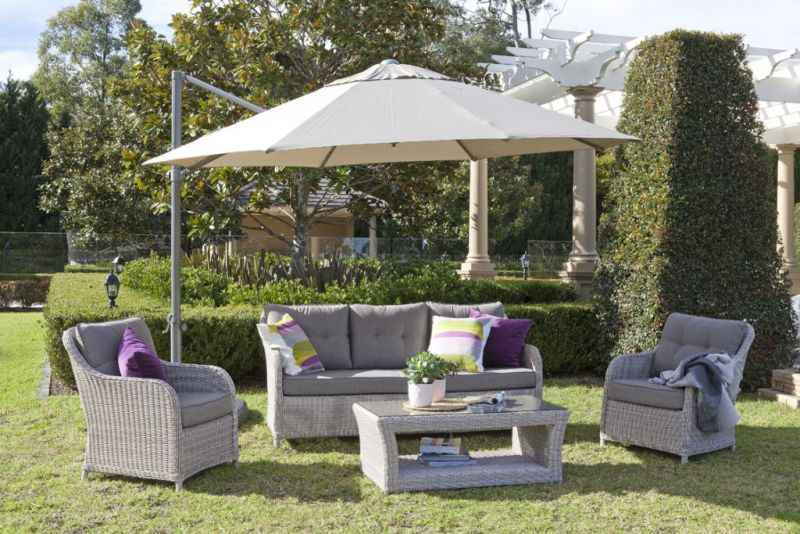
Rectangle coffee tables suit two main setups outdoors. They pair well with long outdoor sofas or modular lounges, letting everyone reach a drink or a book without stretching too far. The long form also draws the eye across the space, making the outdoor area feel deeper. Pair them with the Outdoor Sofas or Outdoor Modular Sofas collection to see how the proportions play out.
They also work well in narrow decks, side courtyards, and long balconies. The table supports the space's linear character rather than fighting it, which improves both look and use. In open outdoor entertaining areas, a rectangle coffee table helps define the lounge zone and separates it from the dining area, fire pit, or bar setup.
Leave 40 to 45 cm between the outdoor sofa's edge and the coffee table. That gap sits at the sweet spot — close enough to reach a drink from the seat, far enough to swing legs out and move around comfortably.
When to choose a rectangle over round or square
A rectangle coffee table is usually the strongest pick when:
- The outdoor lounge area is generous or has an open layout that needs a clear centre
- The setting calls for plenty of surface area for drinks, platters, and shared items
- The household hosts outdoor gatherings often and needs the working surface
- The deck or patio is built on straight lines and rectangular pieces that pair better with matching geometry
- The seating includes a long outdoor sofa or a modular lounge that would look off with a round table
Rectangular tables also carry a few trade-offs. Sharp corners can be less friendly on decks with small children or narrow walkways. A round table seating the same number of people usually takes up less floor space. Compact courtyards can feel tighter with rectangular corners than with rounded ones. Outdoor lounges built around curved seating or organic planting can also clash with a rectangle rather than flow with it.
Rectangular coffee tables suit a wide range of outdoor styles — from coastal and Hamptons through to contemporary Australian outdoor living. Clean lines and generous surface area make them a first-choice pick where both look and use matter.
Choosing the Right Size for Your Outdoor Space
The right dimensions balance function and visual weight. The table should lift the outdoor setting without dominating it or getting lost among the surrounding pieces.
Small rectangle coffee table for compact outdoor spaces
Proportion matters most in smaller outdoor areas. A rectangle coffee table between 80 and 90 cm in length usually works best for balconies and compact courtyards. This size delivers useful surface area without crowding the footprint and still leaves room for people to move comfortably.
A compact 90 cm × 60 cm × 40 cm rectangle coffee table shows how a well-scaled small design brings order to a tight outdoor space. A 100 cm × 50 cm × 35 cm option with a lower profile also fits balconies well without swallowing the walkway.
Traffic flow matters in a smaller outdoor area. A properly sized small rectangle coffee table becomes a focal piece without cramping the space. Tight footprints usually reward proper reach distance (35 to 45 cm from outdoor sofa to table) more than they reward extra walkway clearance.
Large rectangle coffee table for open outdoor layouts
Open outdoor entertaining areas need furniture built to scale. A large rectangle coffee table around 150 cm × 70 cm sits well with modular outdoor lounges 245 cm and wider. Larger outdoor lounges reward substantial coffee tables — they anchor the seating and give real working surface for platters, drinks, and shared items.
Tables between 140 and 160 cm in length pair well with extended outdoor seating layouts. These sizes hold their proportion against the surrounding pieces while leaving room for planters, lanterns, and shared serveware without the setup looking crowded.
A useful trick for very large outdoor spaces: place two similar rectangular tables side by side. Separate them when extra deck space is needed, or keep them together for a longer continuous surface during entertaining.
Ideal height and length proportions
The two-thirds ratio is a reliable guide for coffee table proportions — size the table to roughly two-thirds the length of the outdoor sofa. A 210 cm outdoor sofa pairs well with a 140 cm table. This ratio gives visual balance and practical reach.
Height follows a similar logic. The table should sit within about 5 cm of the outdoor sofa's seat height. Standard outdoor sofas carry 43 to 48 cm seat heights, so coffee tables between 40 and 45 cm tall work best. This height keeps reach easy while preserving sightlines across the outdoor lounge.
Tables that stand too high look visually heavy and throw the proportions off. Tables that sit too low make reaching awkward. Higher outdoor sofas pair well with tables that carry metal or ceramic tops — these materials keep the visual weight lighter under a raised seat.
Spacing guidelines around the table
Getting the clearance right lifts both look and function. The key numbers:
- Leave 30 to 45 cm between the outdoor sofa and the rectangle coffee table for comfortable leg room and easy reach
- Allow 60 to 75 cm for walkways around the table
- Keep at least 15 to 20 cm from the table edge to a wall, planter, or balcony rail
- Plan for 70 to 90 cm of walkway space between the coffee table and any adjacent fire pit, planter row, or fence line
Poor clearance leads to common layout mistakes. Tables set too close to the seating create pinch points where knees bump; tables set too far make it awkward to put a drink down. Position the rectangle coffee table centrally to the outdoor sofa with equal space on each side for balanced visual weight.
Traffic patterns underpin any good outdoor layout. The coffee table should not block the natural movement route through the space, whether that route runs from the back door to the barbecue or from the pool gate to the seating zone.
Functional Features to Consider
A rectangle coffee table can do more than hold drinks. The right features turn a plain table into a working part of the outdoor lounge.
Rectangle coffee table with storage
A rectangle coffee table with storage delivers real value on an outdoor deck or patio. These designs help keep the outdoor lounge tidy by holding items that otherwise clutter the surface — outdoor cushion protectors, throws, magazines, or the barbecue tool set.
Storage tables come in different formats. Some carry drawers for smaller items, others use open shelves that suit lanterns, throws, or planted greenery. The added storage matters most on balconies and small courtyards where every square metre earns its place. The Outdoor Side Tables range often pairs well with a storage coffee table for a layered look.
Multi-use and adaptable designs
Adaptable rectangle coffee tables carry more than one job. Some outdoor designs sit at coffee table height for lounging, then step up for casual al fresco snacking. Others double as ottoman-style seating when a padded top is added, useful for larger outdoor gatherings.
Modular outdoor coffee tables are a genuinely useful format — two matching rectangular pieces can sit as one long surface for entertaining or split apart to create additional side surfaces beside individual outdoor armchairs. This flexibility earns its keep in outdoor spaces that shift between quiet coffee mornings and larger weekend hosting.
Material and construction essentials for outdoor use
Outdoor rectangle coffee tables need construction that stands up to Australian sun, rain, and coastal salt air. The dominant material choices are powder-coated aluminium, UV-stable ceramic, outdoor concrete, and teak.
Look for weather-resistant frames, UV-rated finishes, and hose-clean surfaces. The Outdoor Concrete Tables, Outdoor Ceramic Tables, and Outdoor Aluminium Tables collections each carry different visual weights and maintenance profiles — worth comparing side by side before deciding.
Some outdoor rectangle coffee tables also include storage compartments for cushions or throws, which keeps the deck usable and the soft goods dry between uses.
The Final Take on Rectangle Coffee Tables
Picking the right rectangle coffee table for an outdoor setting comes down to balancing look and function against the space itself. Style is easy to lead with, but a strong choice starts from size, proportions, and spacing. Sit the table at roughly two-thirds the length of the outdoor sofa, and leave 30 to 45 cm between the table and the surrounding pieces.
Material choice shapes both look and daily use. Teak brings a warm, natural character but rewards periodic care. Concrete and stone tops carry visual weight and hold up well to weather, with periodic sealing. Ceramic tops are hose-clean and resist UV fade. Powder-coated aluminium frames pair with a range of tops and suit coastal and pool-side settings for their corrosion resistance.
Practical features widen what the table can do. Storage compartments, adaptable formats, and weather-tough construction solve real outdoor problems without giving up on look. These additions help the rectangle coffee table earn its place in the outdoor lounge.
Styling matters at the finish line. Dark tables set up strong contrast against lighter cushions and pale timber decking. Lighter tables brighten shaded verandahs and read cleanly against dark stone paving. Group decorative pieces — a lantern, a small planter, a stack of outdoor-friendly books — in clusters rather than scattered singles.
A rectangle coffee table is both a working piece and a design decision. Once size, materials, features, and styling are all lined up, the chosen piece anchors the outdoor lounge and reflects how the space actually gets used.
FAQs
What size should a rectangle coffee table be in relation to an outdoor sofa?
A rectangle coffee table should sit at roughly two-thirds the length of the outdoor sofa. This proportion keeps the visual balance right and preserves useful reach across the outdoor lounge.
How much space should I leave around a rectangle coffee table?
Leave 30 to 45 cm between the outdoor sofa and the coffee table for comfortable leg room. Allow 60 to 75 cm for walkways around the table, and at least 15 to 20 cm from the table edge to a wall, planter, or balcony rail.
What are the benefits of an outdoor rectangle coffee table with storage?
Storage-integrated coffee tables help keep the outdoor lounge tidy. They hold cushion covers, throws, magazines, or barbecue tools out of sight but within easy reach, which matters most on balconies and small courtyards where surface space is limited.
How do I choose between concrete, ceramic, timber, or aluminium for a rectangle coffee table?
Consider how the outdoor area is used and the local conditions. Timber (teak) brings warmth and rewards periodic care. Concrete carries visual weight and holds up well to weather with occasional sealing. Ceramic is easy to clean and resists UV fade. Powder-coated aluminium is light, rust-resistant, and suits coastal settings.
What is the best way to style a rectangle coffee table for outdoor use?
Group decorative pieces into two clusters on the table. Use a shallow tray or an outdoor runner to define zones, vary object heights for visual interest, and mix textures. A small planter, a lantern, and a stack of outdoor-safe books cover most looks without leaving the surface feeling cluttered.