





Recently viewed


A white couch outdoors makes a strong visual statement. It lifts a patio, deck, or courtyard by reflecting light, creating contrast against natural surroundings, and making the space feel open and clean. White works especially well in outdoor areas with dark pavers, timber decking, garden backdrops, or rendered walls — the contrast gives the couch presence without needing bold colour.
The obvious question with a white couch outdoors is upkeep. White shows dirt, pollen, food marks, and water stains more than any other colour. That's a real consideration — but on the right materials, with a basic cleaning routine and a cushion storage plan, a white outdoor couch stays bright and presentable with less effort than most people expect.
This guide covers whether white is practical for outdoor use, how to size a couch to your space, which frame and fabric materials keep white looking white in Australian conditions, and how to maintain it season after season.
Is a White Couch Practical Outdoors?
Yes — with the right materials and placement. The concern with white furniture outdoors is staining and discolouration. On indoor fabrics, that concern is justified. But outdoor-rated materials are built differently.
Powder-coated aluminium frames in white won't yellow, chip, or chalk the way painted indoor furniture can. The coating bonds to the metal at high temperature and resists UV, scratching, and moisture. White resin frames are pigmented all the way through, so even surface scratches stay white underneath.
For cushions, UV-stabilised, water-repellent outdoor fabric holds its colour and sheds spills rather than absorbing them. Marks sit on the surface and wipe off. Untreated indoor fabric would yellow and stain within weeks outdoors — outdoor-rated fabric is a different product entirely.
The practical reality is that a white couch under a covered patio needs no more maintenance than a grey or black one — just a wipe-down after use and occasional cushion washing. In a fully exposed position, white does require more frequent cleaning than darker colours. That's the trade-off for the visual impact.
Choosing the Right Size for Your Outdoor Space
Two-Seater vs Three-Seater
A two-seater white couch suits smaller patios, balconies, and courtyards where space is limited. It provides comfortable seating for two without dominating the area, and leaves room for a side table or planter beside it.
A three-seater suits larger decks and patios where you want a more generous seating area. It accommodates guests more comfortably and anchors a bigger outdoor zone. Pair it with a coffee table and one or two armchairs for a complete outdoor lounge setup.
Modular and L-Shaped Options
Modular outdoor lounges in white let you configure the seating to fit your space and occasion. You can arrange sections as a straight sofa, an L-shape, or a U-shape depending on how many people you're seating and how the area flows.
An L-shaped white couch wraps around a corner and defines a lounge zone on a larger patio. It seats more people in less linear space than a standard sofa and makes use of corner areas that would otherwise sit empty. Modular sections can also be separated — pull one piece out as standalone seating when you need a more open layout.
Measuring Before You Buy
Measure the outdoor area where the couch will sit — not the full patio, but the specific zone for seating. Leave at least 75 centimetres of clearance on any side that people need to walk past. Check that the couch dimensions allow room for a table, movement paths, and any doors or gates that swing open nearby.
If you're choosing a modular or L-shaped configuration, lay out the combined dimensions on the ground with painter's tape to see how much space the full setup takes before ordering.
Frame Materials That Perform Outdoors
Powder-Coated Aluminium
Aluminium is lightweight, rust-free, and handles UV exposure and temperature swings without warping. Powder coating in white bonds a hard, even finish to the frame that resists chipping, scratching, and UV yellowing. For a white couch outdoors, powder-coated aluminium is the most reliable frame option — it holds the white finish longer and more consistently than painted or anodised alternatives.
Aluminium frames are also easy to move and reposition, which suits outdoor areas where furniture gets rearranged for gatherings or seasonal changes.
Resin Wicker on Aluminium
Resin wicker woven over a powder-coated aluminium frame adds a textured, woven look while keeping full weather resistance underneath. White resin wicker is UV-stabilised and doesn't absorb moisture, so it won't yellow or grow mould the way natural rattan or cane would outdoors.
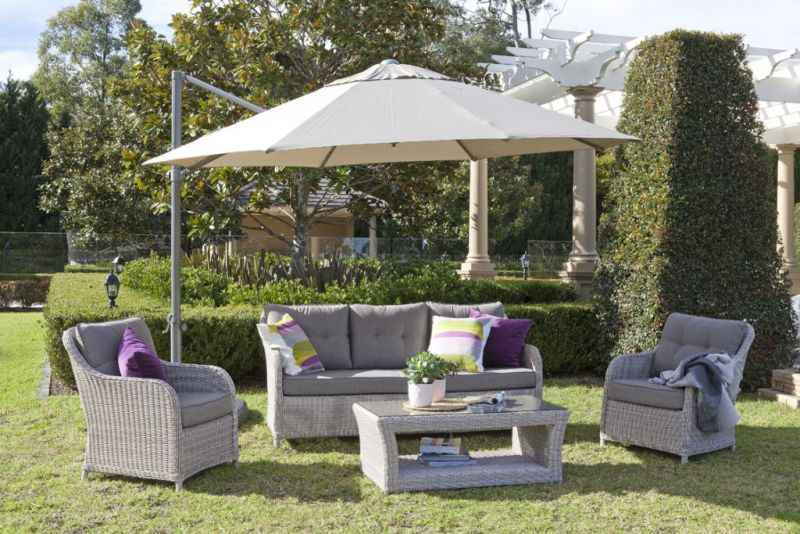
White outdoor wicker sofas suit covered patios and courtyards. The woven texture softens the visual profile of the couch and adds warmth compared to a bare aluminium frame. Cleaning is straightforward — hose down the weave and let it dry.
Teak and Hardwood Timber
A white couch with a natural teak or hardwood timber frame creates contrast between the bright cushions and warm timber tones. Teak is naturally weather-resistant, handles UV well, and develops a silver-grey patina over time if left untreated. With periodic oiling, it keeps its original colour.
Timber-framed couches are heavier than aluminium, so they suit positions where the couch stays put. The weight also adds stability in exposed or windy locations.
Keeping White Cushions Clean and Bright
White cushions are the part of the couch that needs the most attention outdoors. The frame handles itself with minimal care. The cushions require a routine — but on the right fabric, that routine is simple.
Fabric Requirements
Choose cushions made with water-repellent, UV-stabilised outdoor fabric. This is non-negotiable for white outdoor cushions. Water-repellent fabric sheds spills and light rain rather than absorbing them, which prevents staining. UV stabilisation stops the fabric from yellowing or greying under Australian sun.
Look for removable outdoor cushion covers that you can hose clean or machine wash. Having a spare set of covers lets you rotate them and keep the couch looking fresh with minimal downtime.
Cleaning Routine
A quick wipe after each use prevents buildup. For a more thorough clean, remove the covers and hose them down or wash them every week or two depending on use. Spot-clean food or drink marks as soon as they happen — water-repellent fabric makes this easy because the spill sits on the surface.
Avoid abrasive cleaners or harsh chemicals on white outdoor fabric. Mild soapy water and a soft brush handle most marks without damaging the finish or the UV treatment.
Cushion Storage and Covers
Storing cushions under cover when the couch isn't in use is the single most effective way to keep white cushions looking bright. A weatherproof storage box, a bench seat with internal storage, or simply bringing cushions inside overnight all work.
For larger couches where removing multiple cushions is impractical, a fitted furniture cover protects the entire couch from rain, dust, bird droppings, and UV between uses. This is especially worthwhile for white outdoor furniture, where surface marks are more visible than on darker colours.
Where to Place a White Couch Outdoors
Covered Patios and Verandahs
A covered patio is the easiest position for a white couch outdoors. The roof reduces direct rain and UV exposure on the cushions, which keeps the white fabric brighter for longer with less cleaning. Under cover, a white couch reflects available light and makes shaded outdoor areas feel open and airy.
Pair it with neutral or natural-toned accessories — timber side tables, stone planters, muted outdoor cushions in complementary tones — to let the white couch set the visual tone without competing elements.
Poolside
A white couch beside a pool creates a clean, bright seating area that pairs well with water, pale pavers, and greenery. Poolside furniture faces splash, chlorine, sunscreen residue, and sustained UV, so the frame must be rust-free and the cushion fabric must be water-repellent.
Powder-coated aluminium or resin frames handle poolside conditions without corroding. For cushions in an uncovered poolside position, quick-dry fill reduces moisture retention and mould risk. Store or cover cushions when the pool area isn't in use.
Courtyards and Garden Areas
In a courtyard, a white couch stands out against rendered walls, dark stone, and garden greenery. The enclosed nature of most courtyards provides partial weather protection while still exposing furniture to sun and occasional rain.
A modular white couch suits courtyards where the space serves different purposes — you can reconfigure sections for a gathering, pull them apart for a smaller setup, or push them together for lounging.
Balconies
On a compact balcony, a white two-seater couch makes the space feel larger and brighter than a dark-coloured alternative would. White reflects light rather than absorbing it, which opens up tight outdoor areas visually.
Choose a lightweight aluminium frame that's easy to move and won't overload the balcony structure. Pair the couch with a small side table and keep the arrangement simple — on a narrow balcony, less furniture creates more usable space.
What to Check Before Buying
Frame material — Powder-coated aluminium and resin wicker over aluminium are the most weather-resistant options for a white outdoor couch. Both hold a white finish well and need minimal maintenance.
Cushion fabric — Water-repellent, UV-stabilised outdoor fabric is essential for white cushions. Confirm the fabric is rated for outdoor exposure, not just labelled as durable.
Removable covers — Cushion covers you can remove, hose, or machine wash make white outdoor furniture dramatically easier to maintain. Check before buying.
Cushion fill — Quick-dry fill or foam with drainage channels dries faster than solid foam after rain, reducing mould risk inside the cushion.
Dimensions — Measure your outdoor space and confirm the couch fits with clearance for movement, doors, and surrounding furniture. Use painter's tape to test the footprint if you're unsure.
Cover or storage plan — White cushions last longer with a storage or covering routine. Have a plan before the couch arrives — a furniture cover, a storage box, or indoor space for cushions overnight.
A Bold, Practical Choice for Outdoor Seating
A white couch outdoors is a deliberate choice — it makes a visual impact that darker colours don't. On the right frame and fabric, it holds up to Australian conditions with a straightforward care routine. The key is choosing outdoor-rated materials from the start, not indoor fabrics that will yellow and stain within a season.
Covered patios and verandahs are the easiest positions for a white outdoor couch. Poolside, courtyard, and balcony placements all work with the right frame and a cushion management plan. The effort to keep white looking white is modest when the materials are built for outdoor use — and the result is an outdoor space that feels bright, open, and well put together.
Browse the full range of outdoor sofa lounges and outdoor modular lounges to find white options for your outdoor setup.
Frequently Asked Questions
Will a white couch turn yellow outdoors?
Not on outdoor-rated materials. Powder-coated aluminium frames and UV-stabilised resin resist yellowing from sun exposure. For cushions, UV-stabilised outdoor fabric holds its white tone through extended Australian sun. Indoor fabrics will yellow — outdoor-rated fabrics are engineered to resist it.
How often do white outdoor cushions need cleaning?
A quick wipe after each use prevents most buildup. A more thorough clean — hosing down or washing the removable covers — every one to two weeks keeps them looking bright. Spot-clean spills as they happen. Under a covered patio, the cleaning frequency drops noticeably compared to a fully exposed position.
What is the best frame material for a white outdoor couch?
Powder-coated aluminium is the most reliable choice. It's rust-free, lightweight, and the white powder-coat finish resists chipping, scratching, and UV yellowing. Resin wicker over aluminium is another strong option where you want a woven texture. Both need minimal maintenance to hold their appearance.
Can I leave white cushions outside overnight?
You can, but storing them under cover between uses keeps them brighter for longer. A weatherproof storage box, a bench seat with built-in storage, or a fitted furniture cover all reduce exposure to dew, dust, pollen, and bird droppings. This is the single most effective maintenance habit for white outdoor cushions.
Does a white couch work in a small outdoor space?
Yes — white reflects light and makes compact areas feel larger and more open. A two-seater white couch on a balcony or in a small courtyard brightens the space without the visual weight of a darker colour. Choose a lightweight aluminium frame so you can reposition it easily, and keep surrounding furniture minimal.