





Recently viewed


Shop for Wicker Outdoor Setting
A wicker outdoor setting can change the way you use your patio, but not every weave handles Australian weather the same way. A good wicker outdoor setting today usually uses synthetic resin wicker made from high-density polyethylene (HDPE), which resists UV rays and moisture while handling temperature swings, so it holds up against cracking, fading and peeling far better than natural fibres. Natural rattan has a classic look but needs protection from rain and direct sun. Whether you need a compact wicker outdoor furniture set for a balcony, a full wicker outdoor dining setting for family meals or a rattan-look lounge for the deck, this guide helps you choose an option built to last.
Which Wicker Outdoor Setting Suits Your Home?
If you already know where your furniture will sit, use this shortlist to narrow the field before you compare weaves and frames:
- Exposed patio in full sun: UV-stabilised HDPE wicker over a powder-coated aluminium frame, with water-repellent outdoor cushions
- Coastal deck: HDPE wicker on an aluminium frame with stainless-steel fittings, as salt air quickly finds weak points in steel
- Humid tropical north: resin wicker with quick-drying cushions and an open weave that lets air circulate after downpours
- Small balcony or terrace: a two-chair bistro set or a compact 2-seater lounge from our outdoor balcony range
- Large entertaining area: a modular lounge you can rearrange, or a long dining setting that seats up to ten
- Covered verandah only: natural rattan becomes an option, provided it stays out of rain and direct afternoon sun
Choose a Wicker Outdoor Setting That Fits Your Space
Your outdoor space determines which wicker outdoor setting will work best before colour or style comes into play. A balcony needs a different scale than a large backyard, and matching the furniture to the available footprint prevents a patio from feeling crowded or bare.
Measure your space and leave room to move
Measure your patio’s full length and width before you buy a wicker outdoor setting. Note fixed obstacles such as doors, steps, columns or railings because they can affect the layout more than the total floor area. Walkways need at least 90 cm of clearance. Seating generally needs 76 to 91 cm of depth per person, plus 60 cm behind each seat for push-back.
Place a coffee table 36 to 46 cm from the sofa’s edge. This leaves it close enough to reach a drink without crowding your legs. A patio of about 13 m² can comfortably fit a 3-seater sofa and two armchairs, while a space of around 24 m² can accommodate an L-shaped lounge with room to walk around it. Mark the furniture footprint with painter’s tape or chalk, then walk through the space before ordering. This simple step can reveal a layout that looks good on paper but feels too tight in practice.
Bistro and chat sets for small patios
A three-piece bistro or chat set usually includes two chairs and a small table. It suits balconies and compact patios where floor space is limited. A two-seat bistro arrangement needs about 91 x 91 cm of clear space, so it is one of the few wicker outdoor furniture set options that can fit on a narrow terrace without blocking the door. Rocking chat sets and stool-height bistro tables work the same way. Keeping the pieces close together makes morning coffee or an evening chat feel cosy instead of scattered.
Sofas and sectionals for relaxed seating
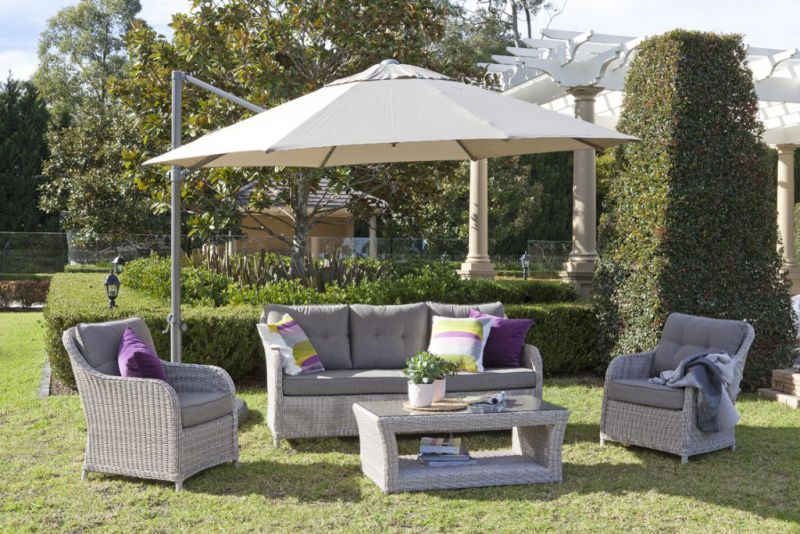
Sectionals offer flexible seating for larger areas. L-shaped layouts are the most common, although curved or U-shaped designs seat more people and work well around a focal point such as a fire pit. A standard outdoor sofa measures about 226 cm long, 89 cm deep and 81 cm high. An L-shaped lounge takes up roughly 226 x 226 cm, while a U-shaped layout spans about 279 x 279 cm and seats six to eight people. Our outdoor wicker modulars let you start with a corner and add pieces as your space or guest list grows.
Smaller patios may suit a reversible sectional with a shallower seat depth of about 46 cm. These designs fit into tight corners while still providing comfortable seating. A loveseat with two lounge chairs needs around 244 x 244 cm, depending on the arm width and required clearance. Seat depth, height, back angle and arm placement affect comfort more than cushion thickness alone. Try the set before you commit if possible, and browse our outdoor wicker sofas, which run from 2-seater to 5-seater aluminium-framed designs.
Wicker outdoor dining settings for shared meals
A wicker outdoor dining setting should suit your patio’s shape instead of competing with it. A long rectangular table can make a square deck feel cramped. Table options include round, square, rectangular, oval and hexagon designs, and dining, counter, bar and balcony heights are available based on how you plan to use the space.
In our wicker dining settings, a 110 cm round seats four, a 148 to 160 cm round seats six, a 240 cm rectangular seats eight, and a 300 cm table seats ten. For four, the Dover + Auto Wicker 5PC setting is built around a 110 cm round. For six, compare the Trivento + Auto Wicker 7PC at 148 cm with the Grace + Armenia setting at 160 cm, for eight, the Doncaster + String setting has a 240 cm table, and for ten, the Polly 300 cm + Darwin setting gives everyone a place at one table. Our wicker outdoor dining settings also include an eight-seater with a 6 mm ceramic top on a powder-coated aluminium base. Check that the table and chair legs work with your surface as well. Thin legs can catch in decking slats or paving joints, so wide feet or adjustable levellers make a real difference on uneven patios. Leave 100 to 120 cm between the table edge and a wall or railing so everyone can pull their chairs out fully.
Which Wicker Materials Last Outdoors?
Once you have chosen a layout, the material beneath the weave determines how well your wicker outdoor setting stands up to the weather, not how it looks in a showroom.
Wicker versus rattan: weave and material explained
Many shoppers use “wicker” as if it were a material, but it only refers to a weaving technique. The material beneath the weave may be rattan, cane, reed, willow, bamboo or synthetic resin such as PVC, LDPE or HDPE. Rattan, however, is a specific material. It is a climbing vine native to tropical parts of Africa, Australia and Asia, and furniture makers use more than 600 species. A set labelled a rattan wicker outdoor setting means rattan has been woven in a wicker style, while a rattan-look setting usually means synthetic resin woven to resemble it. Knowing this difference matters more than choosing a finish colour because it determines how well the furniture will hold up outdoors.
Natural rattan: why it needs shelter from rain and sun
Natural rattan adds warmth and texture, but its porous surface absorbs moisture. It can swell, warp and eventually rot if left outdoors. Direct sunlight also makes the fibres brittle, so they snap under pressure instead of flexing. Fully exposed natural rattan wears out within a few seasons, so it works best on a deep covered verandah or an enclosed patio. It does not suit an exposed deck as part of an open wicker outdoor furniture set.
HDPE versus PVC wicker: compare outdoor wear
High-density polyethylene (HDPE) leads the synthetic options. A density of at least 940 kg/m³ and UV stabilisers blended into the polymer during extrusion help it hold its colour and strength under strong sun. HDPE is non-porous and water-resistant, so it resists mould and mildew. It is also highly flexible, which allows strands to bend under pressure rather than snap, while PVC stretches far less before it fails.
PVC strands contain plasticisers that leach out with UV exposure. The material can become brittle and crack within two to three seasons. Its rough surface also traps dirt easily. Low-density polyethylene (LDPE) falls between the two. It is water-resistant and recyclable, but its lower density of 917 to 930 kg/m³ means it fades sooner and wears out faster outdoors. Many sets in our range use PE wicker over aluminium frames, and some add solid teak armrests for a timber touch.
Match UV and weather resistance to your climate
Humid regions such as coastal Queensland need resin wicker rather than natural fibres because synthetic material handles damp conditions much better. Hot inland areas with high UV levels suit HDPE, which resists cracking, chipping and fading, and its non-porous structure also protects it from sudden summer storms. Coastal areas and frosty highland regions benefit too, because HDPE handles salt air and temperature changes without becoming brittle. Watch for early signs of UV wear wherever you live:
- Colour loss or washed-out strands
- Dry, chalky-looking surfaces
- Reduced flexibility or surface brittleness
- Strands that feel uncomfortably hot to the touch
These signs show whether your current setting still has plenty of use left or whether it is time to compare frames and warranties again.
Check the Quality Beneath the Weave
The frame and fittings beneath the weave determine whether your wicker outdoor setting lasts for many seasons or falls apart within one. Check these details before the style catches your eye.
Aluminium versus steel frames: strength and rust risk
Aluminium forms a protective oxide layer as soon as it meets air. This layer prevents rust and keeps maintenance to an occasional wipe with mild soap, which is why aluminium frames are used across most of our wicker range. Aluminium also keeps settings manageable to move, with a 2-seater wicker lounge in our range weighing under 30 kg. Steel is roughly three times denser than aluminium, so it resists dents better and stays more stable in windy areas. However, it needs a quality coating to prevent rust if the surface gets scratched, which is a real risk near the coast. Fully welded joints usually last longer than fastener-based joints under repeated stress, so ask how the frame is joined, not only what metal it uses.
Even weaving, secure ends and reinforced edges
A quality wicker outdoor furniture set has tight, even weaving with clean edges and no loose ends. Messy strands or visible unravelling suggest the weave will not last. Pieces marketed as entirely wicker still contain a reinforcing subframe because the weave alone can sag and stretch over time.
Strong joints, stable legs and stated weight limits
Choose welded or stainless-steel bolted joints instead of glue or staples. Look for wide-set legs at least 46 cm apart and cross-bracing underneath to improve stability. Weight capacity differs from piece to piece and from one manufacturer to the next, so ask for the stated weight rating of each chair, sofa, sun lounge and bench, and check that it suits the people who will use it every day.
Seat depth, back support and cushion comfort
Choose a seat depth between 38 and 61 cm. Seat height should be 43 to 48 cm for standard dining, 61 to 66 cm for counter-height seating, or 36 to 41 cm for lounging. Lumbar support should follow your spine’s natural curve. Armrests should sit roughly 18 to 23 cm above the seat to support relaxed elbows.
Outdoor fabrics and foam that dries quickly
Solution-dyed acrylic and olefin fabrics resist fading and water better than printed patterns because the colour runs through the entire fibre. Quick-dry foam drains in a fraction of the time standard foam takes, which matters after a summer storm. Removable, zippered covers help keep a wicker outdoor dining setting hygienic, and replacement outdoor cushions let you refresh seating without replacing the frame.
Compare Wicker Outdoor Settings Before You Buy
Wicker outdoor furniture sets can look similar online, and the real difference often comes down to what sits beneath the weave rather than the name on the label.
Compare what each wicker outdoor furniture set has
Sets may come with coordinating tables, loveseats, sectional seating or matching chairs, so check the full configuration before comparing options. Look at the material choices as well, since wicker, steel, aluminium and timber have different maintenance needs. A four-piece set with a loveseat, two chairs and a coffee table suits conversation, while a seven-piece set with a dining table suits family meals. If you already have a table, our outdoor wicker chairs let you build a setting piece by piece.
Read reviews to spot wear over time
Reviews often reveal wear that spec sheets leave out. Lower-grade wicker can look shiny, flimsy and uneven in texture compared with genuine polyethylene. It can feel sticky against skin in warm weather, then fade, scratch, tear and unravel after months of outdoor use. Once discarded, it also adds to landfill waste. Look for these complaints in reviews instead of relying on star ratings alone. They tell you much more about how well a wicker outdoor setting lasts.
Check warranty terms and replacement cushion availability
Warranty cover varies widely between products and parts, so read what applies to the weave, frame, finish and cushions separately rather than relying on a single headline figure. Check whether replacement cushions remain available after the warranty ends. Foam can often be cut and covers sewn to an older set’s exact dimensions, so a worn cushion does not require replacing the full wicker outdoor dining setting.
Confirm delivery, assembly and return terms
Delivery terms vary, so read the details before checkout. Confirm that a delivery truck can reach your address and that large pieces will fit through gates, side paths or apartment lifts. Ask how returns work and who arranges collection if a piece needs to come back. Check that assembly tools are included before the set arrives, since missing hardware can turn delivery day into an unnecessary hassle.
Care for Your Setting to Extend Its Life
Looking after your wicker outdoor setting properly can extend its lifespan well beyond what the material alone can offer.
Clean the weave and frame with gentle products
Fill a bucket with warm water and a few drops of mild dish soap. Use a soft brush on the weave and frame to remove dirt and debris, and wear gloves if you prefer. Avoid harsh chemicals and power washing unless the manufacturer’s instructions recommend them. Resin wicker works well with a gentle outdoor cleaner, a hose rinse or warm soapy water. Dry it with a soft towel afterwards. Natural rattan needs the same mild detergent wash. Apply a UV protectant spray, then let it dry fully in a shaded, ventilated area.
Follow cushion care labels and dry before storing
Removable covers make washing easier because you can clean the fabric separately from the foam insert. Follow the care label on each cover, as some outdoor fabrics can be hand washed while others need gentler spot cleaning to prevent shrinking or fading. Dry covers and inserts completely before storing them, regardless of the fabric.
Use fitted covers without trapping moisture
Choose fitted, vented covers with secure straps because trapped moisture can cause mildew as easily as rain. Cover wicker when it is not in use to protect it from dust, bird droppings and sun fading. Browse our outdoor setting covers to find one sized for your dining or lounge setting.
Store safely in winter and repair small faults early
HDPE furniture can remain outdoors through an Australian winter, though a cover helps keep it clean. Natural wicker needs indoor storage or protection from rain and cold. In northern Australia, the wet season is the time to give cushions extra shelter. Check each piece at the start of the warmer months for fading or rust, and inspect it for loose strands. Repair small cracks with rattan sealant before they spread.
Making the Right Choice for Your Outdoor Space
Your choice of a wicker outdoor setting should match your space, the material and the frame quality with how you use your outdoor area. HDPE outperforms PVC and natural rattan in durability, so it should be your first choice if your patio is exposed to sun and rain.
A sturdy aluminium frame matters as much as tight weaving and genuine warranty cover. The finish may catch your eye first, but the construction underneath matters more. Measure your space before you order, check reviews for honest reports about wear, then confirm the delivery and return terms.
Enjoy the available styles, but prioritise what is underneath. A well-made setting should give you many seasons of comfortable, low-maintenance use.
FAQs
How long can a wicker outdoor setting last?
Quality HDPE wicker on a powder-coated aluminium frame can last for many seasons outdoors with regular care. Lower-grade PVC wicker may become brittle within two to three seasons, while natural rattan left fully exposed generally wears out within a few seasons.
What should I look for in high-quality outdoor wicker furniture?
Choose UV-stabilised HDPE wicker with a sturdy frame, tight, even weaving and secure joints. Check stated weight ratings, warranty terms and whether replacement cushions are available.
Is natural rattan suitable for an uncovered patio?
Natural rattan is best kept sheltered because rain can cause swelling and rot, while direct sunlight makes its fibres brittle. Synthetic HDPE wicker is better suited to an exposed patio.
Is aluminium or steel better for a wicker furniture frame?
Aluminium is lightweight and resists rust, making it a low-maintenance choice, especially near the coast. Steel is heavier and offers better stability in windy areas, but needs a protective coating to prevent rust.
Can wicker outdoor furniture stay outside during winter?
HDPE wicker can remain outdoors through winter, while natural wicker needs indoor storage or protection from rain and cold. Store cushions fully dry and use ventilated covers to avoid trapping moisture.